 Save
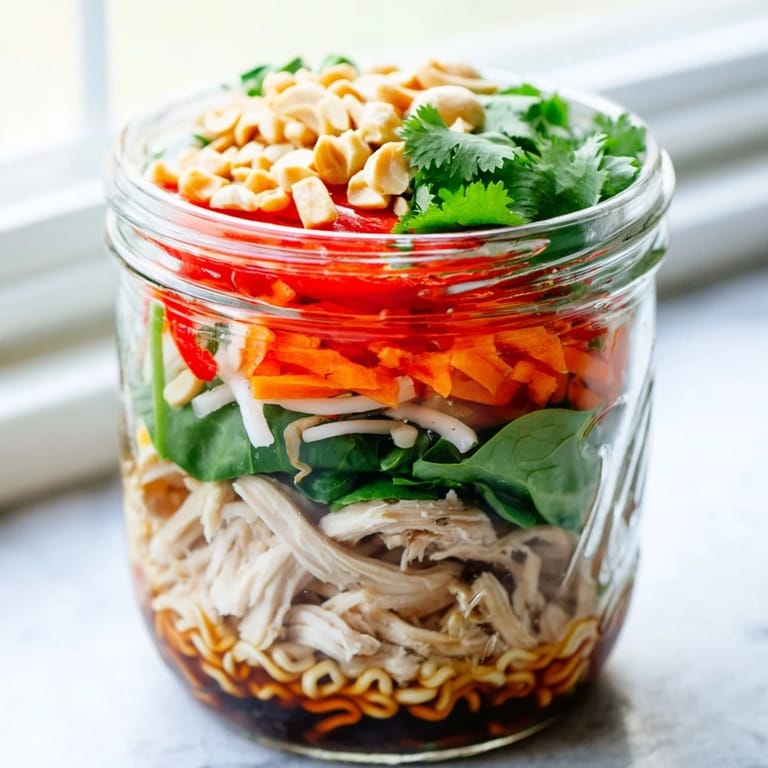
Save My desk drawer at work used to be full of sad granola bars until I started making these layered noodle jars on Sunday nights. There's something deeply satisfying about opening the fridge and seeing four neat rows of colorful vegetables waiting to become lunch. The first time I brought one to the office, my coworker actually asked if I'd ordered takeout during my break.
Last summer I made these for a beach trip with friends, and we ate them sitting on the tailgate while watching the sunset. My friend Sarah, who swears she hates meal prep, asked for the recipe before we even finished eating. Now she sends me photos of her own jar variations every week.
Ingredients
- 200 g dried ramen or rice noodles: Rice noodles hold up beautifully in the jar and don't get mushy, but ramen works perfectly if you prefer that toothsome texture
- 200 g cooked chicken breast, tofu, or cooked shrimp: I've used rotisserie chicken in a pinch and it's incredible, but crispy panfried tofu adds this satisfying chew that keeps you full longer
- 1 cup shredded carrots: These add sweetness and stay crunchy for days, creating this perfect contrast against the soft noodles
- 1 cup thinly sliced bell peppers: Red peppers bring natural sweetness while yellow adds a bright, sunny flavor that cuts through the savory sauce
- 1 cup baby spinach or kale: Spinach wilts slightly when the hot water hits it, creating these tender ribbons, while kale maintains a pleasant sturdy texture
- 1/2 cup thinly sliced scallions: These provide a gentle onion bite that mellows beautifully as they marinate in the sauce
- 1/2 cup bean sprouts: They stay remarkably crisp and add this fresh, clean crunch that makes every bite interesting
- 4 tbsp soy sauce: The foundation of our savory base, though tamari works perfectly if you need to avoid gluten
- 2 tbsp rice vinegar: This brightens everything and cuts through the rich sesame oil, bringing that restaurant quality balance
- 2 tbsp sesame oil: Toasted sesame oil adds this incredible nutty depth that you cannot replicate with anything else
- 1 tbsp honey or maple syrup: Just enough to round out the sharp edges and bring all the flavors together
- 2 tsp Sriracha or chili sauce: Optional if you're heat sensitive, but I personally think it's what makes the sauce addictive
- 1 clove garlic, minced: Fresh garlic makes such a difference here, don't be tempted to use the jarred stuff
- 1 tsp fresh ginger, grated: This adds this gentle warmth that lingers and makes the whole dish feel special
- 2 tbsp chopped cilantro: Fresh herbs are nonnegotiable for that vibrant, just made flavor
- 2 tbsp roasted peanuts or cashews: The salty crunch takes these jars from good to absolutely unforgettable
- 1 tbsp sesame seeds: They look beautiful and add this subtle nuttiness throughout every bite
- Lime wedges: A squeeze right before eating wakes everything up
Tired of Takeout? 🥡
Get 10 meals you can make faster than delivery arrives. Seriously.
One email. No spam. Unsubscribe anytime.
Instructions
- Cook the noodles perfectly:
- Boil them according to the package, then immediately rinse under cold water until they're completely cool to stop the cooking process completely
- Whisk up your sauce:
- Combine the soy sauce, rice vinegar, sesame oil, honey, Sriracha, garlic, and ginger in a small bowl until the honey dissolves completely
- Start your layers:
- Divide the sauce evenly among four mason jars, about 750 ml each, making sure each one gets the same amount
- Add the protein:
- Layer your diced chicken, tofu, or shrimp directly on top of the sauce so it can marinate as it sits
- Stack your vegetables:
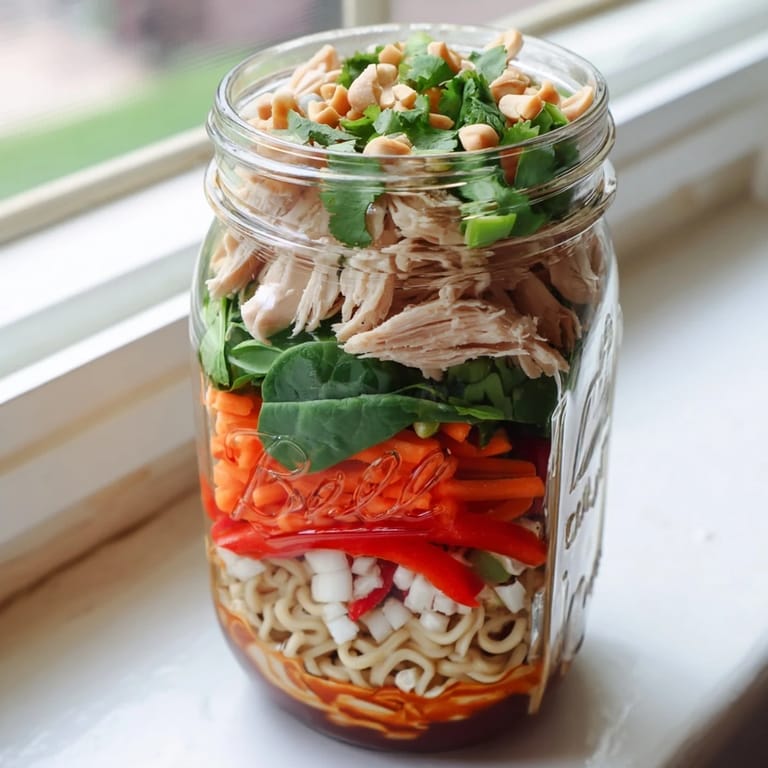
- Add the carrots, bell peppers, spinach, scallions, and bean sprouts in that order, pressing down gently to fit everything
- Top with noodles:
- Finish each jar with the cooled noodles, keeping them at the very top so they don't get soggy
- Seal and store:
- Tighten the lids and refrigerate, these will stay fresh for up to four days
- When you're ready to eat:
- Pour in about half a cup of hot water, let it sit for a few minutes, then stir everything together right in the jar
 Save
Save My sister now requests these every time she comes over to meal prep together. We've turned it into this little ritual where we each make different variations and swap jars for the week. It's become the highlight of my Sunday routine.
Making It Your Own
Once you get the basic layering technique down, you can honestly customize these with whatever you have in your fridge. I've done everything from peanut sauce to Thai green curry, and the method stays exactly the same.
Protein Swaps That Work
Edamame adds this wonderful buttery texture, and leftover grilled salmon transforms these into something fancy enough for dinner. The key is making sure whatever protein you choose is already cooked before it goes into the jar.
The Art of Sauce Ratios
I keep a little notebook of sauce variations because getting the balance right makes such a difference. More sesame oil for richness, extra rice vinegar for brightness, or doubling the Sriracha when I need something to wake me up on a gloomy Monday.
- Mix your sauce in a jar and give it a taste before adding it to the noodles
- Make double the sauce and keep it in the fridge for quick weeknight stir fries
- Add a splash of water if it tastes too intense, the flavors concentrate as it sits
 Save
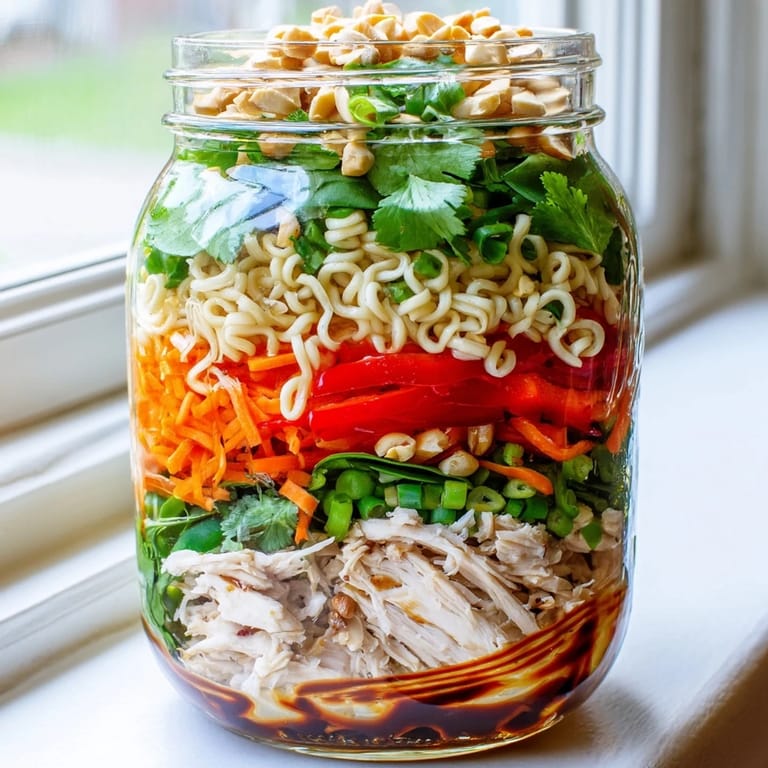
Save There's something about opening that jar at lunch and seeing all those beautiful layers that makes even the busiest workday feel a little more special.
Recipe Questions & Answers
- → How long do mason jar noodles stay fresh?
These layered noodle bowls stay fresh in the refrigerator for up to 4 days when stored properly in sealed jars. The layering technique keeps vegetables crisp and prevents noodles from becoming soggy.
- → What's the best way to reheat these jars?
Add about 1/2 cup of hot water to the jar, let it sit for 2-3 minutes to warm the noodles and loosen the sauce, then mix well. Alternatively, transfer to a bowl and microwave for 1-2 minutes.
- → Can I make these vegetarian or vegan?
Absolutely. Use tofu or edamame as your protein source, swap honey for maple syrup, and ensure your noodles are egg-free. The sauce is naturally dairy-free and packed with umami flavor.
- → What noodles work best for meal prep?
Ramen noodles, rice noodles, or even soba noodles work excellently. For a low-carb option, try spiralized zucchini or shirataki noodles. Cook and rinse noodles thoroughly before layering to prevent sticking.
- → Why does the layering order matter?
The sauce goes at the bottom to keep noodles dry and prevent sogginess. Hearty proteins and vegetables form the middle layers, while noodles stay on top. This order maintains texture and freshness until you're ready to eat.