 Save
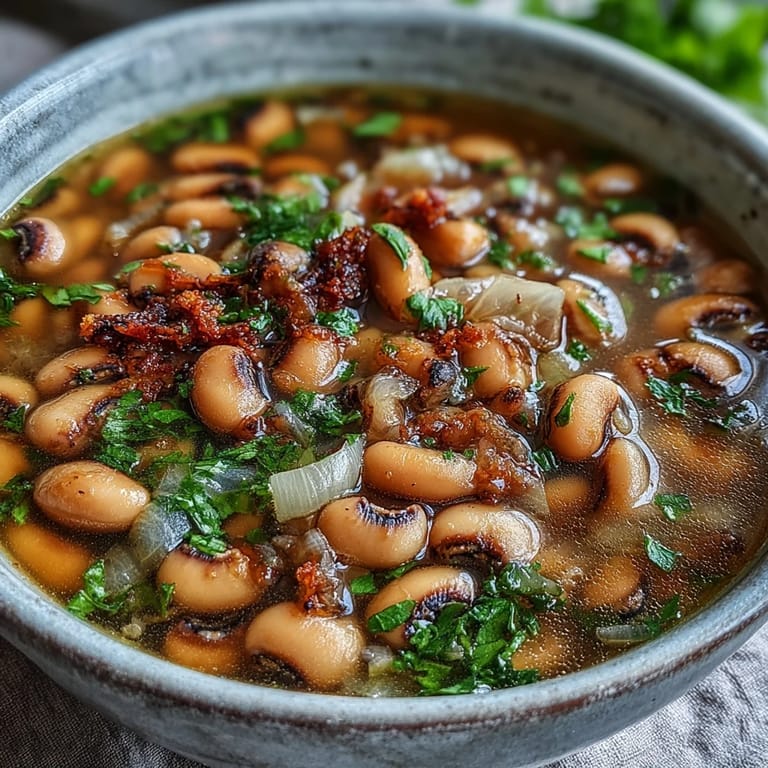
Save There's something about a weeknight when everything feels rushed, and you need something that tastes like home without the fuss. I discovered this version of black-eyed peas on a Tuesday evening when my pantry was running low but my hunger was running high. My grandmother's traditional recipe took hours, but this one? It proved that good food doesn't always need to demand your whole afternoon. The frozen peas steam open into something tender and forgiving, and the broth becomes this subtle, savory thing that brings everything together in less time than it takes to boil pasta.
I made this for my friend Marcus one evening when he showed up exhausted from work, and watching his face light up when he tasted it was worth more than any fancy recipe. He kept asking what was in it, convinced I'd been cooking all day, and I loved that moment of letting him in on the secret—that good cooking sometimes just means knowing which shortcuts actually work. That bowl of peas and the cornbread we had on the side became the kind of meal that sticks with you, not because it was complicated, but because it was exactly what both of us needed.
Ingredients
- Frozen black-eyed peas (2 cups): Use frozen or canned (drained and rinsed)—they're already cooked, so you're just warming and flavoring them, which is why this comes together so fast.
- Olive oil (1 tablespoon): This is your base for building flavor, so use something you'd actually taste—nothing too bitter or too light.
- Small onion, finely chopped: Mincing it small means it releases its sweetness quickly into the broth instead of staying chewy.
- Garlic cloves, minced (2): Add it after the onion softens so it doesn't burn and turn sharp—30 seconds is really all it needs.
- Vegetable or chicken broth (1 ½ cups): This becomes your sauce, so taste your broth first; if it's salty, you might use less and add water instead.
- Smoked paprika (½ teaspoon): This is the secret flavor that makes people think you've done more work than you have—don't skip it.
- Dried thyme (½ teaspoon): It brings an earthy undertone that makes the peas feel grounded and intentional.
- Black pepper and salt (¼ teaspoon and ½ teaspoon): Taste as you go because different broths carry different salt levels.
- Bay leaf (1): Remove it before serving—it's there to whisper flavor, not be eaten.
- Diced tomatoes, cayenne pepper, and fresh parsley (optional): The tomatoes add brightness, cayenne adds heat if you want it, and parsley wakes everything up at the end.
Tired of Takeout? 🥡
Get 10 meals you can make faster than delivery arrives. Seriously.
One email. No spam. Unsubscribe anytime.
Instructions
- Build your base:
- Heat the olive oil over medium heat and add your chopped onion, letting it soften for about 3 to 4 minutes until it starts to turn translucent and smell sweet. You'll know it's ready when your kitchen starts smelling like something intentional is happening.
- Add the garlic:
- Once the onion is soft, add the minced garlic and stir constantly for about 30 seconds—this is enough time for it to wake up without burning. If you wait too long, it turns bitter, so don't get distracted.
- Combine everything:
- Stir in your black-eyed peas, broth, smoked paprika, thyme, pepper, salt, bay leaf, and diced tomatoes if you're using them. The mixture should smell warm and inviting at this point, like a kitchen that knows what it's doing.
- Simmer gently:
- Bring everything to a gentle simmer, cover the pot, and let it cook for 15 to 18 minutes, stirring occasionally to make sure nothing sticks to the bottom. The peas soften further, the flavors start holding hands, and the whole thing becomes cohesive.
- Taste and adjust:
- Remove the bay leaf, taste a spoonful, and add more salt or pepper if it needs it. This is your moment to make it exactly how you like it.
- Finish and serve:
- Scatter fresh parsley over the top if you have it—it adds color and a fresh note that cuts through the richness. Serve it over rice, alongside cornbread, or just in a bowl on its own.
 Save
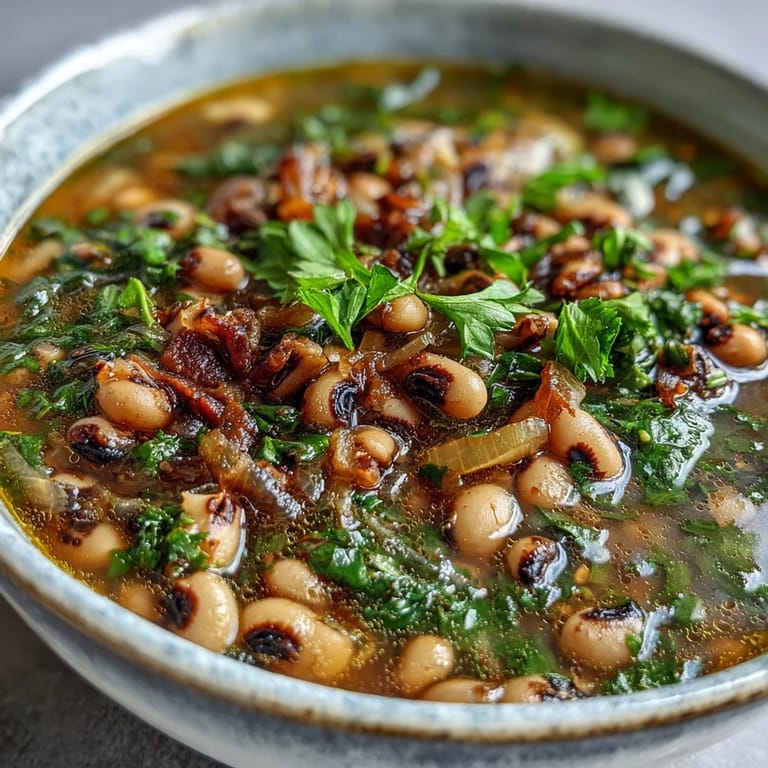
Save My neighbor stopped by one afternoon while I was making this, and I invited her to sit and eat a bowl with me. We talked about how her mother used to make something similar but with ham hock, and how sometimes the simplest things carry the biggest memories. That's when I realized this dish isn't really about the peas or the cooking time—it's about the moment when you can feed someone something warm and genuine without it consuming your whole day.
When to Make This
This is your weeknight lifeline, the recipe you turn to when you want something that tastes like real food but doesn't demand real time. It's also perfect for potlucks because it travels well, tastes good at room temperature, and reheats beautifully. I've made it on nights when I was running late, nights when I wanted something comforting, and nights when I just needed to prove to myself that good cooking was still possible with my eyes half-closed. The consistency means you can count on it, which is a kind of freedom not every recipe gives you.
How to Build Your Own Version
The bones of this recipe are solid enough that you can riff on them without losing what makes it work. If you have celery, dice it and sauté it with the onion. If you've got smoked sausage in your fridge, slice it and add it when you add the peas. Someone once told me that recipes are really just conversations between you and the ingredients, and this one is flexible enough to have that conversation however you want to have it.
The key is keeping the ratio roughly the same: onion and garlic for your aromatics, your peas, your broth, and your seasonings. Everything else is just you being creative in your own kitchen. I've added diced bell pepper, a splash of apple cider vinegar, cooked bacon, hot sauce—whatever felt right that day. The recipe doesn't fight back; it just absorbs what you give it and becomes something that tastes intentional.
Serving and Storage
Serve this with rice, cornbread, or alongside anything that needs a warm, humble side dish to feel complete. It keeps in the refrigerator for about four days, and it actually tastes better the next day once the flavors have had time to really settle and know each other. Reheat it gently on the stovetop with a splash of broth or water if it's thickened too much.
- Make a double batch and freeze half in a container for a night when you need comfort food and have no energy to cook.
- If you're adding meat, cook it separately first so you can control the salt and smoke rather than relying on the broth alone.
- Fresh herbs at the end—whether it's parsley, cilantro, or even a tiny drizzle of good hot sauce—make the difference between good and memorable.
 Save
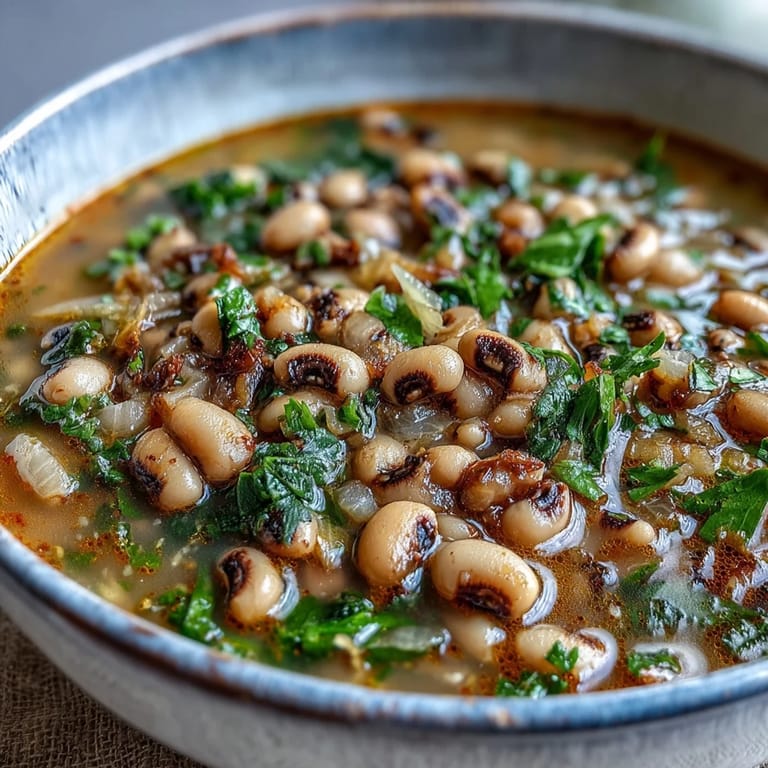
Save This recipe taught me that sometimes the best meals aren't the ones that take hours or require a special occasion—they're the ones that show up when you need them most. Cook this, share it, and let it become part of your weeknight rotation the way it's become part of mine.
Recipe Questions & Answers
- → Can I use canned peas instead of frozen?
Yes, canned black-eyed peas work well; just drain and rinse before cooking to reduce excess sodium.
- → How do smoked paprika and thyme affect the flavor?
Smoked paprika adds a rich, smoky depth, while thyme brings a subtle earthy aroma, enhancing the savory profile.
- → What are good accompaniments for this side dish?
This dish pairs nicely with rice, cornbread, or greens to balance its hearty, smoky flavors.
- → Can I make this vegetarian or vegan?
Use vegetable broth and omit any meat add-ins to keep the dish vegetarian or vegan-friendly.
- → How long should I simmer the peas for tenderness?
Simmer gently for 15–18 minutes until peas are tender and flavors meld perfectly.