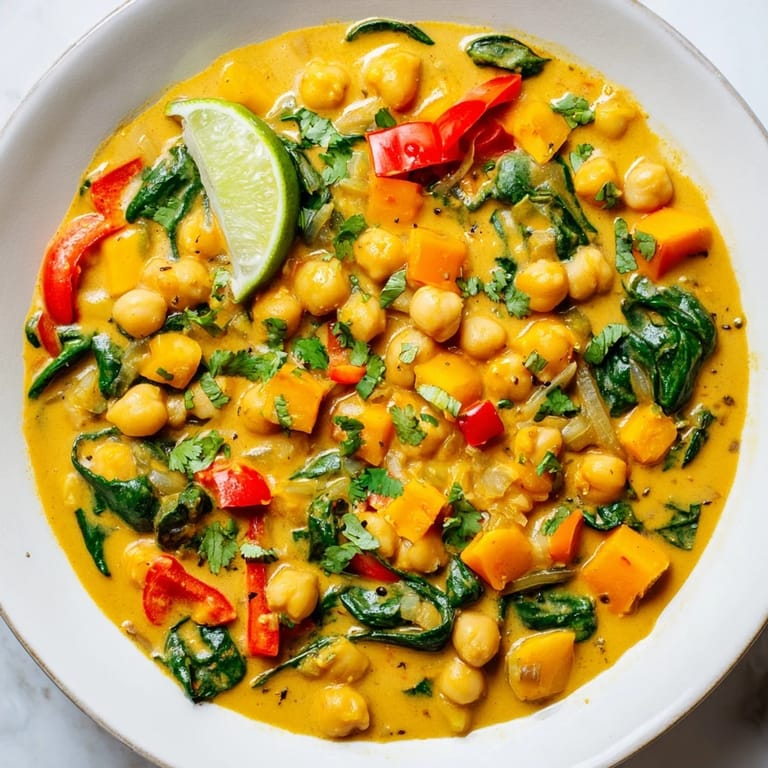
 Save
Save There's something magical about the moment a pot of curry begins to smell like home, even if home is somewhere you've never been. I discovered this particular one-pot chickpea curry on a grey afternoon when I needed something warm and filling but didn't have the energy for complicated cooking. What struck me was how the kitchen filled with that golden, comforting aroma within minutes—the kind that makes you want to slow down and actually sit with your food instead of rushing through dinner.
I made this for friends who were skeptical about plant-based cooking, and watching them go back for seconds without mentioning the absence of meat felt like a small victory in the kitchen. The coconut milk rounds out the spices so elegantly that nobody's left thinking about what's missing—they're too busy enjoying what's actually there.
Ingredients
- Yellow onion: The foundation—diced medium so it softens completely and becomes almost sweet.
- Garlic and ginger: Minced fresh, never from a jar if you can help it, because they're what give this curry its soul.
- Red bell pepper: Adds a gentle sweetness and bright color that makes the finished dish look alive.
- Baby spinach or kale: Chopped roughly so it wilts into the curry at the end without disappearing entirely.
- Carrot: Optional but worth including for texture and a hint of natural sweetness.
- Chickpeas: Drained and rinsed so you're not serving starchy liquid alongside your spices.
- Coconut milk: Full-fat is richer, but light works if that's what you have—the curry won't suffer.
- Vegetable broth: Keeps everything from becoming too thick and one-dimensional.
- Diced tomatoes: From a can is perfectly fine; they add acidity that balances the coconut's richness.
- Curry powder: The main spice here, so choose a blend you actually like.
- Cumin, turmeric, and smoked paprika: These layer underneath the curry powder, adding depth rather than competing with it.
- Chili flakes: Leave them out if heat isn't your thing, but they're not heavy-handed here.
- Coconut oil or olive oil: Either works—coconut oil adds a subtle flavor that feels right with the rest of the dish.
- Fresh cilantro and lime: The finish that transforms it from good to memorable.
Tired of Takeout? 🥡
Get 10 meals you can make faster than delivery arrives. Seriously.
One email. No spam. Unsubscribe anytime.
Instructions
- Heat the oil and soften the onion:
- Pour your oil into a large pot over medium heat and add the diced onion. Let it sit for 3-4 minutes, stirring occasionally, until the edges begin to turn translucent and it smells sweet rather than sharp.
- Build the aromatics:
- Add the minced garlic, grated ginger, and diced bell pepper. Stir everything together and give it another 2 minutes so the raw garlic smell fades and everything becomes fragrant.
- Toast the spices:
- This is the moment that matters—add all your dry spices and stir constantly for about a minute. You'll notice the kitchen suddenly smells like a proper curry, which is how you know you're on the right track.
- Add the liquids and legumes:
- Pour in the tomatoes, coconut milk, broth, and chickpeas along with the carrot if using. Give everything a good stir so nothing sticks to the bottom, then bring the whole thing to a simmer.
- Let it cook gently:
- Reduce the heat to low, cover the pot, and let it bubble away for about 15 minutes, stirring occasionally. This isn't a rolling boil—you want a gentle simmer where the flavors become friends instead of competing.
- Wilt the greens and finish:
- Stir in your chopped spinach or kale and cook uncovered for another 2-3 minutes until it's completely soft and the curry has thickened slightly. Taste it now and adjust salt or spices if needed.
- Serve with intention:
- Ladle it into bowls while it's steaming, then top with a handful of fresh cilantro and a squeeze of lime. If you're serving with rice or naan, warm that at the same time so everything arrives at the table together.
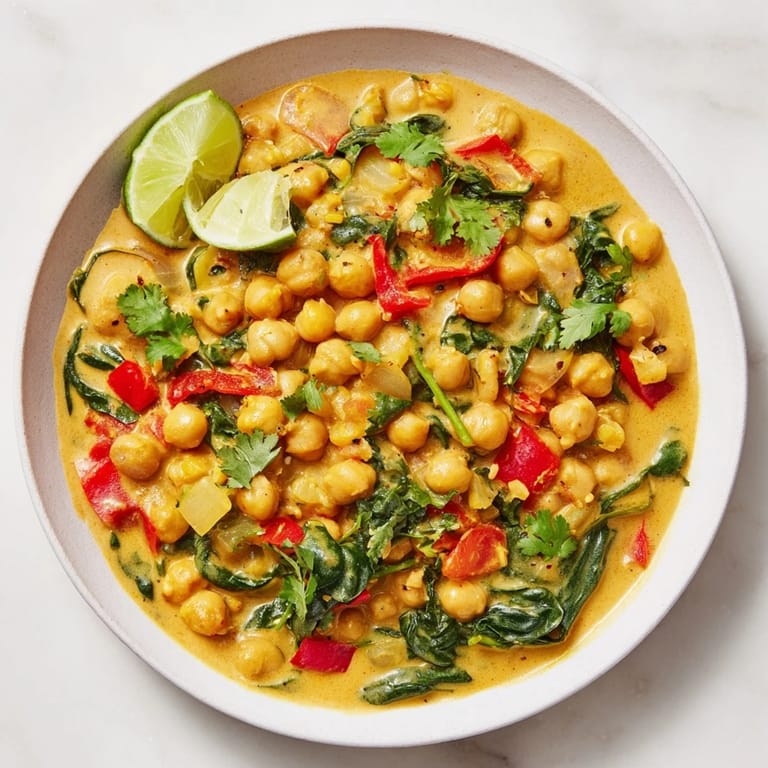 Save
Save I remember my grandmother mentioning once that good food is about creating an invitation for people to sit down together, and this curry feels exactly like that kind of invitation. Something about watching someone taste it for the first time and seeing their whole face relax makes every minute of chopping worthwhile.
Why This Recipe Works
The genius of a one-pot curry is that it's basically a series of simple moves that add up to something that tastes like you've been cooking all day. You're not layering complicated techniques—you're just letting heat and time do what they're supposed to do. The coconut milk does the heavy lifting, the spices bloom properly because you toast them first, and the vegetables break down into the sauce rather than staying stubbornly separate. That's really all it takes.
Adapting It to What You Have
This recipe is honestly forgiving enough to work with substitutions. If you don't have spinach, kale wilts into it beautifully, and Swiss chard adds a slightly earthier note that's not unwelcome. No red bell pepper? A yellow one is fine, or honestly you can skip it altogether if you're short on vegetables. The chickpeas are the anchor, so don't skip those, but nearly everything else can shift based on what's in your kitchen and what sounds good to you.
Making It Your Own
Once you've made this a few times and understand how it works, you'll start seeing places to make it yours. Some people add a splash of soy sauce for depth, others throw in cashew cream for extra richness, and I've had versions where someone added a spoonful of peanut butter and nobody complained. The foundation is solid enough to support your ideas without falling apart.
- A can of chickpeas is filling, but if you want more protein, cubed tofu or tempeh gets creamy rather than dense.
- The spice level is genuinely adjustable—taste as you go and add more chili flakes if your people like heat.
- Serve it with rice, naan, or even just crusty bread if that's what you have, because it's really more about the sauce anyway.
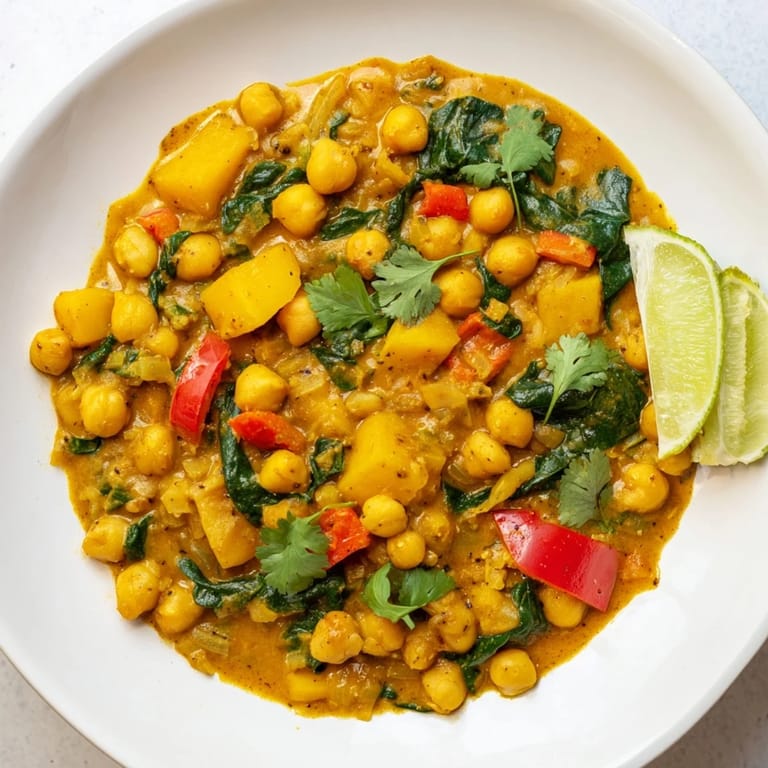 Save
Save This is the kind of curry that becomes a regular in your rotation without you quite planning for it to. Before long, you'll be making it on autopilot, and people will start asking for it specifically.
Recipe Questions & Answers
- → Can I substitute the spinach with other greens?
Yes, kale or Swiss chard can be used instead of spinach to add a similar texture and nutrition.
- → How can I adjust the heat level of the curry?
Adjust the chili flakes amount or omit entirely to control the spice intensity according to your preference.
- → What are good serving suggestions for this dish?
Serve alongside jasmine or basmati rice, or with warm naan bread for a complete meal.
- → Is it possible to add more protein sources?
Adding cubed tofu or tempeh boosts protein and complements the texture and flavor nicely.
- → What kind of oil works best for sautéing?
Both coconut oil and olive oil work well, adding subtle flavor while sautéing the aromatics.