 Save
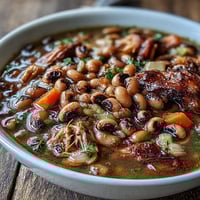
Save My grandmother used to say that black-eyed peas on New Year's Day weren't just tradition, they were insurance—a plate full of luck served steaming in a worn ceramic bowl. Years later, I realized what she really meant was that this dish, with its tender peas and silky collard greens, had a way of making ordinary moments feel ceremonial, like you were feeding something deeper than hunger. The first time I cooked it myself, the kitchen filled with this warm, savory hum that made everyone stop talking and just breathe. Now, whenever someone asks what I'm making, and I say these two words, their faces light up like I've promised them something sacred.
I made this for a potluck once when I was too nervous to cook anything fancy, and someone came back for thirds asking if I'd use a secret ingredient. I hadn't—just onions, garlic, time, and attention—but that's when I understood that soul food isn't about being complicated; it's about showing up and caring enough to let things simmer.
Ingredients
- Black-eyed peas (2 cups dried or 3 cans): Dried ones give you more control and deeper flavor, but canned saves you the overnight soak if you're short on time.
- Collard greens (1 large bunch): Remove those tough stems—they're the enemy of tender greens—and chop the leaves into bite-sized pieces so they cook evenly.
- Onion, garlic, celery, carrot (the aromatic base): This combination is your flavor foundation; don't skip any of it or use a food processor that turns everything into paste.
- Bay leaf: Essential for that subtle depth; fish it out before serving or warn your guests.
- Smoked paprika and thyme: These aren't just seasonings, they're what make this taste like home rather than just cooked vegetables.
- Apple cider vinegar (1 tablespoon): Added at the end, this brightens everything and makes the greens taste greener.
- Vegetable or chicken broth (6 cups): Use good broth, not the salty stuff; it's the backbone of your entire pot.
- Ham hock or smoked turkey (optional): If you use it, the meat shreds into the pot for smokiness; if not, the vegetable version stands completely on its own.
- Hot sauce for serving: Let people control their own heat level—this dish doesn't need it, but some folks can't resist.
Tired of Takeout? 🥡
Get 10 meals you can make faster than delivery arrives. Seriously.
One email. No spam. Unsubscribe anytime.
Instructions
- Soak your dried peas overnight (if using):
- This isn't just tradition; soaking shortens cooking time and makes the peas more digestible. Set them in a bowl of cold water before bed and they'll be ready by morning.
- Build your flavor base:
- Heat oil in your Dutch oven over medium heat and sauté the onion, celery, and carrot until soft, about 5 minutes. You're not looking for color here, just for them to start releasing their sweetness.
- Toast your garlic:
- Add the minced garlic and cook for exactly 1 minute until fragrant—any longer and it turns bitter, any shorter and it stays sharp.
- Add the meat if using:
- If you've got a ham hock or smoked turkey, add it now and let it sit in the heat for a couple of minutes so the smoke starts to infuse everything.
- Coat everything in spices:
- Pour in the black-eyed peas, bay leaf, smoked paprika, thyme, and red pepper flakes, stirring everything together so the peas and vegetables get that spice coating. This is where the magic starts.
- Simmer the peas low and slow:
- Add your broth, bring it to a boil, then drop the heat to a gentle simmer with the pot covered. Dried peas need about 45 minutes; canned only 20.
- Add the greens and let them surrender:
- Once the peas are almost tender, add your chopped collard greens and simmer uncovered for another 30 minutes. They'll shrink down dramatically and turn that deep, silky green that means they're ready.
- Finish with brightness:
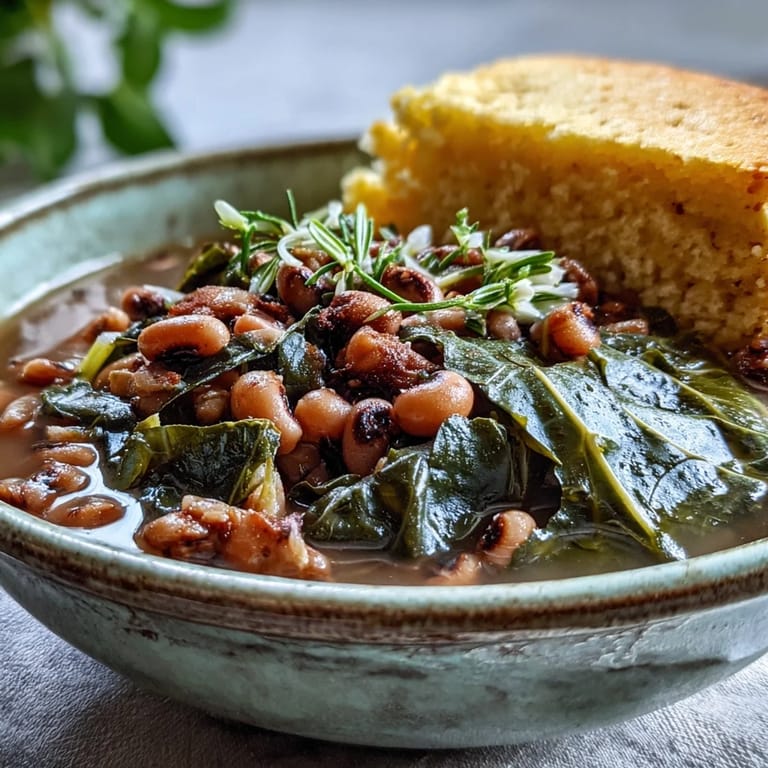
- Stir in the apple cider vinegar, remove the bay leaf and ham hock, shred any meat and return it to the pot. Taste it and adjust the salt and pepper—this is your last chance to balance everything.
 Save
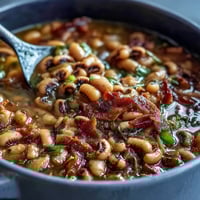
Save There's a moment about three-quarters through cooking when the kitchen stops smelling like individual ingredients and starts smelling like one unified thing—that's when you know you're almost there. My partner once said watching this cook was like watching someone get dressed in slow motion, each addition another layer until the whole picture made sense.
Variations and Substitutions
If collard greens aren't available or you're tired of them, mustard greens bring a sharper bite and kale adds an almost sweet earthiness, though neither will cook quite as silky. Some people swear by adding a splash of hot sauce directly into the pot instead of serving it on the side, which mellows it out and distributes the heat evenly. A ham bone instead of a ham hock gives you even more savory depth, though it's trickier to fish out at the end.
Serving and Pairing
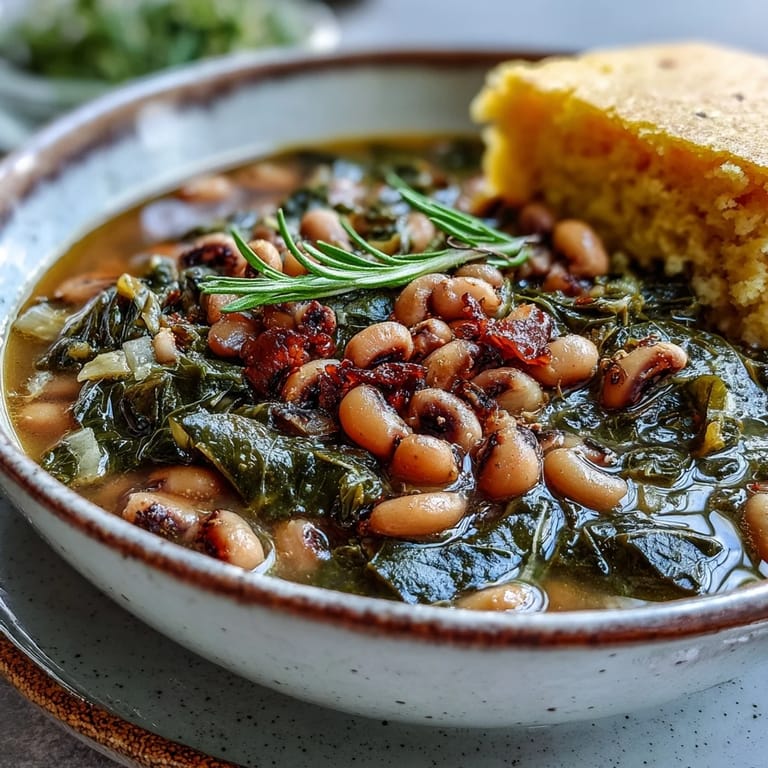
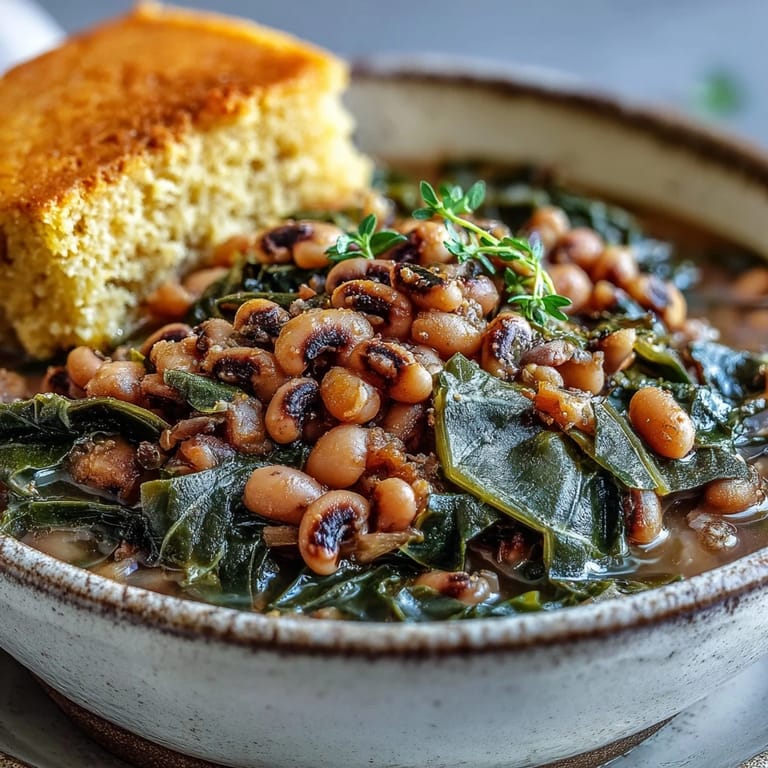
Cornbread is the traditional companion—that sweet, buttery contrast against the savory peas and greens is why they're always served together. Some folks like a drizzle of honey on their cornbread, which might sound odd until you try it. A crisp white wine cuts through the richness beautifully, or if you're keeping it simple, iced tea with plenty of lemon does the job perfectly.
Storage and Make-Ahead Magic
This is genuinely one of those dishes that tastes better on day two, when everything has had time to get to know each other. Store leftovers in an airtight container in the refrigerator for up to five days, and they'll reheat gently on the stovetop with just a splash of broth to loosen them up. You can also freeze this for months, though the texture of the greens shifts slightly upon thawing—they become a bit softer, which honestly only adds to the comfort factor.
- Reheat gently on the stovetop over low heat: The microwave works, but it can make the greens tough and the peas chalky.
- Add extra broth when reheating: The peas will have absorbed liquid overnight, so you may need to loosen everything up.
- Taste before serving: Seasoning deepens as it sits, so you might need less salt the second time around.
 Save
Save Every time you make this, you're continuing something older than you are, feeding people the way ancestors fed theirs. That's the real luck in the pot.
Recipe Questions & Answers
- → Can I use canned black-eyed peas instead of dried?
Yes, canned peas can be substituted to reduce cooking time. Simply drain and rinse them, then add later in the cooking process for about 20 minutes.
- → How do I prepare the collard greens for this dish?
Remove the thick stems and chop the leaves into bite-sized pieces. Add them to simmer until tender and silky.
- → Is it possible to make this dish vegetarian?
Absolutely. Omit any smoked ham or turkey and use vegetable broth to keep it vegetarian-friendly without sacrificing flavor.
- → What spices enhance the flavor of the peas and greens?
Smoked paprika, dried thyme, and a bay leaf provide traditional warmth and depth. Red pepper flakes add optional heat.
- → What is the best way to serve this dish?
Serve hot alongside cornbread wedges and a dash of hot sauce for added zest and authenticity.