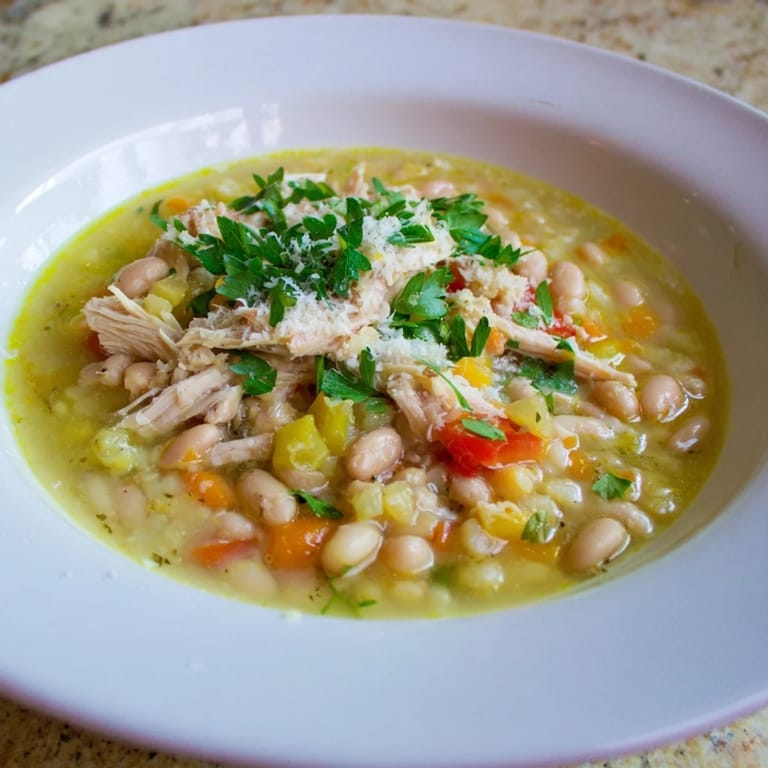
 Save
Save There's something about opening a jar of roasted red peppers that instantly transports me back to a rainy Tuesday afternoon when I was trying to cobble together dinner from pantry staples and whatever chicken I had thawed. I'd been staring at those sweet red peppers, some navy beans, and chicken broth when it hit me—this could be something warm and filling without any fuss. Twenty minutes later, my kitchen smelled like smoked paprika and herbs, and I realized I'd accidentally made exactly what everyone needed that night.
I made this for a friend who'd just moved into her new place and had almost nothing in her kitchen except basics. She took one spoonful and looked genuinely surprised—not the fancy-restaurant kind of surprise, but the better kind, where simple ingredients somehow taste like comfort itself. We've been making it ever since on nights when we're both too tired for anything ambitious but not willing to settle for takeout.
Ingredients
- Cooked shredded chicken (2 cups): Using already-cooked chicken—whether rotisserie, leftover, or freshly poached—is the secret to keeping this under 45 minutes, and it stays tender in the stew rather than drying out.
- Navy beans (2 cans, drained and rinsed): Their mild, creamy texture practically melts into the broth; rinsing them really does cut down the sodium and any tinny flavor.
- Roasted red peppers (1 jar, 12 oz): The shortcut that makes you look like you spent hours prepping; they're already tender and add natural sweetness that balances the savory elements.
- Yellow onion (1 small, finely chopped): This builds the aromatic base and softens into almost nothing, giving the stew its gentle, rounded flavor.
- Garlic (2 cloves, minced): Just enough to be present without overwhelming; mince it fine so it distributes evenly.
- Celery stalk (1, finely diced): Adds subtle earthiness and texture; it's the quiet ingredient that people taste but don't quite identify.
- Low-sodium chicken broth (2 cups): This becomes your liquid foundation, so choose one you actually like drinking—the flavor carries through.
- Olive oil (1 tablespoon): Just enough to prevent sticking and carry the aromatics; you're not trying to deep-fry anything here.
- Smoked paprika (1 teaspoon): This is where the warmth and depth come from; don't skip it or substitute regular paprika without noticing the difference.
- Dried thyme (1 teaspoon): It infuses the whole pot with a subtle herb undertone that feels intentional without tasting medicinal.
- Black pepper (½ teaspoon): Ground fresh if you have a grinder; pre-ground works fine, but fresher is noticeably better.
- Kosher salt (½ teaspoon): Start here, taste as you go, and add more at the end if needed; broth already contains salt, so patience matters.
- Red pepper flakes (¼ teaspoon, optional): A tiny pinch adds gentle heat that makes your palate wake up without burning.
- Fresh parsley (2 tablespoons, chopped) and Parmesan cheese: These turn a warm stew into something that feels finished and thoughtful when you ladle it into a bowl.
Tired of Takeout? 🥡
Get 10 meals you can make faster than delivery arrives. Seriously.
One email. No spam. Unsubscribe anytime.
Instructions
- Start your base:
- Heat olive oil in your pot over medium heat and add the chopped onion and celery, stirring occasionally for about 3–4 minutes until the onion becomes translucent and starts releasing its sweetness. You'll notice the kitchen starting to smell inviting—that's when you know you're on the right track.
- Wake up the garlic:
- Stir in your minced garlic and let it toast for just 1 minute, stirring constantly; you want it fragrant but not browned, as burnt garlic can taste bitter. This is the moment where the aroma shifts from vegetable-forward to something deeper and more complex.
- Bring everything together:
- Add your shredded chicken, drained beans, roasted red peppers, and all the seasonings—paprika, thyme, black pepper, salt, and red pepper flakes if using. Stir everything well so the spices coat all the ingredients and start releasing their flavors into the oil.
- Simmer and meld:
- Pour in the chicken broth, bring the whole pot to a gentle simmer over medium heat, then turn the heat down to low and let it cook uncovered for about 20 minutes, stirring occasionally. The stew will thicken slightly as the beans soften further and the flavors find each other.
- Taste and adjust:
- Before serving, give it a taste and adjust the salt or pepper to your preference; this is also when you can add a pinch more red pepper flakes if you like more heat. Fresh lemon juice squeezed in at this moment adds a brightness that feels like opening a window in the middle of winter.
- Serve with intention:
- Ladle the stew into bowls and top with chopped fresh parsley and a small handful of grated Parmesan cheese if you like. A crusty piece of bread on the side or a scoop of rice underneath turns this into something substantial and satisfying.
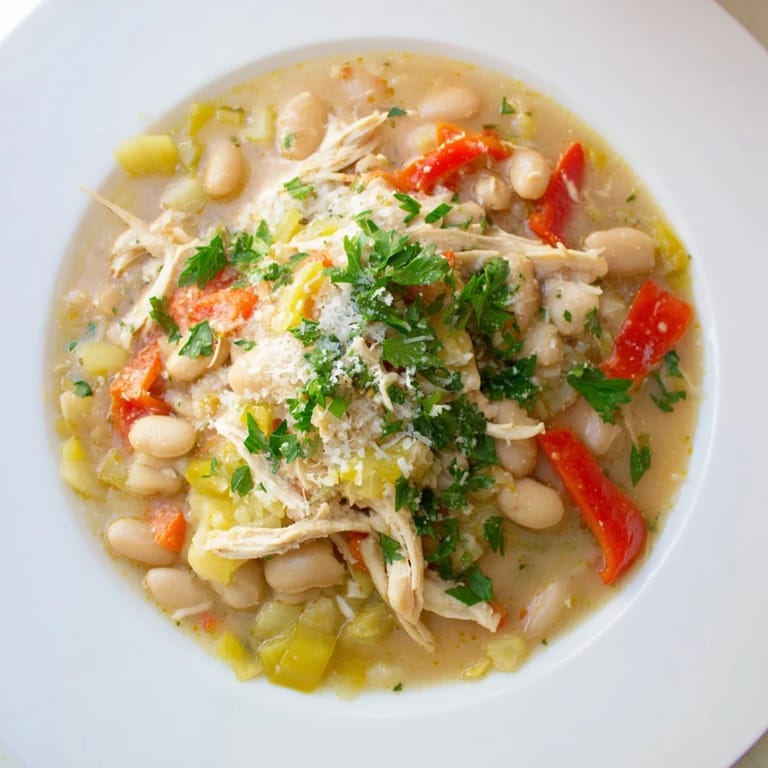 Save
Save The moment I knew this recipe had staying power was when my partner, who usually scrolls through his phone while eating, put it down halfway through his bowl and asked if I could make this every week. It's not fancy or precious, but it's real in a way that matters—the kind of food that makes ordinary evenings feel a little warmer.
Why This Stew Works
What makes this dish feel almost effortless is that every ingredient pulls its weight without requiring much technique or timing drama. The roasted red peppers do the heavy lifting in terms of flavor and visual appeal—they're already tender and sweet, so you're not cooking them from scratch. The beans bring body and protein, the chicken makes it a complete meal, and the aromatics build a savory backbone that ties everything together. It's the kind of recipe that teaches you something valuable: sometimes the best cooking is about respecting good ingredients rather than wrestling them into submission.
Swaps and Variations
This stew is remarkably flexible for a dish with such a short ingredient list. You can swap the navy beans for cannellini or Great Northern beans if that's what you have on hand, though navy beans do have the creamiest texture. For a vegetarian version, skip the chicken entirely and use vegetable broth instead of chicken broth—the roasted peppers and beans still create something deeply satisfying. Some people add a splash of balsamic vinegar for complexity, or a pinch of smoked chili powder if they want more of a Southwestern lean. I've even stirred in some kale at the very end, letting it wilt right into the hot stew, which adds nutrition without changing the essential character of the dish.
Serving and Pairing Ideas
A crusty, toasted piece of bread is the traditional companion here—something with enough structure to scoop and absorb all the flavorful broth without falling apart. If you're serving rice alongside, that small bit of starch becomes your edible vessel, and the stew transforms into something almost grain-forward. A simple green salad on the side provides brightness and crunch that contrast beautifully with the creamy, warm elements. Beyond the obvious, I've learned this stew pairs well with a casual red wine, a crisp white if you want something lighter, or simply ice-cold water for those nights when you want the focus entirely on the food.
- Toast bread with a little olive oil and garlic if you have two minutes; the flavor jump is worth it.
- Serve in shallow bowls rather than deep ones so the toppings stay visible and intentional.
- Let leftovers sit overnight in the refrigerator—the flavors deepen, and reheating is just a few minutes of gentle warming.
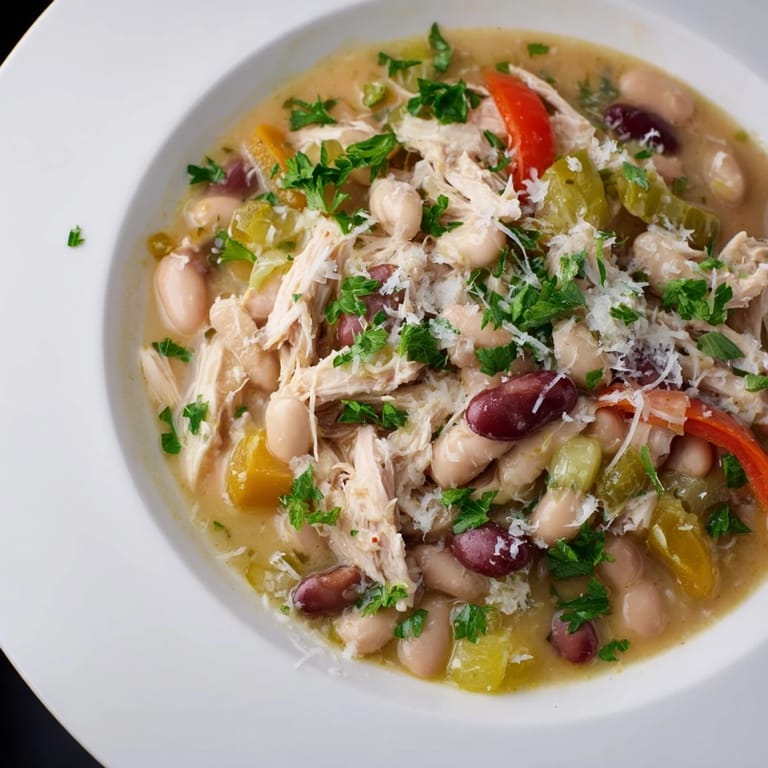 Save
Save This is the kind of recipe that reminds you why cooking matters—not because it's complicated or impressive, but because it brings warmth to people you care about without asking them to wait too long or you to stress too much. Make it, share it, and watch it become something people ask for by name.
Recipe Questions & Answers
- → Can I substitute the navy beans with another type?
Yes, cannellini or Great Northern beans can be used as alternatives for navy beans, providing a similar texture and flavor.
- → How can I make this dish vegetarian?
Omit the chicken and use vegetable broth instead of chicken broth to create a satisfying vegetarian version.
- → What is the best way to prepare the roasted red peppers?
Use jarred roasted red peppers that are drained and sliced. You can also roast fresh red peppers at home, peel, and slice them for a fresher taste.
- → How long should I simmer the stew?
Simmer the mixture on low heat for about 20 minutes to allow the flavors to meld and the stew to thicken slightly.
- → What garnishes complement this dish?
Fresh chopped parsley and grated Parmesan cheese add a fresh and savory finish to the stew if desired.
- → Can this stew be paired with any sides?
Serve with crusty bread or over rice for a heartier meal experience that complements the stew’s flavors.