 Save
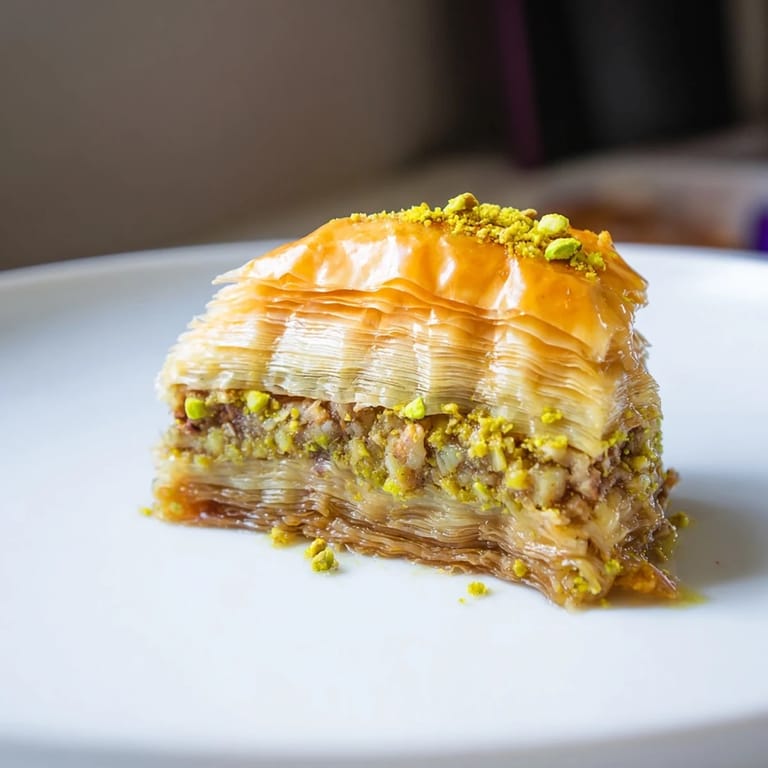
Save I discovered baklava the way most people do—biting into a piece at a Turkish café and wondering how something so delicate could be so rich. Years later, I finally attempted making it at home, expecting disaster, but instead found myself mesmerized by the ritual of layering phyllo with melted butter, listening to each sheet crackle as it hit the pan. The kitchen filled with the smell of toasted nuts and honey, and suddenly I understood why this dessert has survived centuries of tradition. What started as curiosity became an obsession with perfecting those crispy-yet-tender layers.
I made this for my neighbor who had just moved in, partly as a welcome gift and partly because I'd been bragging about finally nailing the technique. Watching her bite into a piece and close her eyes—not speaking for a full ten seconds—that's when I knew this recipe deserved a permanent place in rotation. She came back a week later asking if I could teach her, and we spent an afternoon in my kitchen watching the phyllo sheets flutter like golden tissue paper.
Ingredients
- Phyllo dough: Thaw it completely at room temperature for at least 2 hours—cold phyllo tears instantly, and there's no fixing that mid-layer.
- Unsalted butter, melted: The melting is what matters; each sheet needs a proper brushing, not a drizzle, or you'll end up with dry spots that never crisp up.
- Hazelnuts, finely chopped: Toast them lightly in a dry pan first to wake up their flavor; it's a small step that changes everything.
- Pistachios, finely chopped: The green ones are traditional and more visually stunning, though any variety works.
- Granulated sugar: This sweetens the nut mixture and helps everything bind together slightly.
- Ground cinnamon: Optional, but it's the secret warmth that keeps people guessing what they're tasting.
- Honey: Use good honey if you can; it's the final voice in this composition.
- Water and granulated sugar for syrup: This combination keeps the honey from crystallizing as it cools.
- Lemon juice: Just a teaspoon, but it prevents the syrup from being one-note sweet.
Tired of Takeout? 🥡
Get 10 meals you can make faster than delivery arrives. Seriously.
One email. No spam. Unsubscribe anytime.
Instructions
- Set the stage:
- Preheat your oven to 180°C and brush that baking pan thoroughly with melted butter, getting into all the corners. This prevents sticking and gives the bottom layers their chance to crisp.
- Build your first base:
- Place 4 phyllo sheets in the pan, brushing each one with butter as you go—this is meditative work, and rushing makes the sheets crumple. You'll know you're doing it right when each layer looks golden and slightly translucent.
- Add the first layer of nuts:
- Combine your hazelnuts, pistachios, sugar, and cinnamon in a bowl, then sprinkle one-third of this mixture over the phyllo, spreading it evenly but not pressing down. Let the nuts sit loosely so they toast rather than steam.
- Repeat the rhythm:
- Layer 4 more buttered phyllo sheets, add another third of the nut mixture, then repeat once more with the final batch of nuts. You're creating flavor pockets, not a dense cake.
- Seal it all in:
- Top with the last 4 phyllo sheets, buttering each one including the very top—this top layer is what gives you that shattering crispness everyone remembers.
- Cut with intention:
- Using a sharp knife, cut diagonal lines one way, then the other way to create diamonds, or simply cut squares—work deliberately because phyllo resists sawing motions. A clean, confident cut is what separates baklava from shredded regret.
- Bake into gold:
- Bake for 35–40 minutes until the top is deeply golden and you can hear it crackling when you move the pan. This is when you know the phyllo has given up its moisture and become magic.
- Make the syrup while it bakes:
- In a saucepan, combine water, honey, sugar, and lemon juice over medium heat, stirring until the sugar dissolves, then let it simmer for 10 minutes so it slightly thickens and the lemon flavor integrates. The warmth matters—when you pour hot syrup over hot baklava, it absorbs instead of sitting on top.
- The crucial moment:
- The second the baklava comes out of the oven, pour that warm syrup evenly over the hot pastry, allowing it to cascade into the cut lines. This is not optional, and timing is everything.
- Let patience do the work:
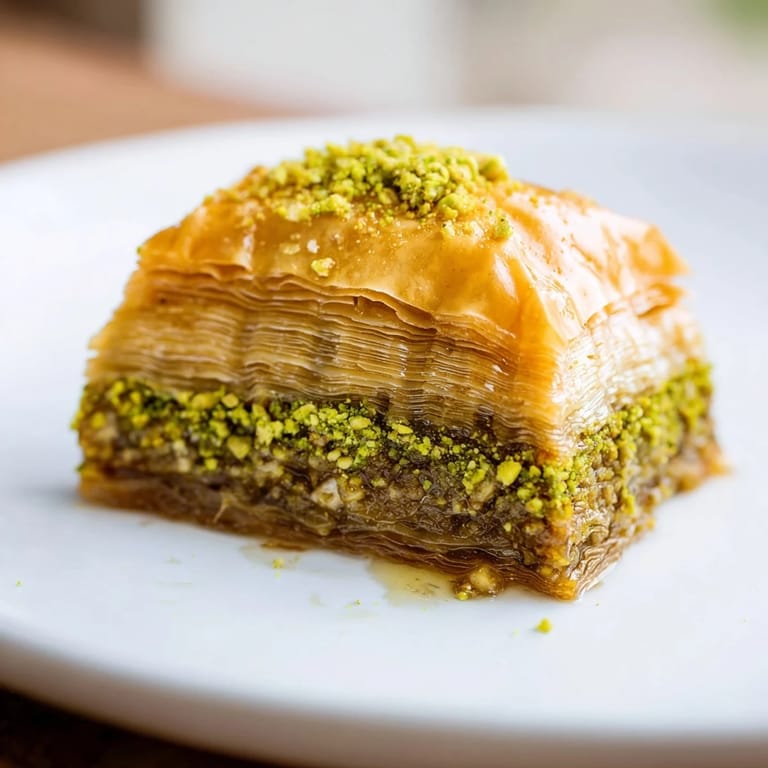
- Allow it to cool completely, undisturbed, for several hours—this is when the magic really happens and the syrup soaks deep into every layer, sweetening and softening them just enough without making them soggy.
 Save
Save There's a moment that happens every time I make baklava when someone walks into the kitchen and just stops, inhaling deeply, and asks what I'm making before they even see it. That question—asked with such anticipation—reminds me why this dish feels more like an event than just dessert. It's become the thing I make when I want to say thank you, or I'm sorry, or simply because someone deserves something beautiful.
The Phyllo Technique
Phyllo dough intimidates most home cooks, but it's actually more cooperative than you'd think if you respect its nature. The key is understanding that each sheet needs moisture to prevent drying—that's the butter's job—and warmth to crisp it up—that's the oven's job. I used to think I needed professional skill, but the truth is simpler: work gently, don't overthink, and trust the process. The paper-thin sheets transform into something substantial and golden through nothing more mysterious than heat and fat.
Building Flavor Layers
The genius of baklava is how it combines textures—crispy phyllo, toasted nuts, sweet binding syrup—but the secret is in how the nut filling is distributed. By dividing it into thirds and spacing out the layers, you avoid a dense middle and instead create little pockets of flavor throughout. I learned to toast my nuts briefly in a dry pan before chopping, which deepens their flavor without adding fat. The cinnamon isn't just flavor; it's a whisper that makes people pause and try to identify what makes this taste like comfort.
The Syrup Matters More Than You Think
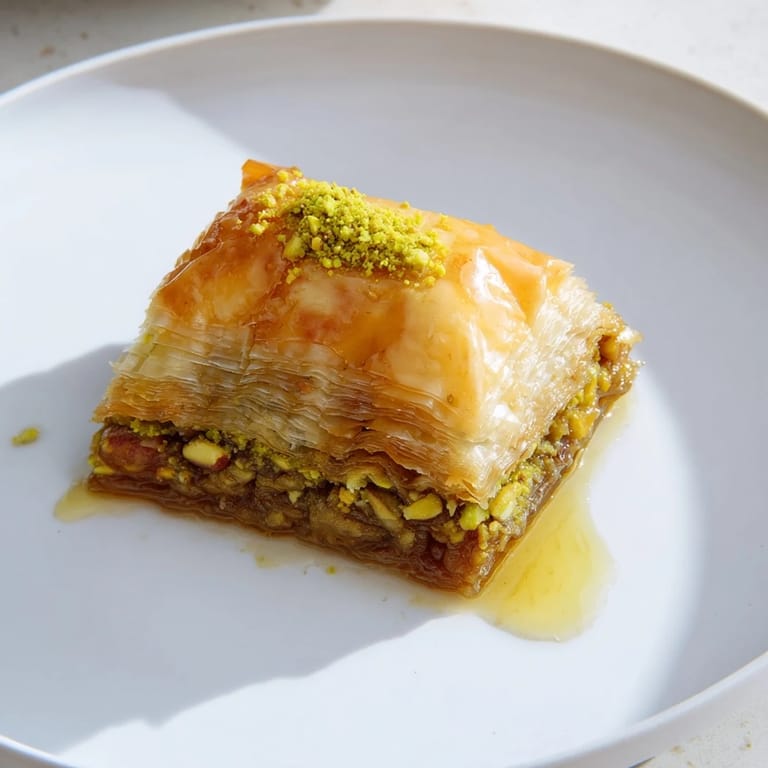
The honey syrup is where baklava goes from good to memorable, and this is where many recipes fall short by oversweetening. The combination of honey, sugar, water, and lemon juice creates something more complex than sweetness alone—it's balanced, slightly floral from the honey, and bright from the citrus. Pour it hot over hot pastry, and it seeps into every crevice, softening the phyllo just enough while the exterior stays crisp. Pour it cold, and it sits uselessly on top.
- Always pour the syrup while both it and the baklava are hot for proper absorption and the best texture.
- Let the finished baklava cool completely and undisturbed for at least 2–3 hours so the syrup fully sets and flavors meld together.
- Store in an airtight container at room temperature; it keeps for up to 5 days and somehow tastes even better on day two.
 Save
Save Baklava is the kind of dessert that reminds you why cooking matters—it's not just about the eating, but about creating a moment worth sharing. Once you master the layers, you'll find yourself making it again and again.
Recipe Questions & Answers
- → What type of nuts are used in the filling?
The filling combines finely chopped hazelnuts and pistachios, lending a rich, aromatic flavor to the layered pastry.
- → How is the honey syrup prepared?
A mixture of water, honey, sugar, and lemon juice is simmered to create a fragrant syrup that is poured hot over the baked layers to soak in.
- → Can I substitute other nuts in the filling?
Yes, walnuts can be used instead of hazelnuts to offer a different nutty flavor while maintaining the texture.
- → What is the best way to cut the pastry cleanly?
Chilling the pastry before slicing helps achieve cleaner cuts and prevents crumbling of the delicate layers.
- → How long should the layers be baked?
Bake the layered pastry for 35 to 40 minutes until the phyllo is golden and crisp throughout.
- → What tools are recommended for preparation?
Use a pastry brush for butter application, a sharp knife for cutting, mixing bowls for combining ingredients, and a saucepan for the syrup.