 Save
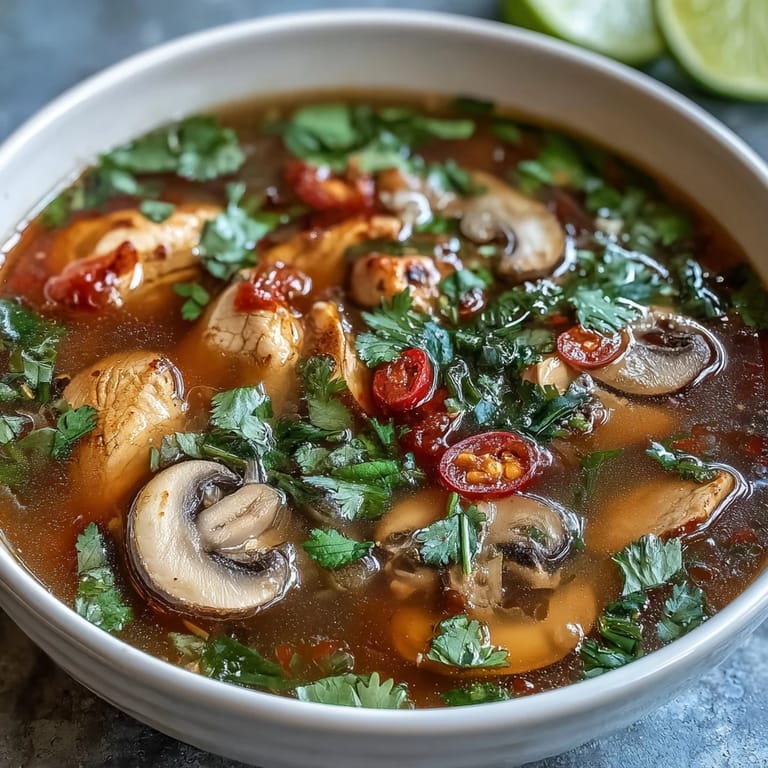
Save My first real Tom Yum came from a cramped Bangkok night market stall where an older woman stirred an enormous pot with practiced ease, steam rising into the humid night. She handed me a bowl still bubbling, and the first spoonful hit like a revelation—that electric combination of heat, tartness, and aromatic herbs that made me understand why this soup had traveled so far from Thailand's streets into kitchens everywhere. What struck me most wasn't just the flavor, but how alive it tasted, like the soup was still cooking even as it touched my lips. Since then, I've made it countless times, each batch teaching me something new about balance and timing. Now it's the soup I turn to when I want to feel that same magic at home.
I made this for a friend who swore they hated spicy food, and watching their face as they took that first sip—the way their eyes widened, then they went back for another spoonful—told me something important about this soup. It's not aggressive heat; it's nuanced, building slowly, with the lime and fish sauce softening the chiles into something complex rather than punishing. By the third bowl, they were asking for the recipe. That's when I realized Tom Yum isn't about proving anything; it's about creating a moment where flavors talk to each other on your tongue.
Ingredients
- Chicken breast or thighs: Thighs stay more tender if you're not watching the clock, but breast works fine if you slice it thin and don't let it simmer too long.
- Chicken stock: Use something flavorful here—this is your foundation, and weak stock will show immediately.
- Lemongrass: Smash it hard so those oils release; the bruising matters as much as the cutting.
- Kaffir lime leaves: These are non-negotiable if you can find them; they add a citrus note that lime juice alone cannot replicate.
- Galangal: If you can't locate it, ginger works, but galangal has a peppery brightness that ginger lacks—worth seeking out.
- Thai bird's eye chiles: These are hotter than they look; start with one and taste before adding the second.
- Mushrooms: Oyster mushrooms are traditional, but cremini or button mushrooms absorb the broth beautifully.
- Nam prik pao: This roasted chili paste carries the soup's soul; it's worth ordering online if your local store doesn't stock it.
- Fish sauce: Yes, it smells funky straight from the bottle, but trust it—it builds umami depth that makes everything sing.
- Lime juice: Fresh squeezed only; bottled juice tastes tinny and hollow in comparison.
- Fresh cilantro: Add it at the end so it keeps its bright, almost peppery flavor.
Tired of Takeout? 🥡
Get 10 meals you can make faster than delivery arrives. Seriously.
One email. No spam. Unsubscribe anytime.
Instructions
- Build your aromatic base:
- Pour the stock into your pot and bring it to a steady boil, then add the lemongrass, kaffir leaves, galangal, and smashed chiles. Watch as the broth transforms—it'll shift from pale and plain to golden and fragrant within minutes, and you'll smell it before you see the change.
- Cook the chicken through:
- Slip the sliced chicken into the simmering broth and let it poach gently for 3 to 4 minutes. You're not trying to brown it; you're coaxing it to tender. If foam rises, skim it away—it keeps the broth clear.
- Add the vegetables:
- Now the mushrooms, tomatoes, and onion go in, and the soup starts to look like the real thing. Let them soften for 3 to 4 minutes; you want them yielding but still with a whisper of texture.
- Season with intention:
- Stir in the nam prik pao, fish sauce, sugar, and salt, then let it all simmer together for 2 minutes so the flavors meld. Taste as you go—this is where the soup becomes yours, not the recipe's.
- Finish with life:
- Remove from heat and stir in the lime juice while the soup is still hot. The acidity will brighten everything at once, and you'll understand why lime is the final word in Thai soup.
- Serve while it's singing:
- Ladle into bowls while everything is still steaming, scatter cilantro and sliced chiles across the top, and set lime wedges on the side so people can adjust the tartness to their preference.
 Save
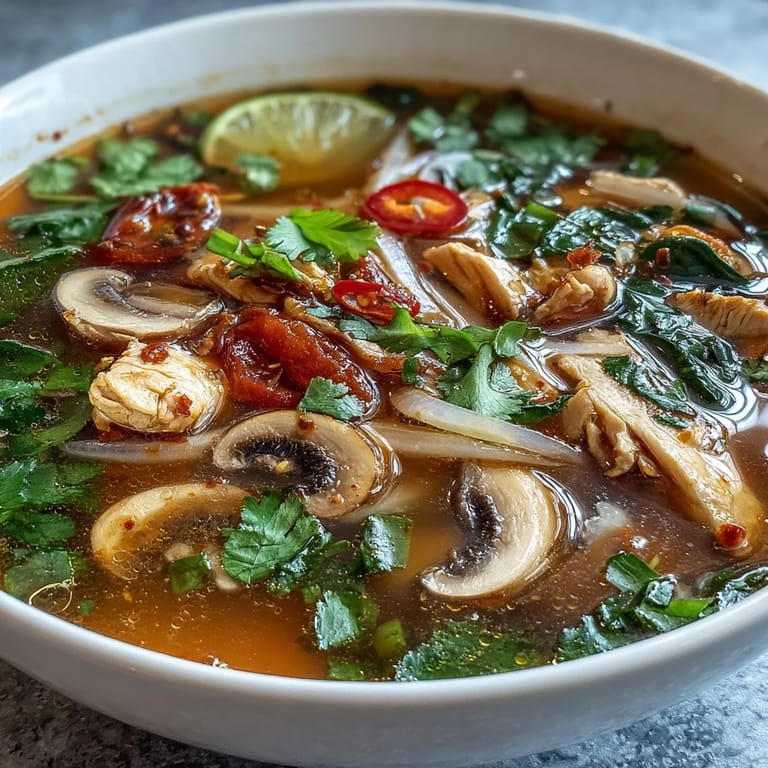
Save There's a moment when everything comes together, when you taste the broth and realize you've caught that balance between heat, sour, and savory that makes your mouth water and your heart feel lighter. That's the moment this soup stops being dinner and becomes something you'll remember—not because it's complicated, but because it's honest and alive.
The Aromatics Are Everything
This soup lives or dies by its aromatics, and I learned this the hard way by once rushing past the infusing step. Lemongrass, kaffir leaves, and galangal aren't side notes—they're the voice of the soup, and they need time to unfold in the hot broth. I now smash my lemongrass with the flat of my knife like I'm having a conversation with it, bruising it so thoroughly that the oils practically leap into the pot. The better you treat those aromatics, the more they'll give back to you, and the difference between a pale, generic soup and a properly infused one is just those few minutes of patience.
Heat and Balance
Thai chiles are honest—they don't hide or apologize—but they're not meant to be the only voice in the room. What makes Tom Yum work is how the lime juice softens the heat, how the fish sauce adds savory depth that makes you forget you're eating something spicy, and how the sugar rounds everything into something almost gentle. I've watched people who claim they can't handle heat enjoy this soup because the heat isn't an attack; it's a conversation where every element gets its turn to speak. Start conservative with the chiles and taste as you go, because you can always add more heat, but you can't take it back.
Variations and Adaptations
Once you understand the formula of Tom Yum, you can shift it in interesting directions without losing its soul. Shrimp turns it into Tom Yum Goong and cooks in under two minutes, mushroom-only makes it vegetarian (skip the fish sauce or use soy instead), and a splash of evaporated milk at the end creates Tom Yum Cream, which feels almost luxurious while staying true to the original. The aromatics are always the foundation, the lime juice is always the finale, and everything in between is up to you and what you're hungry for.
- Swap in shrimp for a lighter, faster version that still delivers full flavor.
- Try adding baby corn, bamboo shoots, or bok choy if you want more vegetables without changing the soup's character.
- A small splash of evaporated milk or coconut cream mellows the heat and adds richness if that's what you need today.
 Save
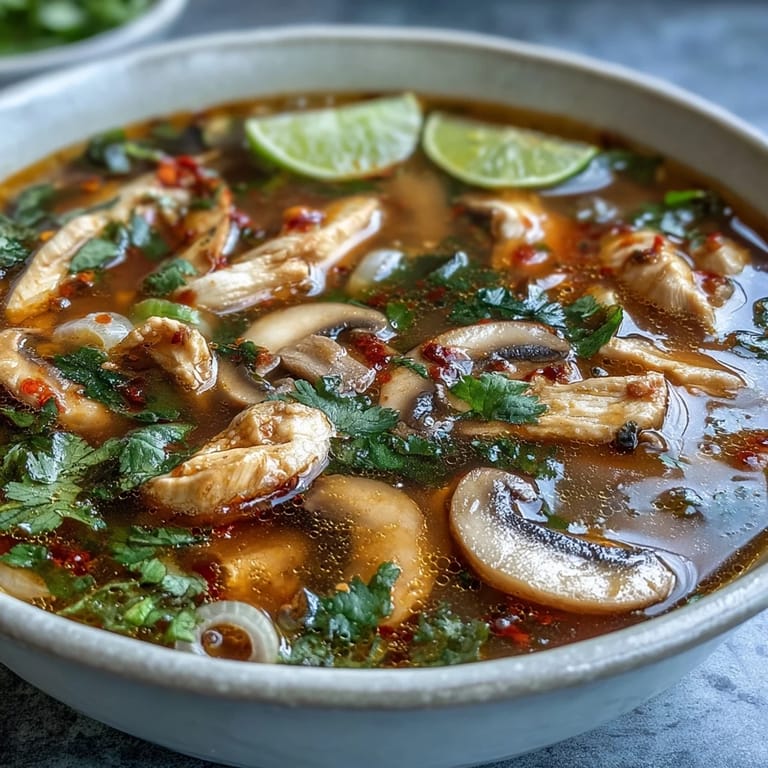
Save Tom Yum is the soup that reminds you why cooking matters—it's fast enough for a weeknight, exciting enough to feel special, and honest enough that you taste every decision you made. Make it, taste it, adjust it, and make it again until it becomes the version you reach for when you need comfort that also wakes you up.
Recipe Questions & Answers
- → What makes Tom Yum Gai different from other Thai soups?
Tom Yum Gai stands out for its distinctive spicy-sour flavor profile created by nam prik pao roasted chili paste, fresh lime juice, and aromatic herbs like lemongrass and galangal. Unlike creamy coconut-based soups, this clear broth focuses on bright, bold flavors that define Thai cuisine.
- → Can I make Tom Yum Gai less spicy?
Absolutely. Reduce the number of Thai birds eye chiles or remove them entirely after infusing the broth. You can also start with one chile and adjust to your preference. The roasted chili paste (nam prik pao) also contributes heat, so use less if needed.
- → What's the best substitute for galangal?
Fresh ginger makes an acceptable substitute for galangal, though it lacks galangal's piney, citrusy notes. Use slightly more ginger than the galangal called for in the ingredient list. Dried galangal slices can also work in a pinch, but fresh is always preferred.
- → How do I store and reheat leftovers?
Store cooled soup in an airtight container in the refrigerator for up to 3 days. Reheat gently over medium-low heat, being careful not to boil vigorously as this can toughen the chicken. You may need to add a splash of water or stock when reheating.
- → Can I use shrimp instead of chicken?
Yes, substituting shrimp transforms this into Tom Yum Goong, another classic Thai variation. Add peeled deveined shrimp during the last 2-3 minutes of cooking to prevent overcooking. The cooking time remains similar, making it an equally quick and delicious option.
- → Is nam prik pao essential for authentic flavor?
Nam prik pao provides crucial depth with its roasted chiles, garlic, shallots, and often shrimp paste. While you can make Tom Yum without it, the result will lack complexity and richness. Look for it in Asian markets or make your own batch to keep on hand.