 Save
Save My first Tom Kha moment happened on a rainy Bangkok evening when a friend's mother handed me a steaming bowl, and I watched the coconut cream swirl into fragrant broth like silk dissolving into air. The soup was so aromatic it felt like breathing in the entire recipe before the spoon even touched my lips. Years later, I finally understood why she made it look effortless—once you taste how the lemongrass and galangal dance together, you realize this isn't complicated cooking, it's just coaxing flavors to sing. That night changed how I think about Thai comfort food entirely.
I made this for my partner on a night when neither of us felt like going out, and he went quiet after the first spoonful—not in a bad way, just the kind of quiet that means the food is doing its job. We ended up making a second batch the next afternoon because we couldn't stop thinking about it. That's when I learned Tom Kha isn't just soup; it's the kind of dish that makes people look up from their bowls and smile.
Ingredients
- Boneless, skinless chicken breast or thighs (300 g): Thighs stay juicier during simmering, but breast works fine if sliced thin—either way, the broth will keep them tender and flavorful.
- Coconut cream (400 ml): This is the backbone of the soup's velvety texture; don't skip it or dilute it too much, as it creates that luxurious mouthfeel that makes the dish memorable.
- Chicken stock (500 ml): Use a good quality stock or homemade if you have it—it makes a noticeable difference in depth, though even a simple store-bought version works beautifully here.
- Lemongrass stalks (2), trimmed and bruised: Bruising the stalks releases their oils and fragrance; hit them gently with the side of your knife and watch the kitchen immediately smell like Thailand.
- Fresh galangal (4 slices) or ginger (1 tbsp): Galangal has a peppery, slightly medicinal quality that ginger can't fully replicate, but ginger is a respectful substitute when galangal isn't available.
- Kaffir lime leaves (4), torn: Tearing them slightly helps release their citrusy oils into the broth—these leaves are irreplaceable and worth seeking out at an Asian market.
- Button mushrooms (200 g), sliced: They soften beautifully in the hot broth and add an earthy counterpoint to the bright aromatics.
- Shallots (2 small), thinly sliced: Their sweetness mellows as they simmer, becoming a soft backdrop for the bolder flavors.
- Garlic (2 cloves), smashed: Smashing breaks down the cloves and lets them infuse more gently than mincing would.
- Thai bird's eye chilies (2–3), smashed: These are genuinely spicy, so start with one and adjust—smashing them distributes the heat more evenly than cutting.
- Fish sauce (2 tbsp): This is the ingredient that makes people pause and ask what that wonderful umami depth is; trust it, even though it smells intense in the bottle.
- Lime juice (1 tbsp, plus extra): Fresh lime is non-negotiable here—it brightens everything and prevents the soup from feeling flat or one-note.
- Sugar (1 tsp): A tiny amount balances the heat and acid, pulling all the flavors into harmony without making the soup sweet.
- Salt, to taste: Add gradually at the end since fish sauce already brings saltiness; taste as you go.
- Fresh cilantro and lime wedges for serving: These aren't afterthoughts—they're essential finishing touches that add freshness and let each person customize their bowl.
Tired of Takeout? 🥡
Get 10 meals you can make faster than delivery arrives. Seriously.
One email. No spam. Unsubscribe anytime.
Instructions
- Build your aromatic base:
- Pour the coconut cream and chicken stock into a large saucepan and add the bruised lemongrass, galangal slices, torn lime leaves, shallots, garlic, and chilies all at once. Turn the heat to medium and let everything come to a gentle simmer—you want to see lazy bubbles, not a rolling boil, because this is about coaxing out flavors, not rushing them.
- Let the aromatics bloom:
- Once it's simmering, step back and let it bubble quietly for 10 minutes while you slice your chicken and mushrooms. The kitchen will fill with a fragrance that smells exactly like a Thai restaurant, and that's when you know the broth is doing its work.
- Add the protein and vegetables:
- Slip the sliced chicken and mushroom pieces into the simmering broth and stir gently to separate any pieces that are sticking together. The broth should come back to a gentle simmer within a minute or two, and you'll cook it for 8–10 minutes until the chicken is cooked through (no pink inside) and the mushrooms have softened and darkened slightly.
- Remove the infusion solids:
- Fish out the lemongrass stalks, galangal pieces, and lime leaves with a spoon or slotted spoon—they've given everything they have to give. The broth will look cleaner and more elegant once they're gone, and eating around them won't be an issue.
- Season to harmony:
- Stir in the fish sauce, lime juice, and sugar, then taste a spoonful of broth on its own. The flavors should feel balanced—not too salty, not too sour, with a gentle sweetness underneath—so adjust salt and lime juice until it feels right for your palate.
- Serve with intention:
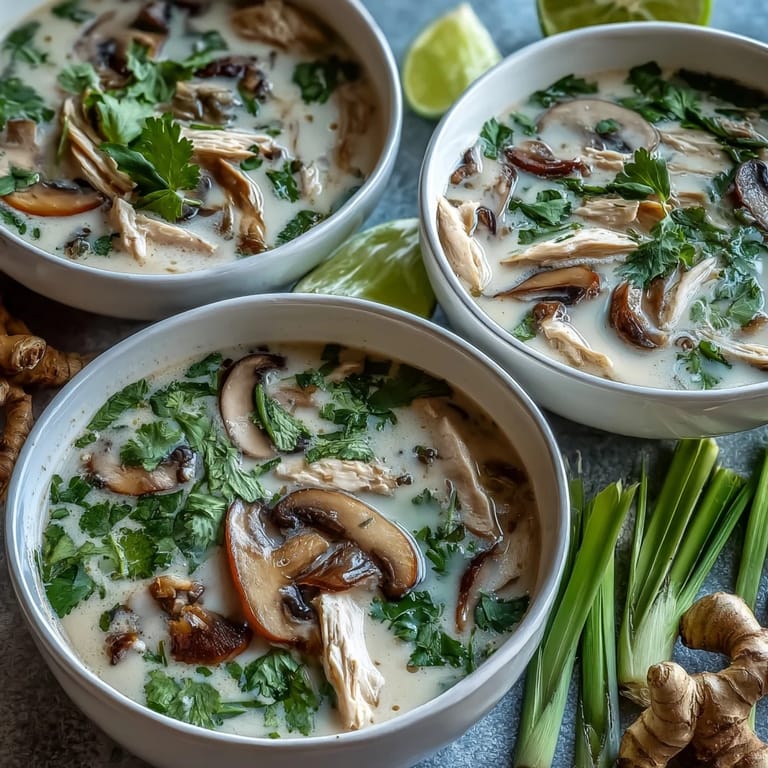
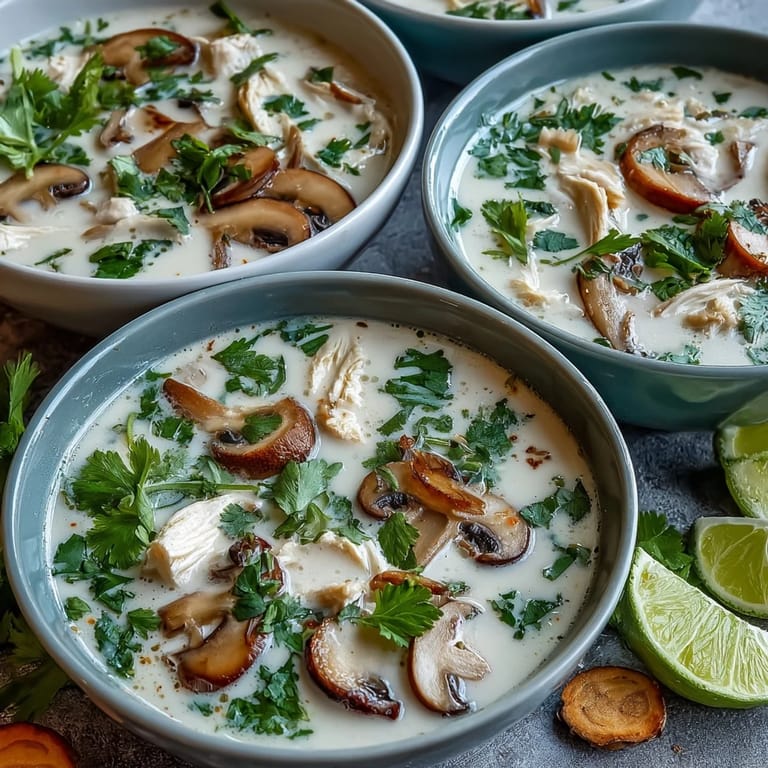
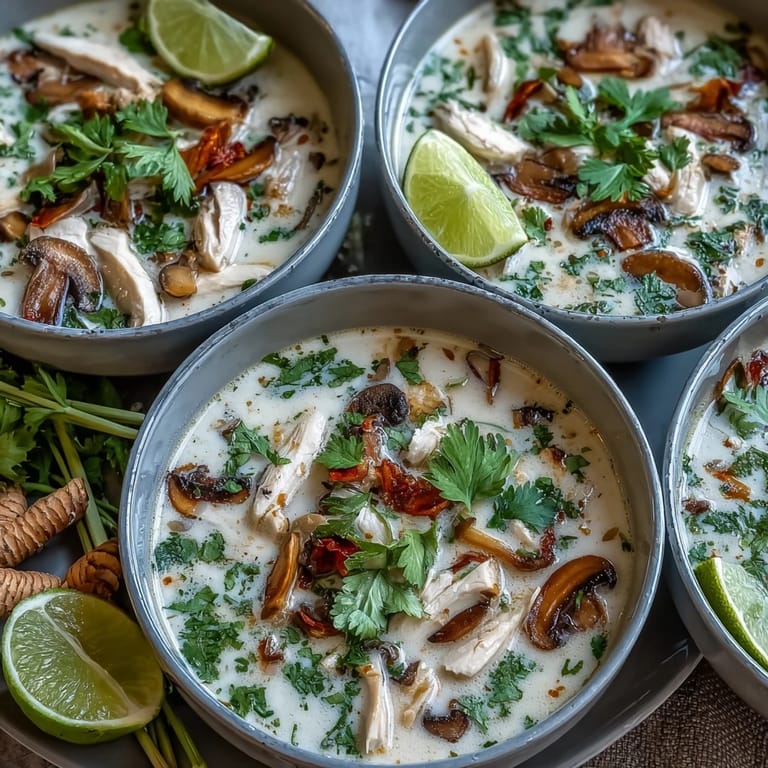
- Ladle the soup into bowls so each one gets plenty of chicken and mushrooms, then scatter cilantro generously over the top and set a lime wedge on the rim. Let people squeeze in extra lime if they want—that final bright note is personal.
 Save
Save There was a moment when my mother tasted this for the first time, and she closed her eyes like she was remembering something from her own past, even though she'd never had Tom Kha before. That's the magic of this soup—it tastes ancient and familiar even on a first meeting, like something your body already knows. Watching someone discover it is almost as good as tasting it yourself.
Why Thin Slicing Matters
The chicken cooks so quickly in the hot broth that thin slices are essential; they'll be tender and silky rather than tough and chewy. I learned this the hard way by overcooking thick chunks, thinking more surface area meant more flavor—it actually meant the exterior was done before the interior had a chance to absorb any of the aromatic broth. Thin slices also make eating the soup more graceful, which matters when you're savoring something this good.
The Coconut Question
Using coconut cream instead of milk creates a richer, more luxurious mouthfeel that makes the soup feel special without adding weight. The difference is subtle but real—cream-based versions have this silky depth that clings to your palate, while milk-based versions are lighter and more delicate. Both are valid depending on your mood, but if you want restaurant-quality richness, the cream is worth the choice.
Making It Your Own
This recipe is a foundation that welcomes customization without losing its soul. I've made it with tofu for vegetarian friends, swapped in soy sauce for fish sauce, and even added extra vegetables like snap peas or baby corn when I had them on hand. The magic stays intact as long as you respect the infusion process and keep the balance of heat, acid, and richness working together.
- If galangal isn't available, ginger works as a substitute, though the flavor will be slightly softer and less peppery.
- For extra heat, leave the chilies whole instead of smashing them, so the spiciness builds gradually instead of hitting all at once.
- Leftovers taste even better the next day after the flavors have mellowed and married together overnight in the refrigerator.
 Save
Save Tom Kha is the kind of soup that turns an ordinary evening into something worth remembering, and once you've made it once, it becomes the recipe you reach for when you want to feel like you're traveling without leaving your kitchen. Make it soon, and let the aroma fill your home.
Recipe Questions & Answers
- → Can I make Tom Kha vegetarian?
Yes, substitute chicken with firm tofu and replace fish sauce with soy sauce or a vegetarian fish sauce alternative. The rest of the ingredients remain the same for a delicious plant-based version.
- → What's the difference between Tom Kha and Tom Yum?
Tom Kha is a creamy coconut-based soup, while Tom Yum has a clear, sour broth. Both share similar aromatics like lemongrass, galangal, and lime leaves, but Tom Kha's coconut cream creates a richer, velvety texture.
- → Can I use ginger instead of galangal?
Yes, ginger works as a substitute if galangal is unavailable. Use about 1 tablespoon of fresh ginger slices to replace the 4 galangal slices. The flavor profile will be slightly different but still delicious.
- → How spicy is this soup?
The heat level depends on the number of Thai bird's eye chilies you add. With 2-3 chilies, the soup has a gentle warmth that doesn't overpower. Adjust the quantity to your preference or omit them entirely for a mild version.
- → How long does Tom Kha keep in the refrigerator?
Store cooled soup in an airtight container for up to 3 days. The flavors often deepen and improve overnight. Reheat gently on the stove, adding a splash of water or stock if the coconut cream has separated.
- → Can I freeze Tom Kha soup?
Yes, freeze for up to 2 months in freezer-safe containers. Note that coconut cream may separate slightly upon thawing—simply reheat while stirring to recombine the texture.