 Save
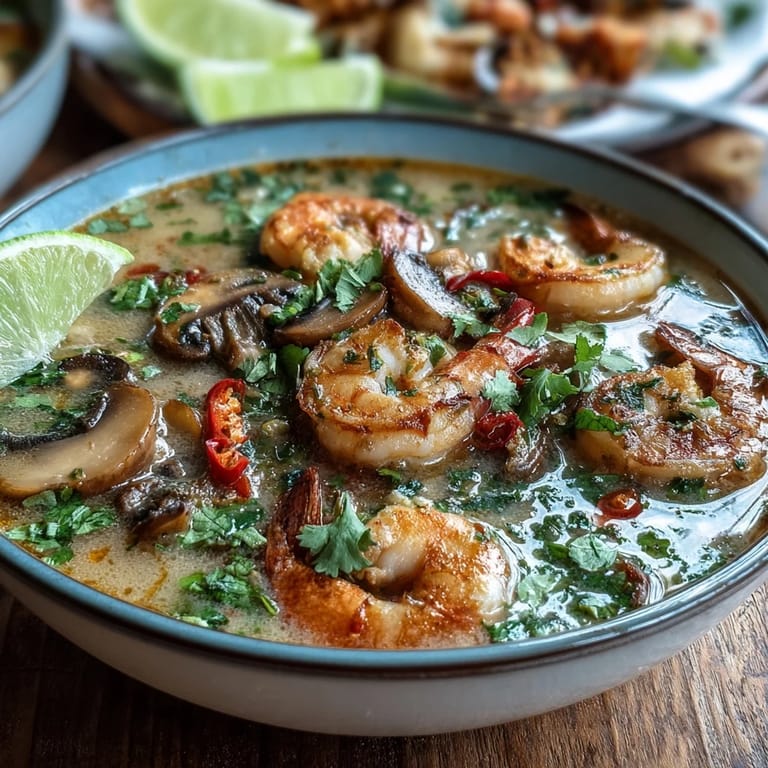
Save My neighbor brought over a container of this soup on a rainy afternoon, and the smell that escaped when I opened the lid stopped me mid-conversation. It was bright and herbal, warm and spicy all at once—nothing like the heavy cream soups I'd grown up with. One spoonful and I understood why she'd been raving about Thai cooking. The coconut milk wrapped around the shrimp so delicately, while the lime and curry kept everything alive and vibrant. I called her that evening asking for the recipe, and she laughed because she'd actually been hoping I'd ask.
I made this for my sister during her first week of a new job, and she told me later that coming home to that soup waiting was the thing that made her feel grounded. She'd had a rough day, something about office politics and feeling out of place, and she just sat at the kitchen counter with a bowl and breathed in the steam for a minute before tasting anything. By the second spoonful, she was smiling. That's when I realized this soup does something beyond nourishment—it offers comfort that feels worldly and gentle at the same time.
Ingredients
- Large raw shrimp, peeled and deveined (350 g): Fresh shrimp will cook quickly and stay tender; if using frozen, thaw completely and pat dry so they don't release excess water into the broth.
- Lemongrass stalks (2, trimmed and smashed): Smashing the stalks releases their essential oils, which is where all that citrusy, floral magic lives—don't skip this step or just chop casually.
- Kaffir lime leaves (4, torn): These add a depth that regular lime juice can't quite match; if you can't find them, you can omit without ruining the soup, but your palate will notice the difference.
- Garlic and onion (3 cloves and 1 small): These form the aromatic foundation; don't rush the initial sauté or you'll miss the moment when everything smells irresistible.
- Fresh ginger or galangal (1 thumb-sized piece, sliced): Galangal has a peppery, pine-like quality that ginger can't replicate, but either works; slice rather than mince to make it easy to remove later.
- Mushrooms, sliced (100 g): Any variety works, but cremini or shiitake add earthiness that balances the brightness of the lime and herbs.
- Thai red curry paste (2 tbsp): This is your flavor anchor; a good quality paste makes all the difference, so check the ingredients list and choose one without additives if possible.
- Coconut milk (400 ml): Full-fat coconut milk creates that silky texture; lite versions work but feel thinner and less luxurious.
- Chicken or vegetable broth (500 ml): Homemade is ideal, but quality store-bought broth saves time without sacrificing much.
- Fish sauce (2 tbsp): This might smell intense in the bottle, but it melds into the soup and deepens every flavor in a way nothing else can; trust the process.
- Lime juice (1 tbsp, plus more): Fresh-squeezed matters here—bottled lime juice tastes hollow and will disappoint you.
- Sugar (1 tsp): Just enough to round out the spice and balance the heat without making anything sweet.
- Fresh cilantro, green onions, and lime wedges for garnish: These aren't decorative—they're the final layer that makes each spoonful feel complete and bright.
Tired of Takeout? 🥡
Get 10 meals you can make faster than delivery arrives. Seriously.
One email. No spam. Unsubscribe anytime.
Instructions
- Build your aromatic base:
- Heat a splash of oil in a large pot over medium heat and add the onion, garlic, smashed lemongrass, sliced ginger or galangal, and chili. Sauté for 2-3 minutes, watching how the kitchen fills with that unmistakable Thai aroma—once it smells intoxicating and the onion is soft, you're ready to move forward.
- Wake up the curry paste:
- Stir in the red curry paste and let it cook undisturbed for about 1 minute. You'll notice the color deepening and the smell shifting to something richer and more complex.
- Create the broth:
- Pour in the coconut milk and broth, add the kaffir lime leaves if using, and bring everything to a gentle simmer. The coconut milk will swirl into the broth, creating that beautiful creamy-looking base that's actually quite light.
- Cook the vegetables:
- Once simmering, add the mushrooms and let them soften for about 5 minutes. They'll absorb the flavors and add a tender, earthy element that makes the soup feel more substantial.
- Add the shrimp:
- Add the shrimp and cook for just 2-3 minutes until they turn pink and curl slightly. Overcooked shrimp becomes rubbery, so set a timer and stay close—this is the moment that requires attention.
- Season with precision:
- Stir in the fish sauce, sugar, and lime juice, then taste. This is where cooking becomes personal; you might want more lime for brightness, more fish sauce for depth, or more sugar if the spice feels aggressive—adjust to what makes your mouth happy.
- Strain and serve:
- Using a slotted spoon, remove the lemongrass, ginger slices, and lime leaves—they've given their flavor and aren't meant to be eaten. Ladle the soup into bowls and top with cilantro, green onions, a squeeze of lime, and your attention.
 Save
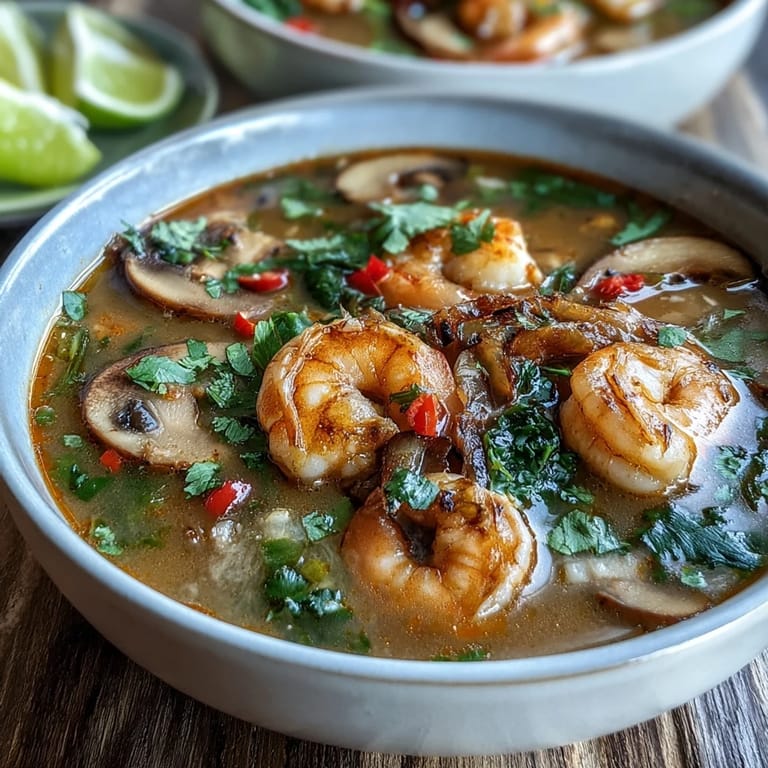
Save My colleague brought this soup to a potluck once, and people actually stopped talking mid-conversation to focus on their bowls. Someone asked if it was from a restaurant, and when she said she'd made it at home in less than an hour, the whole dynamic shifted. It became this moment where cooking felt less like a chore and more like a genuine gift you could give people.
Why This Soup Tastes Restaurant-Quality
The secret isn't in some exotic technique or rare ingredient—it's in respecting the order of operations and understanding what each component does. Thai curry paste is a bridge between Western cooking and Southeast Asian flavor; it holds spice, aromatic complexity, and umami all at once. When you toast it briefly in oil before adding liquid, you're releasing compounds that have been locked in, creating a deeper flavor foundation than if you just dumped it into cold broth. The coconut milk acts as both a creamy element and a vehicle for fat-soluble flavors, which is why it feels luxurious without being heavy. Lime juice comes at the very end not because it's an afterthought, but because it needs to stay bright and alive—adding it early would dull it with heat.
The Magic of Smashed Lemongrass
When I first made this, I made the mistake of slicing the lemongrass thinly like an onion, thinking that would maximize its flavor. The soup tasted fine but somehow generic, like it was missing the fresh, almost citrus-like quality that Thai food is known for. I called my neighbor to ask if mine tasted different, and she asked me how I'd prepared the lemongrass. When I described my method, she laughed gently and explained that bruising or smashing it—literally hitting it with the side of your knife—breaks the cell walls and releases the essential oils that make lemongrass so distinctive. The next time I made it, using smashed stalks, the difference was immediate and undeniable. The soup suddenly had this bright, aromatic quality that made you lean in closer with each spoonful.
Adapting and Personalizing
This soup is naturally flexible, which is one of its greatest strengths. If you can't find kaffir lime leaves, don't panic—the lime juice does most of the heavy lifting. If shellfish isn't your thing, swap the shrimp for silken tofu and trade fish sauce for soy sauce, and you've got something entirely vegetarian that's just as satisfying. I've added baby corn for crunch, sliced bell pepper for sweetness, and bamboo shoots for texture, and every variation felt natural and delicious. The real lesson is that once you understand the flavor balance—spicy, tangy, creamy, savory—you can move pieces around and the whole thing still works. Some nights I want it brothier, so I add more stock. Other times I want it richer, and I use the full can of coconut milk without diluting it. The soup meets you where you are.
- If you prefer less spice, reduce the curry paste by half a tablespoon and adjust upward only if needed after tasting.
- Prep all your ingredients before you start cooking; Thai soup moves quickly once the heat is on, and you won't have time to chop ginger mid-simmer.
- Leftovers keep for three days refrigerated, though the flavors are most vibrant the day you make it.
 Save
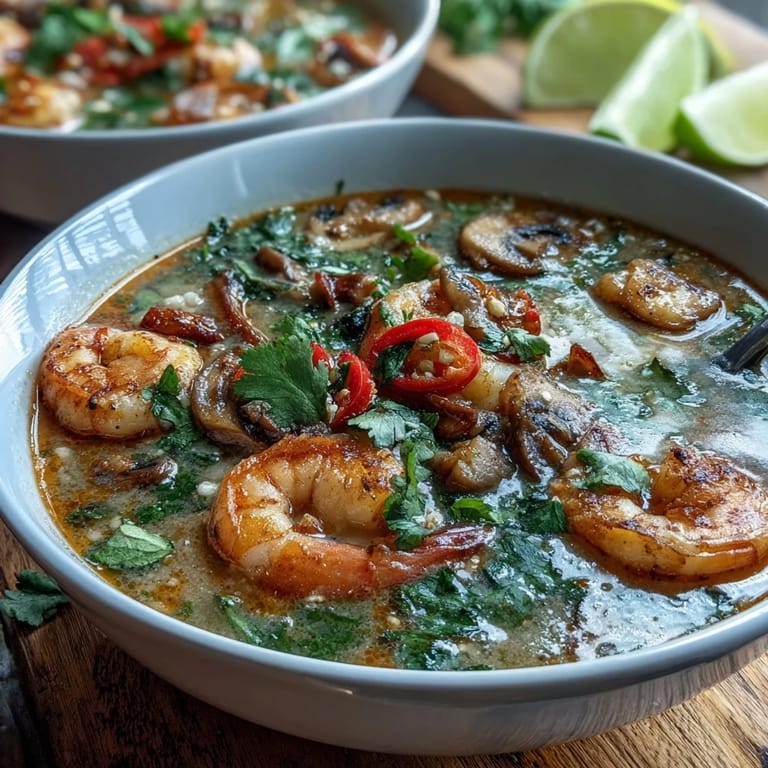
Save This soup has become one of those recipes I make not just because it tastes good, but because it feels like offering someone a moment of ease and something thoughtful. There's something about a warm bowl of coconut broth with bright herbs that makes people slow down.
Recipe Questions & Answers
- → How spicy is this soup?
The heat level is mild to medium, coming from the red curry paste and fresh chili. You can adjust the spice by reducing or omitting the sliced chili, or adding more curry paste for extra kick.
- → Can I make this vegetarian?
Absolutely. Substitute shrimp with firm tofu cubes and replace fish sauce with soy sauce or a vegetarian fish sauce alternative. The soup remains just as flavorful and satisfying.
- → What curry paste works best?
Thai red curry paste is traditional, but you can experiment with green or yellow curry pastes for different flavor profiles. Choose a quality brand with authentic ingredients for the best results.
- → How do I store leftovers?
Store in an airtight container in the refrigerator for up to 3 days. Reheat gently over medium-low heat, adding a splash of coconut milk or broth if needed to restore consistency. The shrimp may become slightly firmer upon reheating.
- → Can I freeze this soup?
Freezing is possible but may affect the texture of the coconut milk and shrimp. For best results, freeze the broth base without shrimp, then add fresh shrimp when reheating. Consume within 2 months for optimal quality.
- → What vegetables can I add?
Baby corn, bell peppers, bamboo shoots, snap peas, or bok choy make excellent additions. Add harder vegetables like carrots and bell peppers earlier in the cooking process, while delicate greens like spinach should be added at the very end.