 Save
Save This Thai curry soup landed in my kitchen on a gray Tuesday when I was craving something warm that didn't feel heavy. I'd been watching steam rise from a neighbor's pot through their window one evening and got curious about what made that particular aroma so magnetic—turns out it was this exact combination of curry paste and coconut milk doing their magic. The first time I made it, I nearly burned the curry paste because I got distracted reading the back of the coconut milk can, but that slight caramelization actually deepened everything that came after. Now it's become my go-to when someone needs comfort food that's also bright and alive on the palate.
I made this for my friend Marcus on a night when he'd had a terrible day at work, and watching him lift that first spoonful to his mouth and just close his eyes was worth every minute of prep. He asked what was in it, and when I told him about the fish sauce and ginger working together, he said it tasted like someone had distilled Thailand into a bowl. That's when I realized this soup does something beyond nourish—it transports.
Ingredients
- Boneless, skinless chicken thighs or breasts (400 g): Thighs stay more forgiving if you're not timing things perfectly, but breasts work beautifully if you don't let them simmer too long.
- Fresh ginger (1 tbsp, finely grated): The grating matters—it releases oils that mincing doesn't quite capture, and the texture dissolves into the broth rather than sitting in chunks.
- Garlic (3 cloves, minced): Fresh is non-negotiable here; jarred garlic loses the sharp clarity you need to balance the coconut.
- Shallots (2, thinly sliced): They caramelize just slightly during that first sauté and add a sweetness that raw garlic alone can't deliver.
- Red curry paste (2 tbsp): This is where everything hinges—buy quality paste and don't skimp; it's the backbone of the whole dish.
- Coconut milk (400 ml, full-fat): Full-fat is essential; lite versions make the soup taste thin and one-dimensional.
- Chicken broth (750 ml): Good broth elevates this; if yours tastes flat, the whole soup will follow suit.
- Fish sauce (1 tbsp): It smells intense on its own but dissolves into the background, adding depth you can't quite name.
- Soy sauce (1 tbsp, use gluten-free tamari if needed): This rounds out the saltiness and adds umami without overwhelming the coconut.
- Brown sugar (1 tsp): Just enough to temper the heat and tie flavors together; don't skip it.
- Lime juice (1 juice of 1 lime): Fresh lime is crucial—bottled juice tastes sharp rather than bright.
- Red bell pepper (1, thinly sliced): Slice it thin so it cooks in the last minutes and stays slightly crisp.
- Shiitake mushrooms (100 g, sliced): They add an earthy note that makes the soup feel more complex than the ingredient list suggests.
- Snow peas (100 g, trimmed): They're the textural counterpoint—tender but not mushy if you time them right.
- Fresh cilantro leaves: Torn right over the top, not mixed in, so you get those bright hits with each spoonful.
- Fresh Thai basil: If you can't find it, regular basil is an acceptable substitute, though the flavor profile shifts slightly.
- Sliced red chili (optional): For those who want the heat to linger on their tongue after each bite.
- Lime wedges: People love squeezing these in themselves—it feels like they're finishing their own bowl.
Tired of Takeout? 🥡
Get 10 meals you can make faster than delivery arrives. Seriously.
One email. No spam. Unsubscribe anytime.
Instructions
- Start the aromatics:
- Heat your pot over medium heat, add a splash of oil, then let the shallots, ginger, and garlic sit in that heat for about 2 minutes. You'll know it's right when your kitchen suddenly smells alive—that's when you know the oils are releasing.
- Bloom the curry paste:
- Stir the red curry paste into the fragrant mixture and let it cook for exactly 1 minute, stirring constantly. This brief toasting deepens the flavors and removes any raw-paste taste.
- Coat the chicken:
- Add your chicken pieces and stir everything together for 2–3 minutes until the curry paste clings to each piece. You're not cooking the chicken through yet—just building flavor layers.
- Build the broth:
- Pour in the chicken broth and coconut milk slowly, stirring as you go. This is the moment the soup transforms from a paste into something you can actually ladle.
- Season and balance:
- Add the fish sauce, soy sauce, and brown sugar, then stir well so everything dissolves evenly. Taste as you go—the balance between salty, sweet, and savory is personal.
- Simmer the vegetables:
- Add the bell pepper, mushrooms, and snow peas, then let everything bubble gently for 10–12 minutes until the chicken is cooked through and vegetables are tender but still have a slight bite. Don't rush this; the gentle simmer is what makes flavors marry together.
- Finish with brightness:
- Squeeze in your lime juice and taste again. Sometimes you'll want a touch more lime, sometimes a whisper more fish sauce—there's no shame in tweaking it to your preference.
- Serve and garnish:
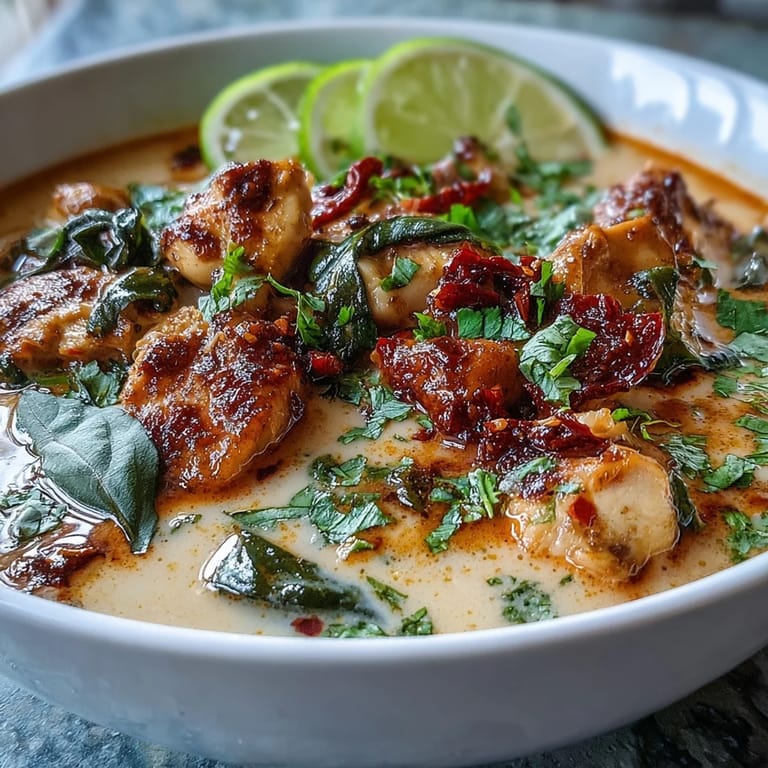
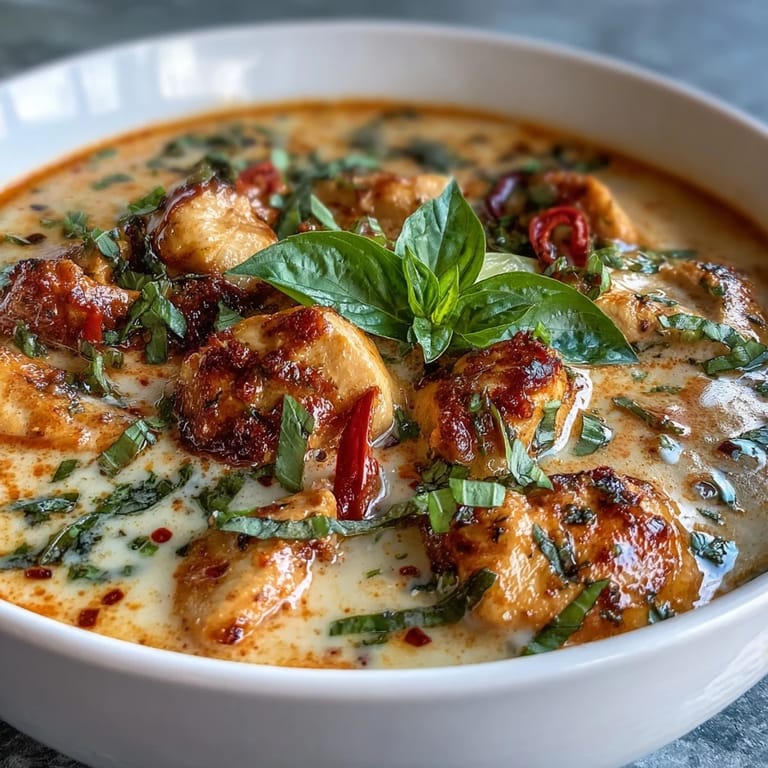
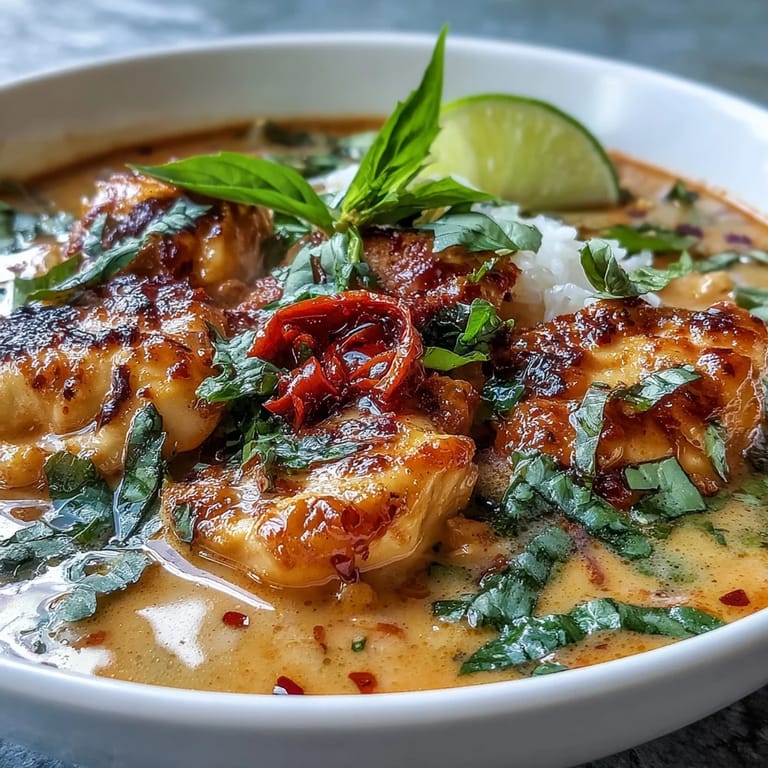
- Ladle into bowls and scatter cilantro, Thai basil, and chili over the top. Pass lime wedges on the side so people can add more brightness if they want.
 Save
Save There's a moment that happens every time I make this, right after I squeeze in the lime juice and the aroma shifts—it becomes less about individual spices and more about this unified thing that smells like a place, like memory. My daughter started asking for it by name when she was four, and now when we eat it together, she closes her eyes the same way Marcus did, and I know it's doing what good food should: making people feel held.
Variations That Work
The beauty of this soup is that it bends without breaking. Swap the chicken for shrimp and use vegetable broth instead of chicken broth, omitting the fish sauce, and you've got something pescatarian that tastes just as complete. Tofu works too if you're cooking for vegetarians—just add it gently near the end so it doesn't break apart.
If you want something heartier, cooked rice noodles stirred in at the end turn this from soup into almost a noodle dish. Some people add a handful of bok choy or baby spinach for extra green; it wilts right into the broth and doesn't change the flavor profile at all.
Heat and Spice Management
The red curry paste provides the base heat, but you control the final temperature. If you like things mild, use less paste—2 tablespoons is moderate, and 1 tablespoon is genuinely gentle. If you love heat, add a sliced Thai chili during the simmer so it infuses the whole pot, or just let people add their own sliced chili at the table so everyone gets to choose their own adventure.
I learned the hard way that adding chili at the beginning means the heat distributes evenly but can become aggressive if you're not careful. Adding it at the end gives you control and lets people adjust their own spice level, which I've found makes everyone happier.
Pairing and Storage
This soup pairs beautifully with jasmine rice on the side, or crusty bread for soaking up the coconut broth. A crisp white wine like Riesling cuts through the richness without competing with the curry. If you're keeping it simple, just serve it in bowls with lime wedges and let the soup do the talking.
Leftovers keep in the refrigerator for three days and actually taste better the next day once flavors have melded. The coconut milk may solidify slightly when cold, but it comes right back together when you reheat gently over medium heat. Freeze it for up to two months if you want to build ahead—just reheat slowly so the coconut milk doesn't break.
- Make extra and freeze in individual portions so you have comfort food ready for a difficult week.
- Reheat gently over low heat rather than blasting it with high heat; coconut milk can separate if it's shocked.
- Taste and adjust seasoning every time you reheat because flavors shift slightly as things cool and warm.
 Save
Save This soup has become my answer to so many moments—when someone needs comfort, when I'm short on time but want something that tastes like care, when the weather shifts and my body asks for something warm and alive. Make it for yourself first so you know it by heart, then make it for someone who needs it.
Recipe Questions & Answers
- → Can I make this soup spicier?
Absolutely. Increase the red curry paste to 3 tablespoons or add sliced fresh Thai chilies during cooking. You can also serve with chili oil on the table for diners to add heat individually.
- → What protein alternatives work well?
Shrimp cooks beautifully in this broth—add them during the last 3-4 minutes of simmering. Firm tofu works for vegetarian versions; use vegetable broth and substitute fish sauce with soy sauce or tamari.
- → Can I prepare this soup in advance?
The flavors actually improve overnight. Prepare up to 2 days ahead and refrigerate. Reheat gently over low heat, adding a splash of coconut milk or broth if it has thickened. Add fresh garnishes just before serving.
- → How do I store leftovers?
Cool completely and store in airtight containers for up to 3 days. The soup freezes well for up to 3 months without the vegetables. Add fresh vegetables when reheating for the best texture.
- → What can I serve alongside?
Jasmine or sticky rice soaks up the flavorful broth perfectly. Crispy spring rolls or fresh summer rolls make light appetizers. For a complete meal, add a simple cucumber salad with rice vinegar dressing.