 Save
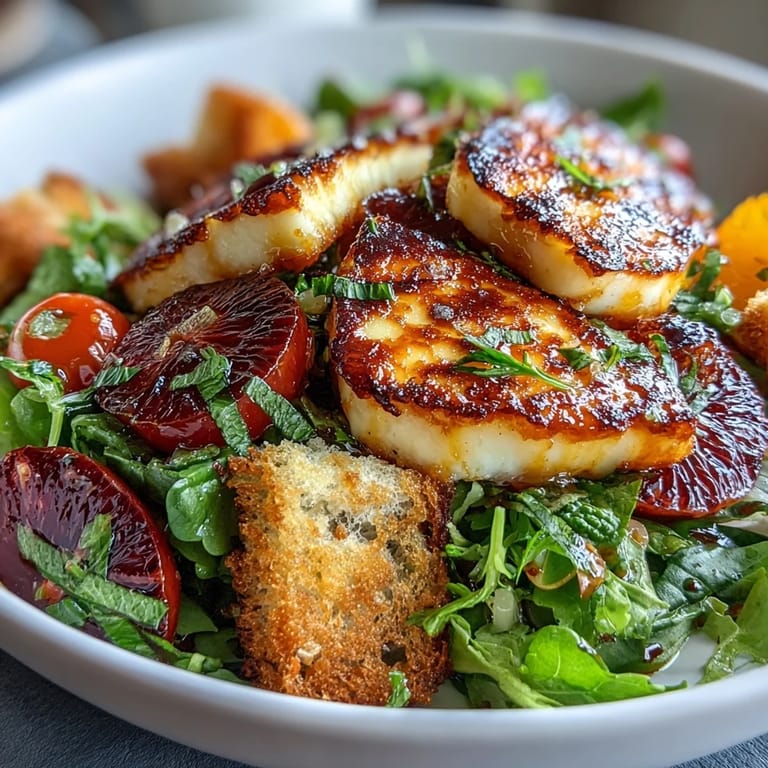
Save My first encounter with this salad happened on a sun-soaked afternoon when a friend brought blood oranges from their farmer's market haul, and I suddenly had to justify frying cheese at lunch. The combination felt unexpected at first—warm, salty halloumi against tart citrus and crispy bread—but after one bite, I understood why Levantine cooks have been layering these flavors for generations. Now I make it whenever I want to feel both nourished and a little bit celebratory.
I served this to my sister during one of those chaotic dinners where everyone arrived hungry and tired, and watching her expression shift from skepticism to pure delight was its own kind of reward. She kept asking if the croutons were homemade and whether she could steal the leftover dressing, which felt like the highest compliment a cook could receive.
Ingredients
- Halloumi cheese, sliced (200 g): This is the star—it fries instead of melting, turning golden and slightly squeaky, which sounds odd but tastes absolutely right.
- Blood oranges (2): Their deep crimson color and subtle bitterness elevate this from a regular salad into something that feels special; if they're not in season, regular oranges work but you'll miss that dramatic hue.
- Mixed salad greens (200 g): Use a combination of romaine, arugula, parsley, and mint for layers of flavor and texture that play well with everything else.
- Cucumber (1/2): Slice it fresh just before assembly so it stays crisp and cool against the warm cheese.
- Cherry tomatoes, halved (200 g): The smaller they are, the more intense their flavor; taste one before you commit, as sweetness varies by season.
- Radishes, thinly sliced (4): They add a peppery snap that's essential for keeping the salad interesting in every bite.
- Red onion, thinly sliced (1 small): The thin slices soften slightly as they sit, mellowing their sharpness without disappearing entirely.
- Sourdough bread, cubed (2 thick slices): The tanginess of sourdough matters here; it echoes the sumac and pomegranate molasses in the dressing.
- Olive oil for croutons (2 tbsp) and frying (1 tbsp): Use a neutral oil for frying the halloumi, but save your best extra virgin for the dressing.
- Extra virgin olive oil (3 tbsp): This becomes the backbone of the dressing, so choose one you'd actually drink.
- Fresh lemon juice (1 tbsp): Always squeeze this fresh; bottled changes the entire character of the salad.
- Red wine vinegar (1 tbsp): It adds a subtle woody note that complements the citrus without overpowering it.
- Ground sumac (1 tsp): This is the secret ingredient—a fruity, slightly sour spice that tastes like bottled brightness; don't skip it or substitute it.
- Pomegranate molasses (1 tsp): It's tart and deep, binding all the flavors together with an almost magical quality.
- Salt and black pepper: Taste as you build the dressing; the amounts here are a starting point, not gospel.
Tired of Takeout? 🥡
Get 10 meals you can make faster than delivery arrives. Seriously.
One email. No spam. Unsubscribe anytime.
Instructions
- Make your croutons golden:
- Preheat the oven to 180°C (350°F) and toss your sourdough cubes with olive oil and a pinch of salt until they're evenly coated. Spread them on a baking sheet and bake for 8 to 10 minutes, stirring once halfway through, until they're golden and making a hollow sound when you tap them.
- Whisk the dressing together:
- In a small bowl, combine the extra virgin olive oil, fresh lemon juice, red wine vinegar, sumac, pomegranate molasses, salt, and pepper. Taste it straight from the whisk—it should make your mouth water with its brightness.
- Fry the halloumi until it's golden:
- Heat the olive oil in a nonstick skillet over medium heat until it shimmers, then carefully lay in your halloumi slices. Fry for about 1 to 2 minutes per side until they develop a deep golden crust that's slightly squeaky when you bite it, then transfer to a plate to cool just slightly.
- Build your salad bowl:
- In a large bowl, combine your greens, cucumber, cherry tomatoes, radishes, and red onion, being gentle so you don't bruise the delicate leaves. The bowl should feel full and colorful at this stage.
- Add the warm and cool elements:
- Scatter the blood orange slices and warm halloumi across the greens, then crown everything with your crispy croutons. Add them just before dressing so they stay crunchy rather than softening into mush.
- Dress and serve immediately:
- Drizzle the dressing over everything and toss gently but thoroughly, making sure each piece of green gets a coating of that gorgeous sumac-tinged oil. Serve right away while the halloumi is still warm and the croutons are still crisp.
 Save
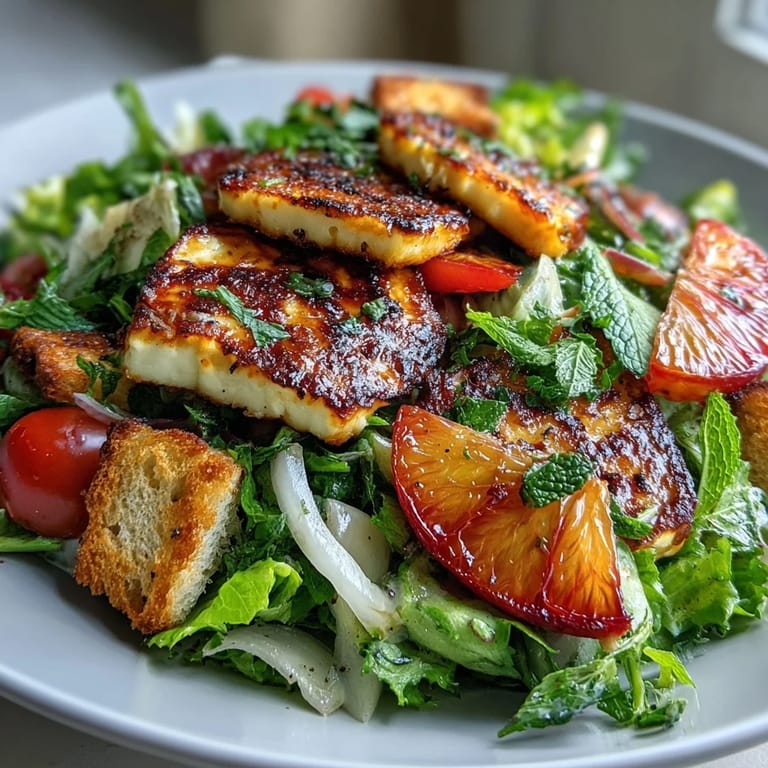
Save There's a moment when you first taste this—when the warm salt of the halloumi meets the bright acid of blood orange and the whole thing just clicks—that reminds you why cooking for yourself and others matters. It's not complicated or pretentious; it's just honest, vivid food that tastes like someone cared.
The Magic of Sumac
Sumac is the ingredient that transforms this salad from pleasant to memorable. It's a deep burgundy spice with a lemony tartness that doesn't come from citric acid but from something more complex and mysterious. I once made this salad without it, thinking the pomegranate molasses and lemon juice would compensate, and the whole thing fell flat—it tasted like a nice salad instead of a conversation starter. Once you understand how sumac works, you'll start adding it to everything.
Timing is Everything
The key to this salad working is assembling it in the right order and serving it immediately. You can prep your ingredients hours ahead—slice your vegetables, make your dressing, even fry your halloumi and let it come to room temperature—but the final toss must happen within moments of eating. This isn't laziness; it's respect for the dish and for the textures that make it sing.
Ways to Make This Your Own
Once you've made this salad once or twice, you'll start seeing it as a framework rather than a prescription. The base of fried halloumi, blood oranges, and sumac dressing feels fixed, but everything else is negotiable depending on what you find at the market or what your mood demands. I've added toasted pistachios when I wanted crunch, scattered pomegranate seeds for visual drama, and swapped the blood oranges for fresh figs when they were at their peak.
- Try adding Kalamata olives or toasted pine nuts if you want more texture and richness.
- In winter when blood oranges aren't available, regular oranges work, or branch out to grapefruit for something entirely different.
- For a vegan version, grilled tofu or store-bought vegan feta takes the place of halloumi beautifully, though you'll lose that specific squeaky texture.
 Save
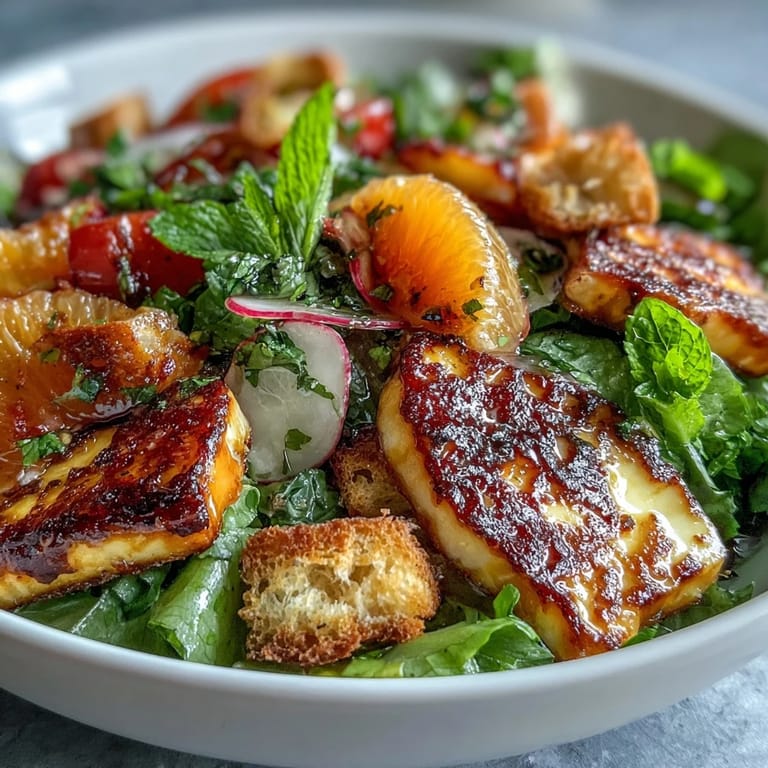
Save This salad taught me that sometimes the best meals come from letting good ingredients speak for themselves without overthinking it. Make it once, then make it your own.
Recipe Questions & Answers
- → What makes fattoush different from other salads?
Fattoush is a Levantine salad that traditionally features stale or toasted bread as a key ingredient, adding crunch and substance. Unlike lighter green salads, fattoush combines fresh vegetables with crispy croutons and often includes cheese or protein. The sumac vinaigrette with pomegranate molasses gives it a distinctive tangy, citrusy flavor that sets it apart from other Mediterranean salads.
- → Can I prepare the components ahead of time?
You can prepare several components in advance. The dressing can be made up to 3 days ahead and stored in the refrigerator. The croutons stay crispy for 2-3 days in an airtight container. The vegetables can be sliced and chilled a few hours before serving. However, fry the halloumi just before serving and assemble the dish immediately for the best contrast between warm cheese and crisp vegetables.
- → What can I substitute for halloumi?
If you need a dairy-free option, grilled tofu or vegan feta work well as substitutes. Paneer can be used instead of halloumi for a similar texture, though it's less salty. For a different flavor profile, try feta cheese—crumbled over the salad instead of fried—or grilled chicken for added protein. Each substitute will slightly alter the dish's character while maintaining its satisfying nature.
- → How do I prevent the croutons from getting soggy?
The key is serving the salad immediately after dressing it. If you need to wait, serve the dressing on the side and let guests add their own. Make sure your croutons are thoroughly cooled and completely crisp before adding them to the salad. Storing them in an airtight container with a silica packet or piece of bread helps maintain their crunch until you're ready to assemble the dish.
- → What's the best way to slice blood oranges?
Peel the oranges completely, removing all white pith for the best presentation. Slice them crosswise into thin, even rounds about 1/4 inch thick. This creates beautiful wheels that showcase their vibrant color and internal pattern. If the segments are too large, you can cut the rounds into halves or quarters. Removing any seeds before arranging them on the salad ensures a pleasant eating experience.