 Save
Save There's something magical about the first time you nail cold sesame noodles on a sweltering afternoon—the kind of day where turning on the stove feels like a betrayal of the weather gods. I was desperate for something that felt cooling and indulgent at once, and when those noodles hit the cold water and the aroma of toasted sesame oil drifted up from my mixing bowl, I knew I'd found my summer answer. What started as a weeknight experiment became the dish I now make on repeat, often preparing double batches because guests always ask for seconds.
I remember serving this to a friend who claimed they didn't like sesame noodles—they'd had a bad experience with an overly thick sauce at some takeout place—and watching their face change on the first bite. The sauce was creamy but still slippery, nutty without being heavy, and they ended up eating two bowls while we sat on my porch watching the sun dip lower. That's when I realized this wasn't just a recipe; it was a gentle reminder that sometimes what we think we don't like is just the wrong version waiting for the right one.
Ingredients
- Wheat noodles or spaghetti (350 g / 12 oz): Use whatever you have on hand—the shape matters less than the quality, so pick noodles that feel substantial when raw.
- Sesame oil (1 tbsp for noodles, plus 1 tbsp toasted for sauce): That initial toss prevents clumping and makes the difference between noodles that separate easily and ones that stick together like a mat.
- Tahini or Chinese sesame paste (4 tbsp): This is the backbone of the sauce; tahini gives a lighter taste while Chinese sesame paste is richer and darker, so choose based on your mood.
- Smooth peanut butter (2 tbsp): It adds richness and helps emulsify the sauce, making it silky rather than gritty.
- Low-sodium soy sauce (3 tbsp): Low-sodium lets you control the saltiness; regular soy sauce will make the dish one-dimensional and parched-feeling.
- Rice vinegar (2 tbsp): This brightens everything without the harshness of regular vinegar; it's the whisper that makes you ask what that flavor is.
- Honey (1 tbsp): A small amount rounds out the flavors and prevents the sauce from tasting too sharp or one-note.
- Garlic and ginger (2 cloves and 1 tbsp, grated): Fresh and finely grated means they dissolve into the sauce and flavor every bite rather than sitting as chunks.
- Chili oil (1–2 tsp, optional): If you like heat, this is gentler and more fragrant than straight cayenne.
- Cold water (3–5 tbsp): Start with less and add gradually—the sauce thickens slightly as it chills, so what feels perfect now might be too thick tomorrow.
- Cucumber, carrots, spring onions: The crunch is essential; it plays off the creamy sauce and keeps every bite interesting.
- Sesame seeds and cilantro: These feel like finishing touches but they're actually what make the dish feel intentional and special.
Tired of Takeout? 🥡
Get 10 meals you can make faster than delivery arrives. Seriously.
One email. No spam. Unsubscribe anytime.
Instructions
- Cook and cool the noodles:
- Bring a pot of salted water to a rolling boil and add noodles, stirring occasionally so they don't clump. When they're tender but still have a slight firmness (usually a minute or two before the package says), drain and run them under cold water—really cold, not just cool—until they stop steaming. This stops the cooking and sets the texture perfectly.
- Toss with sesame oil:
- While the noodles are still slightly damp, toss them with that tablespoon of sesame oil using your hands or two forks. This is the insurance policy against them turning into one solid mass.
- Build the sauce:
- In a separate bowl, whisk the tahini and peanut butter together first—they're thick and stubborn, so give them a moment to loosen slightly before adding the soy sauce, rice vinegar, honey, toasted sesame oil, grated garlic, and ginger. The whisking should feel smooth and deliberate, not rushed.
- Thin it to the right consistency:
- Add cold water one tablespoon at a time, whisking between each addition, until the sauce coats the back of a spoon but still flows slowly. It should look creamy and almost luxurious, never thick like peanut butter straight from the jar.
- Combine everything:
- Put the cooled noodles in your largest mixing bowl and pour the sauce over them, then toss with purpose—using your hands works best, turning and folding until every strand glistens. Don't be shy about getting in there; the sauce needs to coat everything evenly.
- Dress and serve:
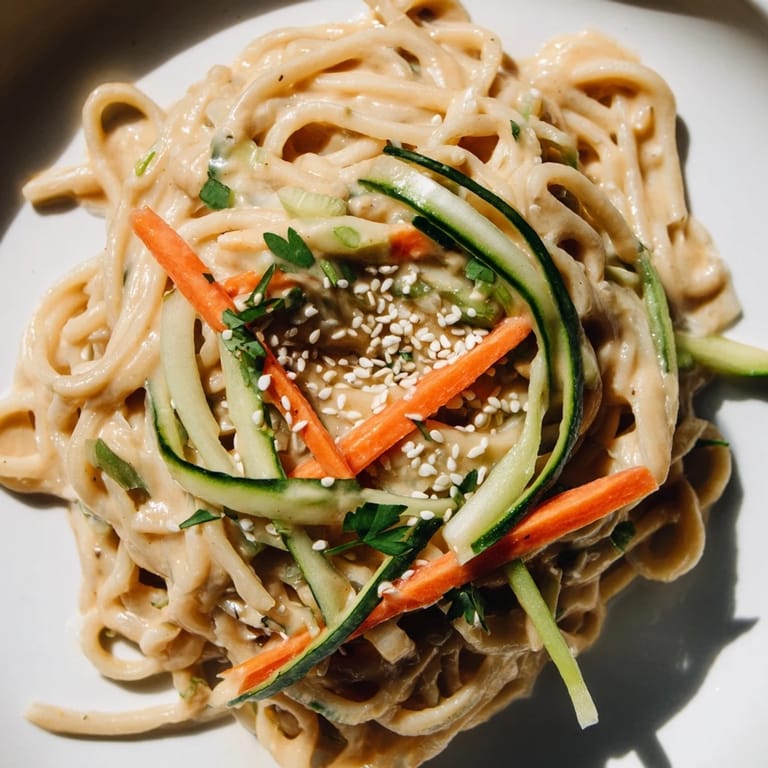
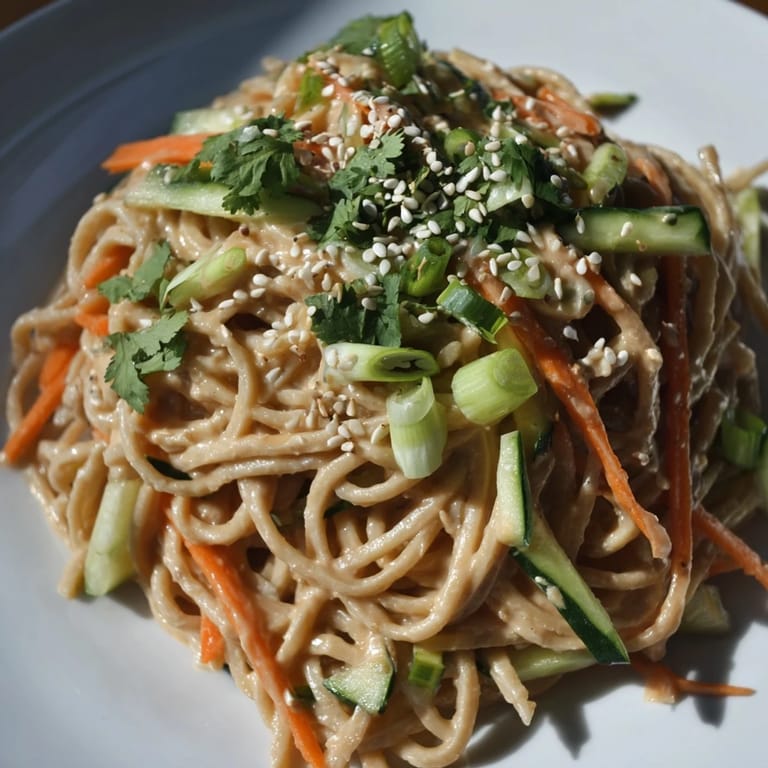
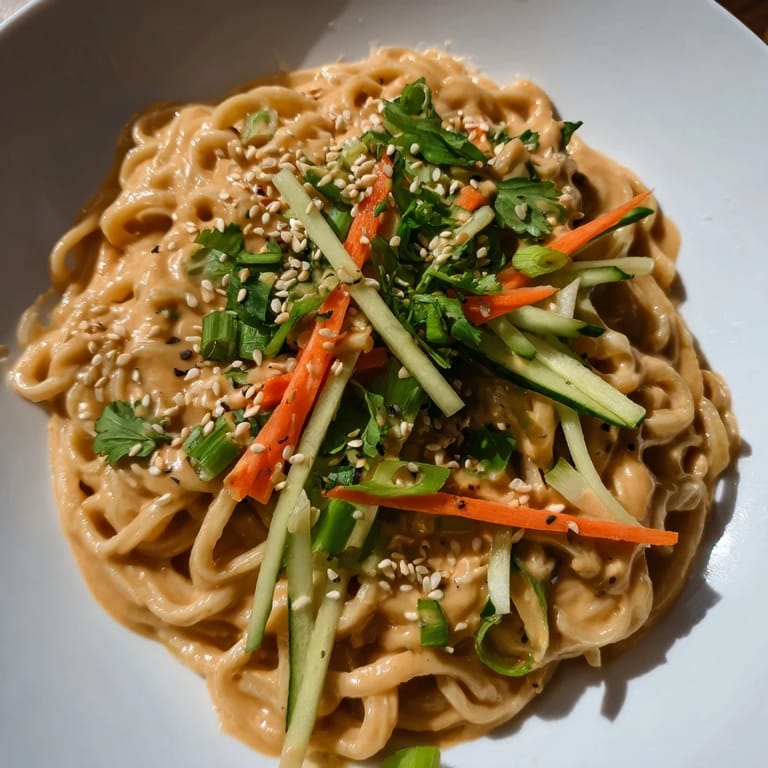
- Divide noodles into bowls and crown each portion with the julienned vegetables, spring onions, sesame seeds, and cilantro arranged however makes you happy. A squeeze of lime right before eating lifts everything and makes it taste brighter.
 Save
Save There's a quiet satisfaction in pulling a bowl of these noodles from the fridge on a day when the kitchen feels too hot to use, knowing you created something that tastes like you spent hours when you actually spent twenty minutes. That's when food stops being fuel and becomes a small act of self-care.
Why This Sauce Is Different
Most sesame noodle sauces I've tried are either gummy or aggressively peanutty, but this one finds the middle ground by balancing tahini (which is more delicate) with peanut butter (which adds depth) and cutting through both with rice vinegar and honey. The toasted sesame oil comes at the end so it doesn't lose its fragrance, and the ginger isn't just a background whisper—it's present enough to make you notice. When you taste it, you should think "oh, that's what makes this feel special" rather than "this tastes like what I've had before."
Make-Ahead Magic
One of my favorite things about this recipe is how forgiving it is with time. You can cook the noodles and chop the vegetables the night before, storing them separately so the noodles don't absorb moisture, and the sauce can sit in the fridge for up to three days—actually, it tastes better the next day because the flavors deepen and marry. On a busy morning, you're just tossing and assembling, which means you can feed people something that tastes like an effort without any actual stress.
Serving and Pairing Ideas
These noodles are perfect on their own, but if you want to make them a more complete meal, add grilled chicken (which picks up a lovely char), crispy tofu (the contrast with the creamy sauce is divine), or even cooked shrimp for something a bit more elegant. For drinks, cold white wine or iced green tea cuts through the richness without competing with the flavors. If you're serving to guests, you can set up a little topping bar and let people customize their bowls—it makes them feel involved and turns dinner into something more interactive.
- A squeeze of fresh lime is crucial; it's not optional.
- If you're making this for tomorrow, keep the toppings separate and add them right before eating so they stay crisp.
- Leftovers actually taste better the next day, so don't hesitate to make extra.
 Save
Save This dish has a way of becoming a regular in your rotation once you make it the first time, especially during those months when heat and humidity make you think twice before entering the kitchen. It's the kind of recipe that reminds you that simple food, made thoughtfully, is often the most memorable.
Recipe Questions & Answers
- → What type of noodles work best?
Wheat noodles or spaghetti are ideal for their texture and ability to absorb the sauce well. For gluten-free, substitute with rice or shirataki noodles.
- → How can I adjust the sauce consistency?
Gradually add cold water while whisking to reach a creamy and pourable texture that coats the noodles evenly.
- → Can the dish be served warm?
While designed to be chilled, serving slightly warm is possible, though the refreshing quality diminishes.
- → What toppings enhance the flavor and texture?
Julienned cucumber, carrots, spring onions, toasted sesame seeds, fresh cilantro, and crushed peanuts provide crunch and aroma.
- → Are there any suggested protein additions?
Incorporate shredded cooked chicken, tofu, or shrimp for added protein and variety.