 Save
Save There's a particular kind of magic that happens when you commit to caramelizing onions for nearly an hour. My kitchen filled with this honeyed sweetness that made me forget I was supposed to be doing three other things, and suddenly it felt like the only recipe in the world that mattered. A friend who'd lived in Lyon for a year swore by her bistro's version, and after tasting it, I understood why French Onion Soup earned its place as a winter staple in France. The first time I made it properly, I stopped fighting the long cooking time and just leaned into it, stirring and breathing in the smell of caramelization. That single shift in mindset changed everything about how I approached this soup.
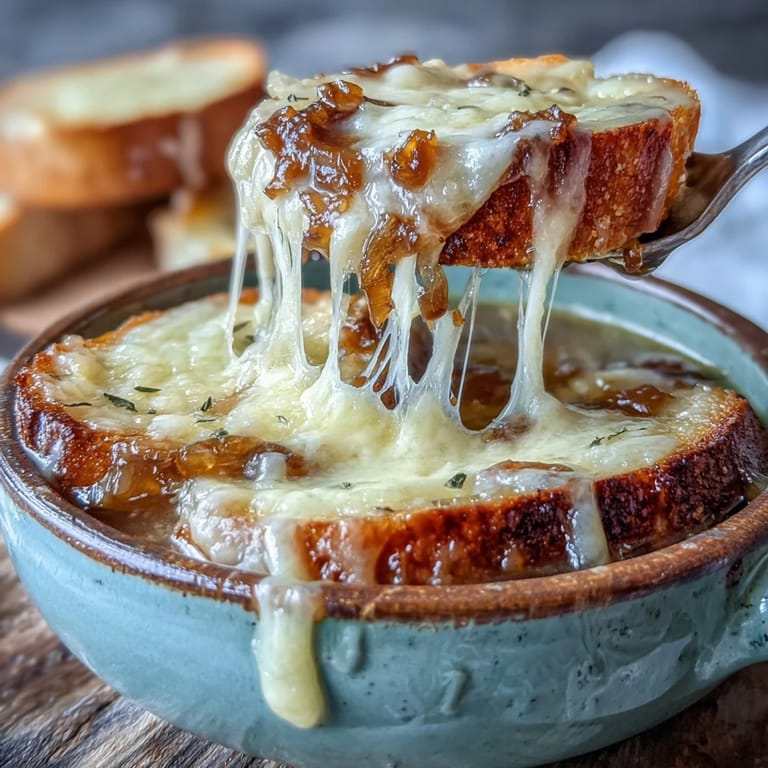
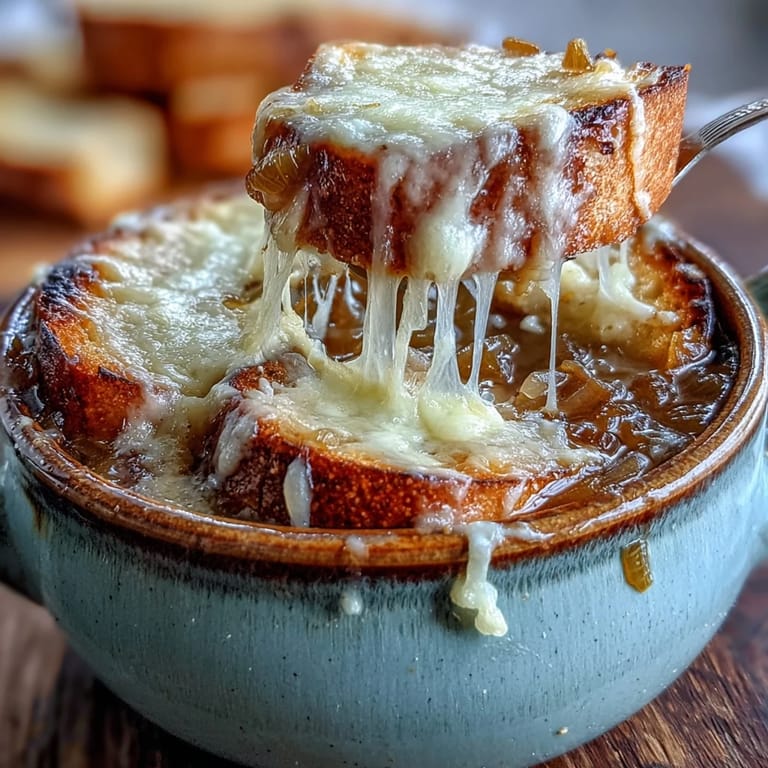
I made this for my partner during a particularly gray February when neither of us wanted to leave the house, and watching his face when he tasted that first spoonful made the whole long caramelization worth it. The cheese pulling in golden strings as he lifted the spoon, the bread soaked through with broth and butter, the steam rising up—it became one of those meals that felt like more than just dinner. Simple things done with care have a way of becoming memory.
Ingredients
- Yellow onions, thinly sliced: Use 6 large ones and don't rush the slicing, as consistency helps them cook evenly; thin slices also give you more surface area for caramelization.
- Unsalted butter and olive oil: The butter adds richness while the oil prevents it from burning during the long cooking, and together they create a better browning environment than either alone.
- Beef broth: Quality matters here because this soup's depth depends on your broth; I learned the hard way that boxed broth makes a noticeable difference, so splurge if you can.
- Dry white wine: This is optional but not really—it adds brightness and helps lift the soup from one note to complex, plus the alcohol cooks off.
- Garlic, sugar, salt, and pepper: The sugar isn't sweetness but amplifies savory notes through caramelization, while garlic added at the right moment blooms without overpowering.
- Fresh thyme and bay leaf: These build a subtle herbal backbone; don't skip them or substitute with dried herbs for thyme unless necessary, as fresh tastes brighter.
- Crusty French bread and Gruyère cheese: Crusty bread holds up to the hot broth without dissolving immediately, and Gruyère has a nuttiness that complements caramelized onions in ways other cheeses simply don't.
Tired of Takeout? 🥡
Get 10 meals you can make faster than delivery arrives. Seriously.
One email. No spam. Unsubscribe anytime.
Instructions
- Heat your pot and begin with butter and oil:
- Use a large heavy-bottomed pot—this prevents burning and distributes heat evenly—and melt the butter with olive oil over medium heat until it's fragrant and foamy. Add your sliced onions and stir them gently, letting them get acquainted with the heat before you leave them alone.
- Soften the onions gently:
- Stir occasionally for about 15 minutes until they've collapsed and turned translucent, which tells you the water inside them is cooking out. This is the groundwork phase, and rushing it changes everything about the final soup.
- Commit to deep caramelization:
- Sprinkle the onions with sugar and salt, then stir frequently as they transform from pale to golden to deep amber over 30–40 minutes. You'll notice the color creeping along the bottom of the pot; that's caramelization happening, and you want to scrape it gently and fold it back into the onions so it coats everything evenly.
- Add garlic and build flavor:
- Once the onions are deeply golden and smell like nothing but sweetness, add your minced garlic and let it toast for just one minute—any longer and it turns bitter. You're looking for that moment when raw sharpness softens into something mellow.
- Deglaze with wine:
- Pour in the white wine if you're using it, and use your wooden spoon to scrape up all those browned bits stuck to the bottom—that's where the flavor lives. Let it simmer for a couple of minutes so the alcohol cooks off and the wine becomes part of the base.
- Build the soup with broth:
- Add your beef broth, thyme sprigs, bay leaf, and black pepper, then bring everything to a boil before reducing to a gentle simmer for 30 minutes. This is when the kitchen stops smelling like caramelized onions and starts smelling like actual soup, complex and inviting.
- Toast your bread:
- Preheat your broiler and toast the French bread slices until they're golden on both sides, which should take just a few minutes since you're using direct heat. Set them aside on a clean plate and resist the urge to eat them immediately.
- Assemble and finish under the broiler:
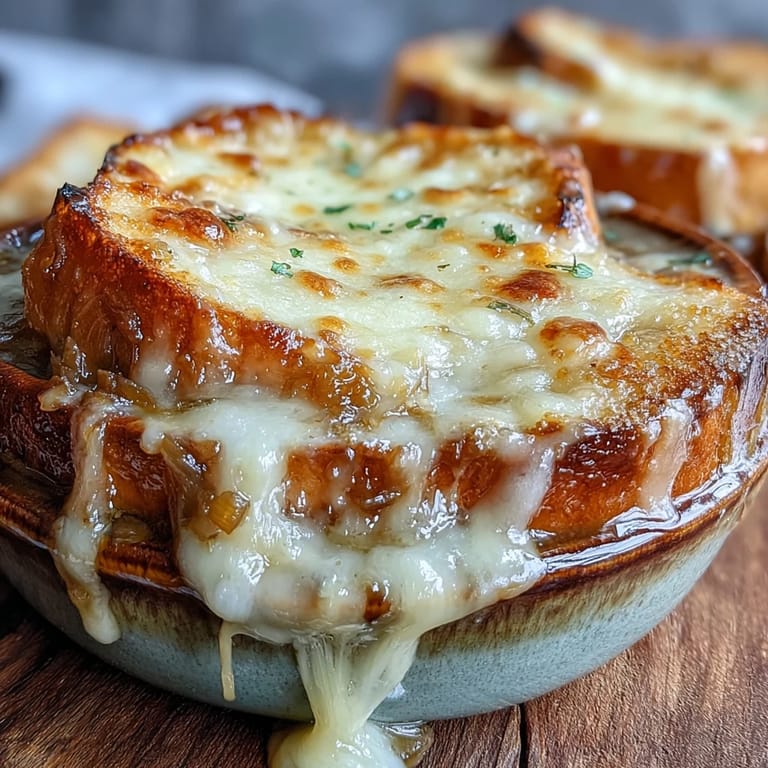
- Ladle your hot soup into oven-safe bowls, top each with a slice of toasted bread, then pile on the grated Gruyère generously—you want it to actually ooze when it melts. Place the bowls under the broiler for 2–3 minutes until the cheese bubbles at the edges and turns a light golden brown, watching carefully so nothing burns.
 Save
Save There's something about serving French Onion Soup in oven-safe bowls that transforms it from dinner into an experience, maybe because you're finishing it right in front of people and there's that moment of theatrical anticipation. I realized after making it a handful of times that this soup isn't just about feeding hunger—it's about slowing down and honoring the time it took to get there.
The Caramelization Truth
The caramelization phase is genuinely the entire foundation of this soup, and I learned this the hard way by trying to skip it once or pretend 20 minutes of cooking was enough. When you take the full 30–40 minutes to let those onions turn golden and then deep amber, something chemical and magical happens—the natural sugars concentrate and create a depth that no amount of beef broth can fake. The Maillard reaction isn't just cooking science; it's why this soup tastes like an actual Parisian bistro and not just onion in broth.
Wine and Deglazing Matter More Than You'd Think
I once made this without the wine because I thought it was optional and just an extra ingredient to buy, and the soup tasted flat in a way I couldn't quite explain. The white wine isn't there to make it taste boozy—it's there to add acidity and brightness that cuts through the richness of caramelized onions and beef broth, creating balance. When you deglaze the pot with it, you're also lifting all those flavorful browned bits from the bottom, which means they don't get wasted sitting there burnt.
Cheese and Toasted Bread Elevate Everything
The final assembly under the broiler is where French Onion Soup stops being a peasant dish and becomes something special, and this is where you shouldn't compromise on cheese quality. Gruyère melts smoothly and adds a subtle nuttiness that cheap cheddar just can't replicate, and when it bubbles under the broiler it creates this gorgeous golden crust that's crispy outside and creamy inside. The toasted bread is equally important because it acts as a vehicle for the soup and cheese, providing texture and preventing everything from just being a bowl of liquid.
- Toast your bread slices thick enough (about an inch) that they hold their structure through the soup without turning into mush.
- Don't be shy with the Gruyère—a generous handful per bowl means every spoonful has cheese in it, which is absolutely the point.
- Watch the broiler carefully during the final melting step since cheese can go from golden to burnt in seconds, and burnt cheese tastes bitter and ruins everything you've worked for.
 Save
Save French Onion Soup asks very little of you except patience and attention, and it rewards both with something that tastes like it took all day. This is the kind of recipe that makes you understand why people cook, beyond just needing to eat.
Recipe Questions & Answers
- → How long does it take to caramelize onions properly?
Proper caramelization takes 30-40 minutes of cooking over medium heat. The onions should turn deep golden brown and develop a rich, sweet flavor. Stir frequently to prevent burning and ensure even browning.
- → Can I make French onion soup vegetarian?
Absolutely. Substitute vegetable broth for the beef broth. The soup will still be delicious thanks to the deep flavor from caramelized onions, garlic, and herbs.
- → What type of cheese works best for topping?
Gruyère is the traditional choice for its excellent melting properties and nutty flavor. Emmental or Swiss cheese make good substitutes if Gruyère isn't available.
- → Why use both butter and olive oil?
Butter provides rich flavor while olive oil prevents the butter from burning during the long cooking time. This combination ensures proper caramelization without scorching.
- → Can I freeze this soup?
The soup base freezes beautifully for up to 3 months. Freeze without the bread and cheese topping. When ready to serve, thaw, reheat, and add fresh toppings before broiling.
- → What wine works best in this soup?
A dry white wine like Sauvignon Blanc or Pinot Grigio works well. The wine adds acidity and depth, helping to deglaze the pot and incorporate the browned bits from caramelization.