 Save
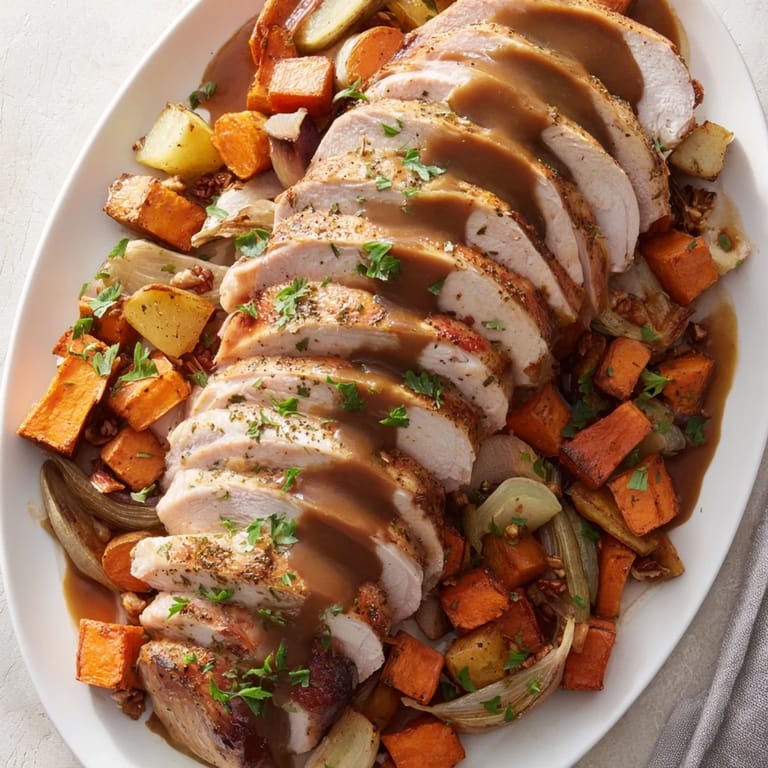
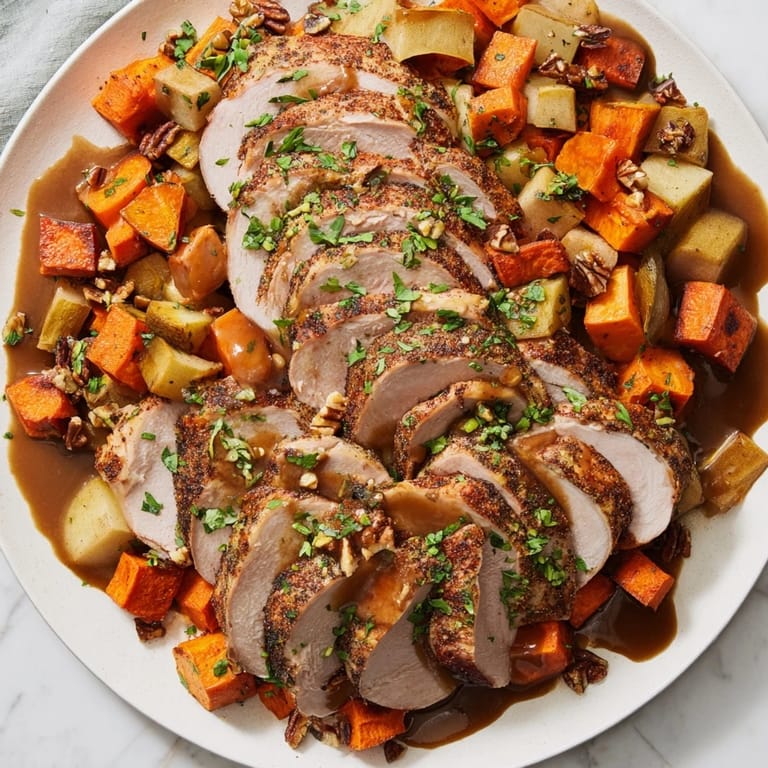
Save I still remember the year I decided to break away from the traditional Thanksgiving centerpiece and create something that told a story on the plate. Chains of the Mayflower came to life in my kitchen as I thought about the harvest season and those early journeys that connected people through shared meals. That first time I arranged the turkey and root vegetables in overlapping chains across a large platter, my family went quiet for a moment before someone said, 'It's beautiful.' That's when I knew this dish had become more than just dinner.
I made this for my extended family during our first Thanksgiving in a new home, and somehow the act of carefully arranging each piece of turkey and vegetable became a meditation. My daughter helped me layer the chains, and we talked about journeys and gratitude while the gravy simmered on the stove. That platter became a conversation starter that night in a way a traditional turkey never had.
Ingredients
- Boneless turkey breast, skin on: One and a half kilos gives you that beautiful golden skin and tender meat without the fuss of carving a whole bird. I learned the hard way that skin-on keeps everything juicier
- Olive oil: Use good quality olive oil for rubbing the turkey and vegetables. It coats beautifully and helps everything develop that gorgeous caramelized exterior
- Dried thyme and sage: These are your flavor anchors. Fresh herbs are wonderful, but dried versions concentrate the earthiness that makes this dish feel like autumn on a plate
- Carrots, parsnips, and sweet potatoes: The foundation of your chains. I cut them into one-inch pieces so they roast evenly and look intentional when arranged
- Celery root: This is the secret weapon that most people overlook. It adds a subtle minerality and when roasted becomes nutty and slightly sweet
- Smoked paprika and cumin: Together these create a warmth that makes people pause and wonder what makes this taste so different from regular roasted vegetables
- Chicken or turkey stock: The foundation of your gravy. I always use homemade if I have it, but good quality store-bought works perfectly
- Cornstarch: Your gravy's best friend. It creates a silky texture without any flour taste
Tired of Takeout? 🥡
Get 10 meals you can make faster than delivery arrives. Seriously.
One email. No spam. Unsubscribe anytime.
Instructions
- Preparing your oven and seasoning the turkey:
- Start by preheating your oven to 200°C. While it's warming, pat your turkey breast dry with paper towels. This step matters more than you might think. Rub it generously with olive oil, letting your hands warm the spices as you work them into the skin. The thyme and sage should coat evenly, creating a fragrant crust that will turn golden as it roasts.
- Roasting the turkey to golden perfection:
- Place your turkey breast skin-side up in a roasting pan. You'll roast it for about one hour and fifteen minutes, watching for that moment when the skin deepens to a rich mahogany brown. Use a meat thermometer to check that the internal temperature reaches 74°C, then cover it loosely with foil and let it rest for fifteen minutes before slicing. This rest is crucial—it keeps the juices from running all over your platter.
- Building flavor in your root vegetables:
- While the turkey roasts, toss your prepared vegetables with olive oil and those wonderful spices. The smoked paprika will make the vegetables glisten like jewels. Spread them on a baking sheet and slide them into the oven alongside the turkey about thirty minutes after it starts. You want them golden and fork-tender, which takes forty to forty-five minutes. I stir them halfway through to ensure even browning on all sides.
- Creating silky gravy:
- In a small saucepan over medium heat, melt your butter until it foams slightly. Whisk in the cornstarch gently, watching as it becomes smooth and paste-like. This is where patience matters—slowly pour in your stock while whisking constantly, which prevents lumps from forming. Add the soy sauce for depth, and simmer for five to seven minutes until the gravy thickens enough to coat the back of a spoon. Taste and adjust the seasoning with salt and pepper.
- Arranging your chains:
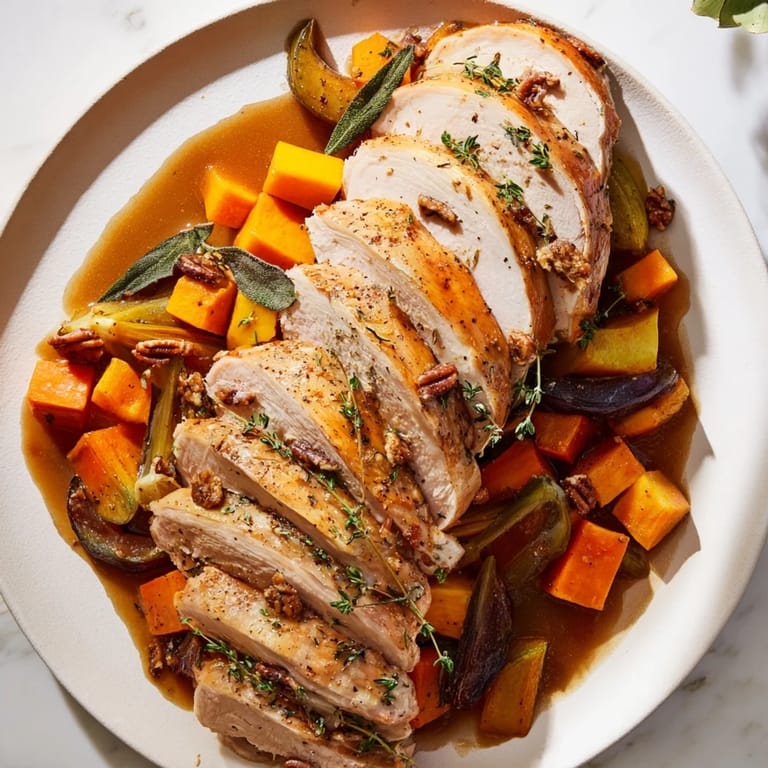
- This is the creative part that makes the dish special. On a large platter, arrange your sliced turkey and roasted vegetables in overlapping rows or rings, creating that chain-like pattern that inspired the name. Think of it as building links, each piece supporting the next. Drizzle your warm gravy across the arrangement so it pools slightly. Finish with fresh parsley scattered across and toasted pecans sprinkled throughout if you're using them.
 Save
Save The most meaningful moment with this dish came when my grandmother, who rarely ate much anymore, took a second helping. She traced her finger along the chain pattern and said it reminded her of every Thanksgiving table she'd ever sat at. That's when I understood that the way we arrange food on a plate matters just as much as the cooking itself.
Choosing Your Root Vegetables Wisely
The beauty of this dish is how forgiving it is with vegetables. I've made it with roasted Brussels sprouts added for color, roasted beets for earthiness, and even parsnips substituted for carrots when that's what I had on hand. The key is keeping pieces roughly uniform so they roast at the same rate. Some years I'll add extra celery root because I love how it becomes almost creamy when roasted, developing a subtle nuttiness that makes people lean in and ask what that flavor is.
Understanding the Importance of Temperature Control
Roasting is about patience and temperature. I used to crank my oven higher thinking I'd save time, but I discovered that 200°C is the sweet spot. It allows the turkey skin to turn golden without the outside cooking too quickly and the inside staying rare. The same gentle heat lets root vegetables caramelize slowly, developing complex sweetness rather than burning on the outside while staying firm inside. Temperature control is the invisible hand that guides this whole dish to success.
Making This Dish Truly Your Own
Every kitchen has its own rhythm and every cook their own preferences. I've learned that this recipe welcomes improvisation. Serve it with cranberry sauce for a tangy contrast, or make a vegetarian version by roasting thick slices of portobello mushrooms instead of turkey. Some years I'll add a drizzle of balsamic reduction, other years I'll stick with the pure gravies and spices. The chain arrangement is your canvas.
- Taste your gravy before serving and adjust seasoning to match your stock—homemade stock needs less salt than store-bought
- If you have leftover turkey and vegetables, they're wonderful shredded into a grain bowl with greens the next day
- The vegetable arrangement can be made hours ahead and held at room temperature before drizzling with warm gravy right before serving
 Save
Save This dish reminds me that the most nourishing meals are the ones that carry meaning. Whether it's your first time making it or you've perfected it over years, Chains of the Mayflower brings people around a table with something beautiful to admire before they taste it.
Recipe Questions & Answers
- → What spices enhance the roasted root vegetables?
Smoked paprika, ground cumin, salt, and pepper provide warm, earthy flavors that complement the sweetness of the root vegetables.
- → How can I ensure the turkey remains juicy when roasting?
Rubbing the turkey breast with olive oil and herbs before roasting and resting it covered with foil after cooking helps retain moisture.
- → What ingredients create the rich brown gravy?
Butter, cornstarch, chicken or turkey stock, and soy sauce combine to form a smooth, flavorful gravy that enhances the dish.
- → Can this dish be adapted for vegetarian diets?
Yes, substituting turkey with roasted portobello mushrooms and using vegetable stock for gravy creates a vegetarian alternative.
- → What is the purpose of arranging the components in chain-like rows?
This presentation symbolizes the Mayflower's journey and the bonds of community, adding a meaningful visual element to the dish.