 Save
Save I'll never forget the Easter when my daughter insisted we make something "magical and pink" for our spring brunch. That's when I stumbled upon the idea of creating an edible bunny silhouette—a whimsical centerpiece that transformed our plain wooden table into something that made everyone smile the moment they walked in. It wasn't just food; it was a conversation starter that had even the skeptics delighted.
I remember standing in my kitchen an hour before guests arrived, arranging those first strawberries into what would become the bunny's ears. My hands were a little shaky—perfectionism gets to me—but as the pink and white colors started dancing together on that platter, something magical happened. It felt less like a chore and more like creating art with ingredients I genuinely loved.
Ingredients
- Black olives (1 cup, whole or sliced): These are your guide—they create that bold outline that shapes the entire bunny face and long ears. I learned the hard way that whole olives work better for this because they stay in place while you're building.
- Diced strawberries (1 cup): The jewels of this platter. Their natural sweetness and brilliant pink color are why this dish feels so celebratory. Choose firm strawberries so they don't weep juice onto your white fillings.
- Diced watermelon (1 cup): This adds a light, refreshing element and a slightly different shade of pink that creates visual texture. Cut away any excess juice before adding so your platter stays dry.
- Pink beet hummus (1 cup): The creamy anchor that holds everything together. Hummus spreads beautifully and adds protein without heaviness—I've served this to everyone from toddlers to grandparents.
- Radish slices (1/2 cup): These little rounds add a subtle peppery crunch that surprises and delights. They're also naturally pink, which is exactly what we need.
- Mini mozzarella balls (1 cup): Soft, mild, and purely white—these are the clouds of the face section. Fresh mozzarella has a delicate flavor that doesn't compete with the other bright tastes on the platter.
- Cottage cheese, drained (1 cup): This sounds simple, but drained cottage cheese creates a creamy white base that holds together beautifully. Drain it well so moisture doesn't pool and ruin your design.
- Hard-boiled eggs, sliced (2): The classic addition that brings richness and that satisfying density to every bite. I always peel them while still slightly warm for cleaner slices.
- Cauliflower florets (1 cup): Light, crunchy, and pure white. Raw cauliflower keeps your platter fresh and adds a wonderful textural contrast to all the softer elements.
- Fresh chives, finely chopped (1 tablespoon): These delicate green whiskers make the bunny come alive. Their oniony brightness is just strong enough to be noticed but gentle enough not to overwhelm.
- Carrot piece (1 small piece): The nose—a tiny pop of orange that grounds the whole design. A simple carrot stick, sliced thin or rounded, works perfectly.
- Blueberries (2): The eyes that make this bunny real. Blueberries are jewel-like and their dark color creates perfect contrast against all the pink and white.
Tired of Takeout? 🥡
Get 10 meals you can make faster than delivery arrives. Seriously.
One email. No spam. Unsubscribe anytime.
Instructions
- Prepare your canvas:
- Lay out your parchment paper or large serving platter in front of you—this is where the magic happens. I like to work on a clean, well-lit surface where I can step back and see the whole design as I build.
- Outline the bunny:
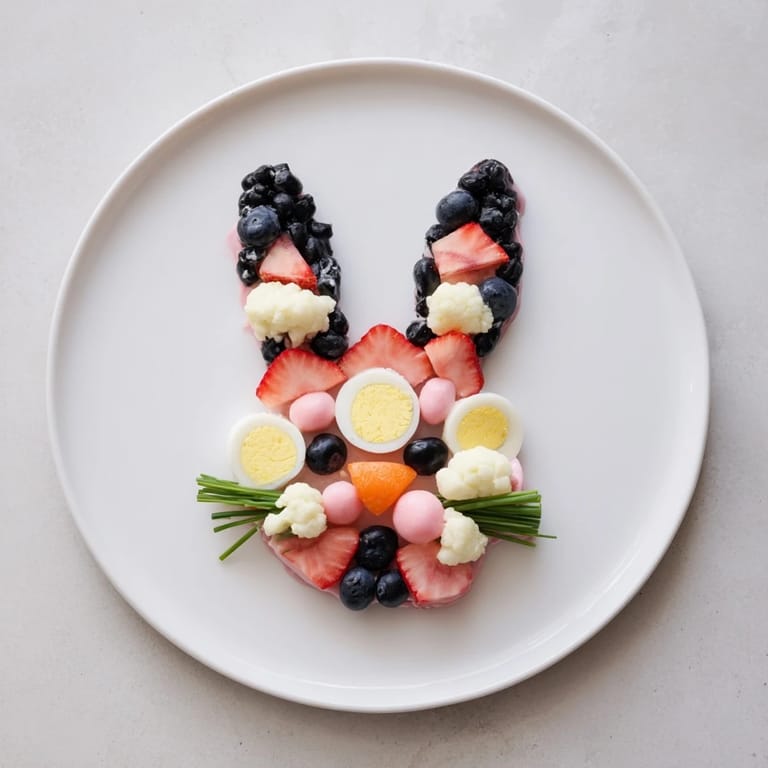
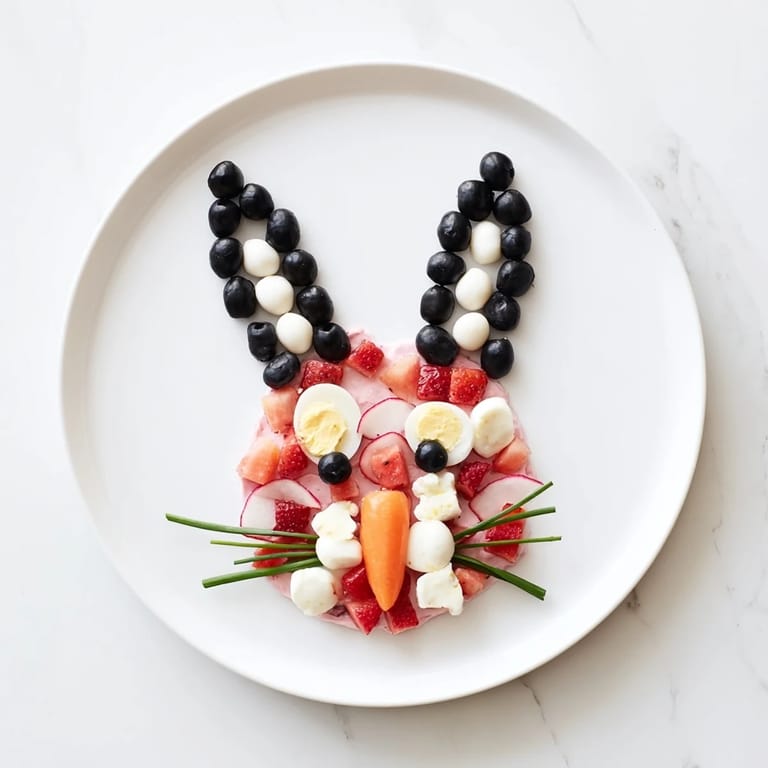
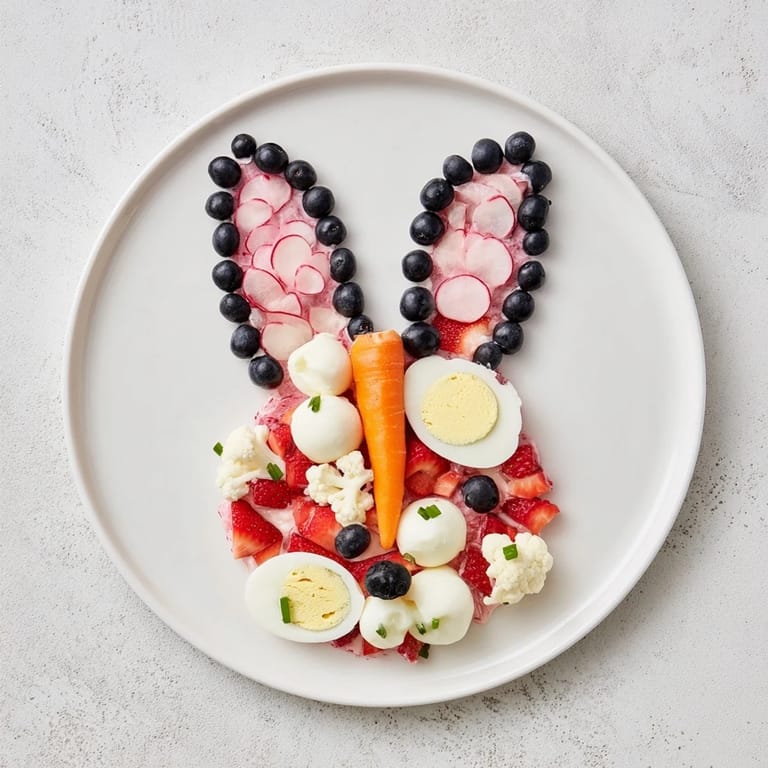
- Using your black olives, draw a clear bunny head with two long ears pointing upward toward one end of your platter. Don't overthink this—think of it like you're sketching with your hands. The outline doesn't need to be perfect; charming and playful is the goal. Stand back and adjust until it feels right to you.
- Fill those ears with pink:
- This is where the color comes alive. Starting in the ear sections, begin layering your pink ingredients in whatever pattern feels right—strawberries here, watermelon there, a swirl of beet hummus, then radish slices. The beauty is that there's no wrong way. Let the colors and textures guide you. Think of it like painting, but with food.
- Create the white face:
- Now move to the face area inside your olive outline. Scatter your white ingredients across this space: mozzarella balls, dollops of cottage cheese, sliced eggs, and those pristine cauliflower florets. Fill it generously so every inch is covered with something interesting. This is where your white ingredients become the foundation.
- Add the finishing features:
- Place those two blueberries where the eyes should be—right where you'd expect them on a bunny's face. Position your little carrot piece as the nose. Then take those finely chopped chives and arrange them as whiskers, radiating outward from the nose area. This is the moment your bunny truly comes alive.
- Chill and present:
- Pop your platter into the refrigerator until you're ready to serve. This keeps everything fresh and the ingredients firm. When you bring it out, watch people's faces light up—that moment never gets old.
 Save
Save What struck me most wasn't the platter itself, though it was beautiful. It was watching my five-year-old nephew point at the bunny and say, "She's so happy," before diving in for a piece. That's when I understood that food arranged with joy tastes different. It carries intention in every bite.
Choosing Your Colors Wisely
The magic of this dish is in the color contrast. Pink and white are the stars, but I've learned that consistency matters. Make sure your pink ingredients are genuinely pink—not orange, not too pale. This means choosing ripe strawberries, checking that your beet hummus has enough color, and picking watermelon that's a proper rosy pink rather than pale. When you're creating something visual, these details are what make it sing. If your strawberries aren't as vibrant as you'd like, that's when raspberries or even pomegranate arils step in beautifully as substitutes.
Making It Your Own
This recipe is a blueprint, not a prison. I've made it with roasted beets instead of fresh watermelon, used goat cheese where cottage cheese would normally go, and once, I arranged everything in stripes instead of a face just because I felt experimental. The framework stays the same—outline, pink fillings, white fillings, features—but the ingredients can bend to what you have and what you love. That's the joy of food arranged rather than cooked.
Serving Suggestions and Pairings
This bunny deserves a gentle accompaniment. I've served it alongside gluten-free crackers that let the fresh ingredients shine, and I've paired it with sparkling rosé that makes the whole experience feel like a celebration. For a lighter gathering, elderflower lemonade adds a floral note that somehow makes sense with the spring theme. Whatever you choose, the platter itself is rich enough and varied enough to stand on its own, but having something to dip or spread on makes it more interactive and fun.
- Pair with crispy crackers or toasted gluten-free bread for textural contrast.
- A light sparkling rosé or elderflower lemonade complements the fresh, bright flavors beautifully.
- Serve this as a centerpiece so everyone can admire it before diving in—the presentation is half the magic.
 Save
Save Every time I make this bunny, I'm reminded that the best recipes aren't just about taste—they're about the moment they create. This one has a way of turning an ordinary spring gathering into something a little more special.
Recipe Questions & Answers
- → How do I create the bunny outline?
Use whole or sliced black olives arranged on parchment or a platter to form the bunny's head and ears clearly.
- → What ingredients create the pink sections?
Alternating layers of diced strawberries, watermelon, radish slices, and beet hummus give a vibrant pink hue.
- → Which ingredients fill the white sections?
Mini mozzarella balls, drained cottage cheese, sliced hard-boiled eggs, and cauliflower florets create the white areas.
- → Can I make this dish vegan-friendly?
Yes, substitute dairy items with vegan cheese alternatives and ensure beet hummus and other fillings fit vegan preferences.
- → What are good serving suggestions?
Chill the platter before serving and pair it with crackers, crispbread, or vegetable sticks for added texture and flavor.
- → Are there any allergen considerations?
This dish contains dairy and eggs; verify ingredient labels carefully if serving guests with allergies.