 Save
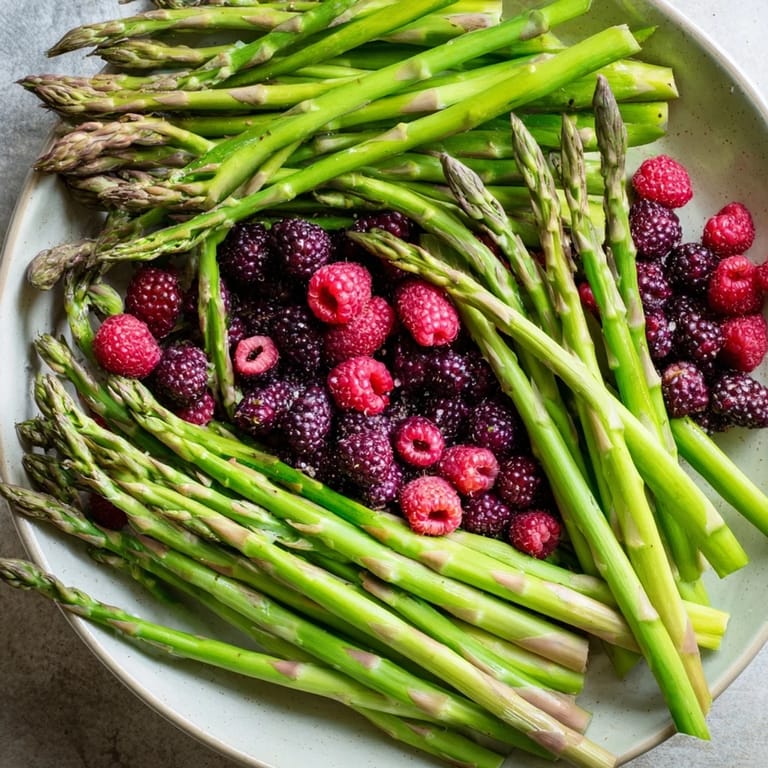
Save The first time I attempted something this architectural in the kitchen, I was nervous about whether vegetables could actually hold a shape. I'd seen photos of this botanical lattice online and thought it was pure decoration—until I realized the asparagus and chives weren't just pretty, they were genuinely delicious woven together. The real magic happened when my friend tasted it and said the sweetness of the berries against the grassy snap of asparagus felt like spring had landed on her plate.
I made this for a spring brunch once and watched people hesitate before their first bite, unsure if something so carefully arranged would actually taste good. The moment they bit through the asparagus into the berries, their expressions shifted from curiosity to genuine delight. That's when I knew this wasn't just a pretty plate—it was a dish that delivered on every level.
Ingredients
- Asparagus stalks: Choose medium-sized ones that are straight and firm; thinner stalks can snap during handling, while thicker ones take longer to soften.
- Fresh chives: The long stems are the secret infrastructure here—they become flexible when briefly heated and tie your entire structure together.
- Mixed berries: Blueberries, raspberries, strawberries, and golden berries each bring different sweetness levels and textures, so the combination keeps things interesting.
- Extra virgin olive oil: A good quality oil matters here since it's one of the few seasonings and gets tasted directly.
- Flaky sea salt: Regular salt works, but flaky salt gives you better control over seasoning and adds a pleasant crunch.
Tired of Takeout? 🥡
Get 10 meals you can make faster than delivery arrives. Seriously.
One email. No spam. Unsubscribe anytime.
Instructions
- Blanch and shock the asparagus:
- Boil salted water, add asparagus for just 1-2 minutes until bright green and barely tender, then plunge into ice water immediately. This stops the cooking and keeps the spears crisp—you'll hear the sizzle when they hit the ice bath, which is oddly satisfying.
- Soften the chive stems:
- Quickly dip each chive into the same hot water for just 5 seconds to make them pliable enough to tie, then cool in ice water. This is faster than you'd expect and makes all the difference in whether they'll bend or snap.
- Weave your lattice foundation:
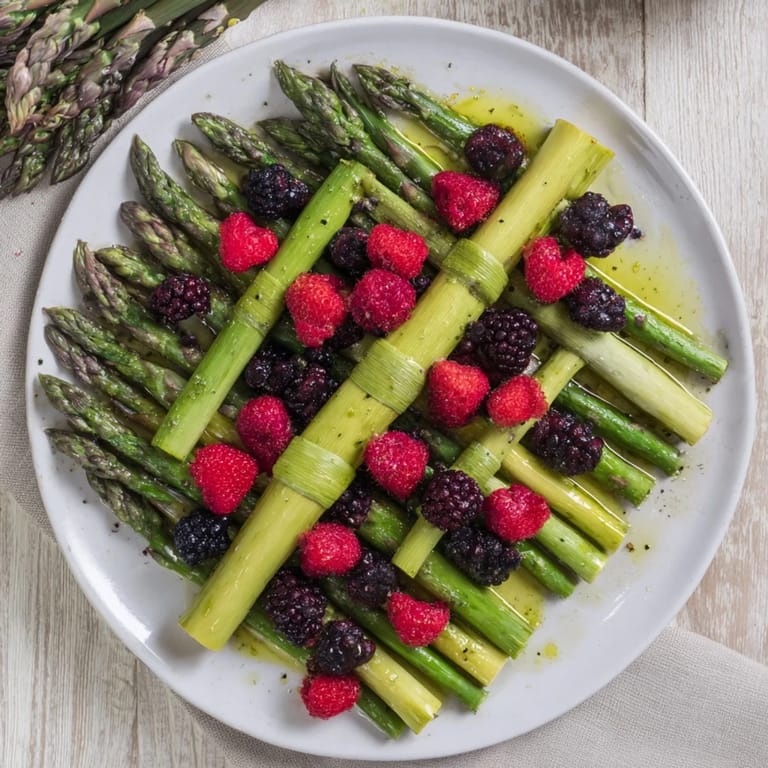
- Lay 8 asparagus stalks parallel on your platter, evenly spaced, then carefully weave 8 more stalks perpendicular over and under to create a grid. Take your time here because the pattern is what makes it look intentional.
- Tie the intersections:
- Wrap a chive stem gently around each crossing point where asparagus meets asparagus, tying a simple knot to hold everything in place. The chives become almost invisible once they dry slightly, but they're doing all the heavy lifting.
- Fill the squares:
- Distribute berries into each square of the lattice, mixing colors and types so no two adjacent squares look identical. This takes a moment but makes the whole thing feel like a jeweled pattern.
- Final seasoning:
- Just before serving, drizzle lightly with olive oil and sprinkle flaky sea salt and black pepper across the entire piece. The timing here matters because salt can weep moisture onto asparagus if added too early.
 Save
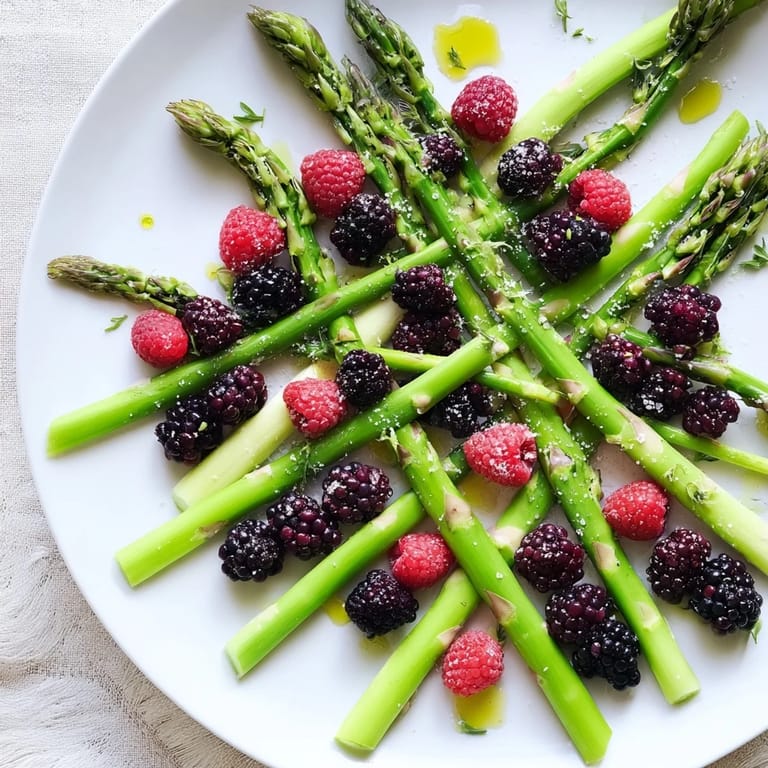
Save I remember my neighbor asking if this was too delicate to actually eat, if it was more art than food. But when she bit into it, she immediately understood—the whole thing was designed to be eaten, and every element had a purpose beyond looking beautiful. That moment crystallized why I love this dish: it's proof that food doesn't have to choose between being pretty and being delicious.
Choosing Your Berries
The beauty of this lattice is that you can adapt it to whatever berries are at their peak in your market. Blackberries add earthiness, red currants bring a tart pop, and pomegranate seeds add an unexpected crunch. I've even used a mix of raspberries and blackberries when it was late summer and everything else was out of season, and it still tasted like a carefully planned menu item.
Timing and Temperature
This appetizer truly sings when served chilled, so assemble it no more than an hour before your guests arrive and keep it in the refrigerator. The cold temperature makes the asparagus crisp again if it's softened slightly, and the berries stay plump and fresh. I learned this the hard way after assembling one too early and watching the asparagus gradually lose its snap.
Making It Your Own
Once you master the basic lattice, you can dress it up for different occasions and tastes. A light drizzle of aged balsamic glaze adds sophistication, while fresh mint leaves scattered across bring brightness and herbaceous depth. Some versions I've made have included a tiny dollop of whipped cream cheese or crème fraîche in the center of each square, which turns this from a fresh appetizer into something richer and more indulgent.
- Fresh mint leaves scattered across the finished lattice add an herbal brightness that plays beautifully with the berries.
- A thin drizzle of aged balsamic glaze adds sophistication without overwhelming the delicate flavors.
- For richer occasions, add a tiny dollop of whipped cream cheese or fresh goat cheese to the center of each square.
 Save
Save This dish reminds you that sometimes the most memorable meals come from ideas that initially seemed too ambitious or too fragile to actually work. Serve it with confidence knowing that the careful architecture will hold, and the flavors will speak for themselves.
Recipe Questions & Answers
- → How do I soften the chives for weaving?
Briefly dip chive stems in hot water for about 5 seconds, then cool them quickly in an ice bath to make them flexible for tying.
- → What is the best way to blanch asparagus without overcooking?
Boil asparagus for 1-2 minutes until bright green and tender-crisp, then immediately place them in an ice bath to stop cooking and preserve color.
- → Can other fruits be used in the lattice?
Yes, small firm fruits like blackberries, red currants, or pomegranate seeds work well and add a flavorful twist.
- → How should the lattice be assembled for stability?
Lay eight asparagus stalks parallel, then weave eight more perpendicularly over and under. Secure crossing points by gently tying with softened chives.
- → What seasoning enhances the flavor without overpowering this dish?
A light drizzle of extra virgin olive oil with a sprinkle of flaky sea salt and freshly ground black pepper enhances natural flavors delicately.
- → Is this dish best served warm or chilled?
Serving chilled preserves the fresh textures and bright flavors, making it ideal for spring or summer occasions.