 Save
Save Years ago, a friend from Bangkok brought a thermos of this soup to a foggy San Francisco afternoon, and I watched the steam curl up and just disappear into the air while she explained how her mother made it every week. The first spoonful hit me with this wave of warmth that wasn't just temperature—it was the coconut, the lime, the mysterious spice blend all at once. I've been chasing that feeling ever since, and now I make it whenever I need to transport myself or feed someone who needs to feel held by their food.
I made this for my partner on a random Tuesday when he mentioned missing Thai food, and he went silent mid-slurp in that way that means everything is exactly right. The apartment smelled like a Bangkok street market by the time we sat down, and we ended up eating two bowls each and talking until the soup got cold. That's when I knew this recipe had moved from something I made to something I trusted.
Ingredients
- Boneless, skinless chicken breast (400 g): Slice it thin so it cooks through in minutes without turning rubbery—this is where patience with your knife pays off.
- Chicken stock (800 ml): Use good stock if you have it; it's the foundation and deserves that respect.
- Full-fat coconut milk (400 ml): Don't skim here—the richness is non-negotiable and makes the whole thing sing.
- Lemongrass (2 stalks): Smash it hard to release the oils, and don't skip this step even if it feels aggressive.
- Kaffir lime leaves (4 leaves): Torn by hand, these add a citrusy floral note that lime juice alone can't replicate.
- Galangal (3 slices): If you can't find it, ginger works but use less—galangal is spicier and more peppery.
- Thai bird's eye chilies (3): Crush them to distribute heat evenly and adjust the count based on your tolerance.
- Garlic (4 cloves) and shallots (4 small): Smashed and sliced respectively, they build the aromatic base that makes you want to breathe deeply over the pot.
- Oyster mushrooms (200 g): They absorb the broth beautifully and stay tender, unlike some mushrooms that turn mushy.
- Cherry tomatoes (100 g): Halved so they soften just enough but keep their shape and burst with brightness.
- Fish sauce (2 ½ tbsp): This is the secret depth that makes people ask what's in here—don't be shy with it.
- Fresh lime juice (1 ½ tbsp): Squeeze it fresh; bottled changes the whole profile.
- Palm sugar (1 tsp): Balances the heat and salt—light brown sugar works if palm sugar isn't available.
- Salt (½ tsp): A small amount because the fish sauce carries saltiness too.
- Fresh cilantro and green onions: These finish the soup with brightness and are worth buying fresh.
Tired of Takeout? 🥡
Get 10 meals you can make faster than delivery arrives. Seriously.
One email. No spam. Unsubscribe anytime.
Instructions
- Bloom the aromatics:
- Bring your stock to a gentle boil, then add the smashed lemongrass, torn kaffir lime leaves, galangal slices, crushed chilies, smashed garlic, and sliced shallots all at once. Let it simmer for 5 minutes and the kitchen will smell absolutely alive.
- Cook the chicken gently:
- Slide in your thin chicken slices, turn the heat down to a gentle simmer, and let them cook for 5 to 7 minutes until just opaque—they'll finish cooking through without becoming tough. This is where restraint matters more than rushing.
- Add the coconut milk:
- Stir it in slowly so it swirls through the broth and everything gets that silky, luxurious texture. Add mushrooms and tomatoes right after and let everything mingle for another 5 minutes.
- Balance the flavors:
- This is the moment where you taste and adjust—add your fish sauce, lime juice, palm sugar, and salt. Take your time here; each spoonful should make you nod.
- Remove the aromatics if you like:
- Use a slotted spoon to fish out the lemongrass, kaffir lime leaves, galangal, and garlic, or leave them in if you like the rustic look and extra flavor hits.
- Finish and serve:
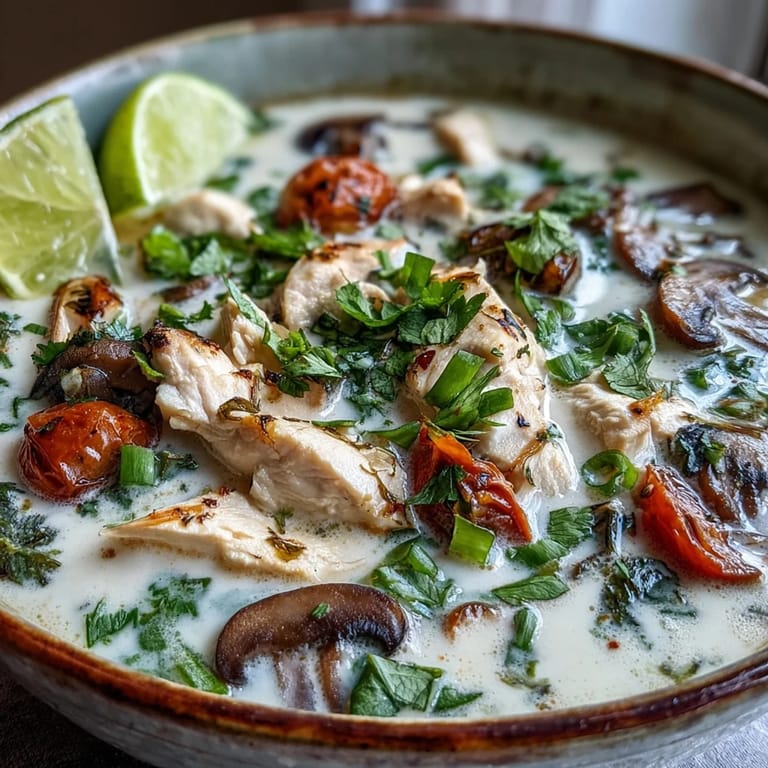
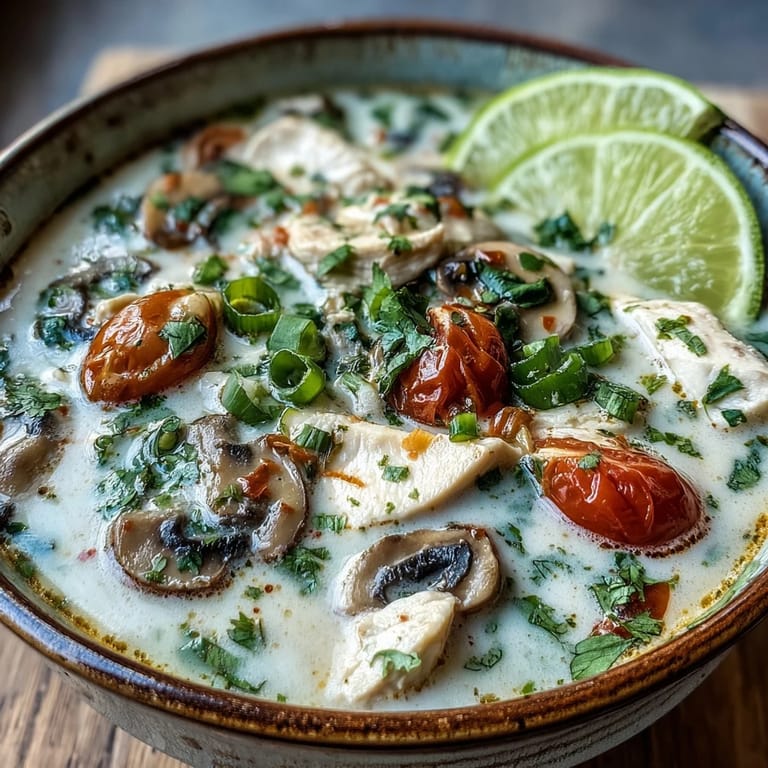
- Ladle into bowls and scatter cilantro, green onions, and maybe an extra lime wedge and thin chili slices on top. Serve it immediately while the steam is still rising.
 Save
Save My neighbor brought over her grandmother from Thailand once, and I made this soup nervous, wondering if I'd get it right. She tasted it, closed her eyes, and said something in Thai that made my neighbor laugh and hug me—apparently it reminded her of home. That's when cooking stopped being about following instructions and started being about creating a moment someone could carry with them.
The Secret Behind the Depth
What makes this soup sing is the layering of aromatics at the beginning—each one adds a different texture to the flavor profile. The smashed lemongrass brings brightness, galangal adds warmth and spice, the chilies give heat, and the shallots and garlic build that savory foundation that makes you want another spoonful. I used to wonder why Thai restaurants' soups tasted so complex, and then I realized they weren't doing anything fancy—they were just giving each aromatic time to infuse properly. When you rush that 5-minute bloom, you lose the complexity that separates this from being just chicken soup with coconut milk in it.
Making It Your Own
This soup is forgiving in the best way, which means you can adjust it based on what you have and what you're craving. If you can't find kaffir lime leaves, fresh lime zest does a reasonable impression; if galangal is impossible, good ginger with an extra half-lime will get you there. I've made it with tofu for vegetarian friends and vegetable broth instead of chicken stock, swapping fish sauce for tamari, and it becomes its own beautiful thing.
Serving and Storage Tips
Serve this immediately while the aromatics are still fragrant and the soup steams with promise—it's better fresh, but it also keeps beautifully in the refrigerator for up to three days. I often make a batch and eat it for lunch throughout the week, and while the aromatics mellow slightly, the depth of flavor actually increases as everything gets to know each other better.
- Pair it with steamed jasmine rice to make it a complete meal, or eat it solo as a warming, nourishing course.
- Leftover soup reheats gently on low heat—never a hard boil or the coconut breaks and separates.
- Fresh cilantro and lime should be added just before serving each time for maximum brightness and flavor impact.
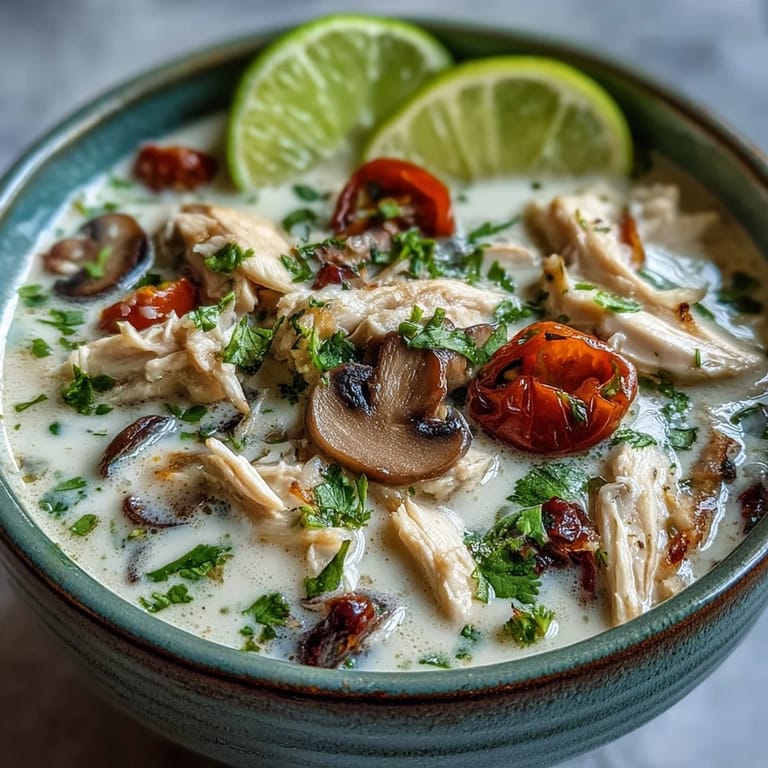 Save
Save This soup has become the thing I make when I want to say I care without saying much at all, when the weather turns cold or someone needs comfort. It's proof that the most meaningful meals don't require complicated techniques—just intention, good ingredients, and the willingness to let them shine.
Recipe Questions & Answers
- → What makes Tom Kha Gai different from regular Thai soup?
Tom Kha Gai features coconut milk as its base, creating a rich and creamy broth unlike the clear broth of Tom Yum. The combination of galangal, lemongrass, and kaffir lime leaves creates a distinctive aromatic profile that's both comforting and invigorating.
- → Can I make this soup vegetarian?
Yes, simply replace the chicken with firm tofu and use vegetable broth instead of chicken stock. Substitute fish sauce with soy sauce or tamari to maintain the salty umami element while keeping it plant-based.
- → What can I use if I can't find galangal?
Fresh ginger makes an acceptable substitute, though the flavor profile will be slightly different. Use slightly more ginger than the galangal called for, as galangal has a more intense, piney citrus flavor that ginger doesn't fully replicate.
- → Why shouldn't the soup boil after adding coconut milk?
Boiling coconut milk can cause it to separate and become grainy. Simmering gently preserves the smooth, creamy texture and prevents the oils from separating, ensuring a luscious consistency in every spoonful.
- → How spicy is this soup?
The heat level depends entirely on how many Thai bird's eye chilies you include. Three crushed chilies provide a moderate warmth that builds gradually. Adjust the quantity to suit your preference, or serve extra chilies on the side for diners to add.
- → Can I prepare this soup in advance?
The flavors actually develop beautifully when made ahead. Prepare up to the point of adding coconut milk, refrigerate, and finish with coconut milk and seasonings when ready to serve. This prevents the coconut milk from separating and allows the aromatics to infuse even more deeply.