 Save
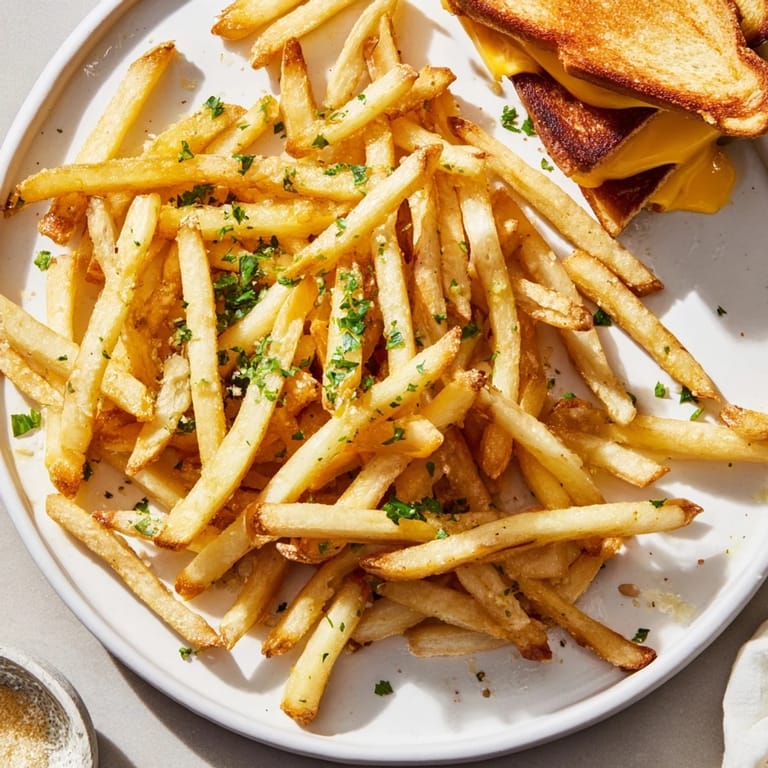
Save There's something almost magical about the sizzle of beef tallow in a hot pan—it takes me back to a Saturday afternoon when my grandmother pulled a cast-iron skillet from the stovetop, her kitchen filling with that unmistakable savory aroma. She paired crispy, golden fries with a grilled cheese so perfectly melted it seemed to glow, and I realized that day that real comfort food isn't about fancy techniques; it's about using the right fat and letting the ingredients speak for themselves. Since then, beef tallow fries have become my secret weapon whenever I want to impress someone or simply treat myself to something genuinely delicious.
I made this for my roommate on a rainy Tuesday when he came home exhausted from work, and I watched his whole face change when he bit into that first fry. The butter-soaked bread and the sharp bite of cheddar seemed to chase away whatever frustration he'd been carrying, and we sat in near silence for a few minutes, just eating and occasionally nodding at each other. That's when I knew this wasn't just a meal—it was a quiet conversation between two people who understood that sometimes the best gift you can offer is something warm and truly cared for.
Ingredients
- Russet potatoes, 4 large: Their starch content and waxy-to-mealy ratio make them the gold standard for fries; they crisp on the outside while staying fluffy inside if you handle them right.
- Beef tallow, 1 quart: This is the entire point—beef tallow fries at the right temperature achieve a flavor and crispness that no oil can replicate, though it needs to be pure and heated carefully.
- Kosher salt and black pepper: Applied immediately after the second frying while the fries are still steaming ensures every piece tastes seasoned, not just the surface.
- Fresh parsley, 1 tsp chopped: A small final flourish that adds a whisper of freshness and brightness to cut through the richness.
- Sourdough bread, 8 slices: Sourdough's tang and sturdy crumb hold up to butter and heat without becoming mushy, plus it adds character that plain sandwich bread can't provide.
- Sharp cheddar cheese, 8 slices: Sharp cheddar melts beautifully while keeping its bold flavor; mild cheddar gets lost between the bread and butter.
- Unsalted butter, 4 tbsp: Softened butter spreads evenly without tearing the bread, and using unsalted gives you control over the salt level in the final dish.
- Mayonnaise, 2 tbsp optional: A trick I picked up that adds extra moisture and helps the bread toast to a deeper golden brown, though it's truly optional if you prefer pure butter.
Tired of Takeout? 🥡
Get 10 meals you can make faster than delivery arrives. Seriously.
One email. No spam. Unsubscribe anytime.
Instructions
- Soak the potatoes to remove starch:
- Cut your potatoes into quarter-inch sticks and submerge them in cold water for at least 30 minutes. This draws out excess starch, which would otherwise absorb oil and make your fries soft instead of crisp. After soaking, drain them thoroughly and pat every piece completely dry with paper towels—moisture is the enemy of crispness.
- First fry at lower temperature for tenderness:
- Heat your beef tallow to 325°F and fry the potatoes in batches for 4 to 5 minutes until they're just tender but barely colored. This step cooks the potato through without browning, and it's crucial not to skip it or try to combine the two frys into one. Remove them with a slotted spoon and drain on paper towels.
- Second fry at higher temperature for crispness:
- Raise the tallow temperature to 375°F and fry the pre-cooked potatoes again in batches for 2 to 3 minutes until they turn a deep golden brown and shattering crisp. The moisture has already been driven out, so this fry is purely about building that shatteringly crisp exterior that makes the whole dish sing.
- Season fries while hot:
- The moment you pull the fries from the oil, toss them with kosher salt and black pepper while they're still steaming. The heat helps the salt adhere, and the steam carries the salt flavor throughout rather than sitting on the surface.
- Prepare grilled cheese bread:
- Spread softened butter on one side of each bread slice, and if you're using mayo, blend it in with the butter for extra richness and browning power. Make sure the spread reaches the edges so every part of the bread makes contact with the hot skillet.
- Assemble and cook sandwiches:
- Layer 1 to 2 slices of sharp cheddar between two slices of buttered bread with buttered sides facing outward. Heat a skillet or griddle over medium heat and cook the sandwich for 3 to 4 minutes per side, pressing gently with a spatula to ensure even contact with the heat and better melting of the cheese.
- Serve immediately:
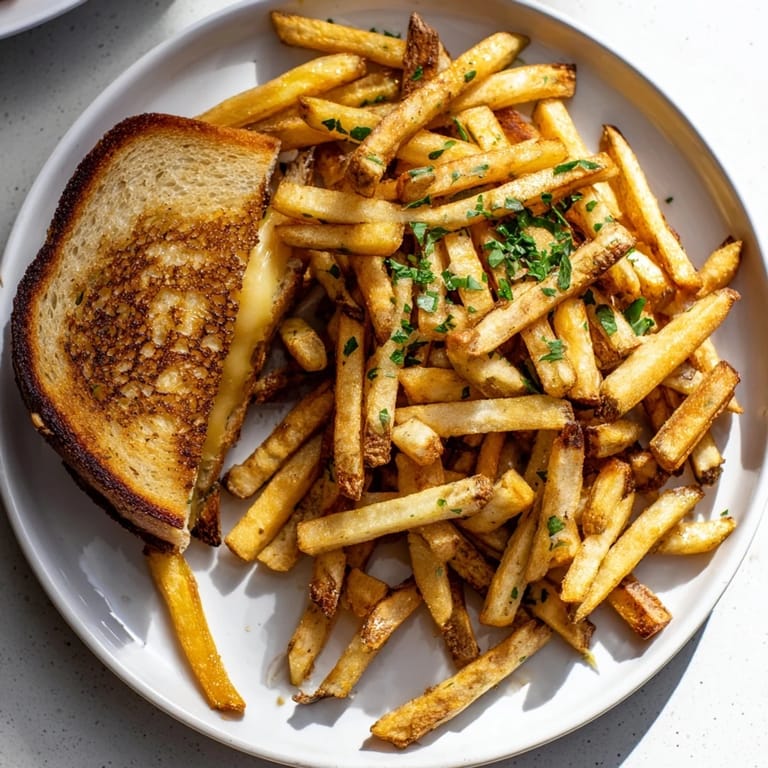
- Plate the grilled cheese with a generous portion of fries alongside and eat right away while everything is at its temperature-perfect peak. Any delay means the fries lose their crispness and the cheese begins to firm up.
 Save
Save I remember watching my father's eyes light up when he realized that beef tallow fries weren't some new restaurant trend but a technique his own grandmother used decades ago, and somehow that discovery made the meal feel even more meaningful. It became less about fancy ingredients and more about honoring a way of cooking that time had almost forgotten—comfort food with a living history in it.
Why Beef Tallow Makes All the Difference
Beef tallow carries flavors that neutral oils simply cannot match—it's rich and savory in a way that deepens the potato's natural taste rather than masking it. When beef tallow heats properly, it creates a crust through a process called the Maillard reaction that turns the outside of each fry into a shatteringly crisp exterior while the inside stays fluffy and tender. Some people worry about the richness, but I've found that the combination with a bright, tangy grilled cheese actually balances itself perfectly on the plate.
The Art of a Perfect Grilled Cheese
A grilled cheese sandwich is deceptively simple, but it teaches you something about cooking that applies to almost everything else: temperature control and patience matter more than ingredients. I learned this the hard way by trying to rush the cooking on high heat, only to end up with burnt bread and cold cheese in the middle. The secret is medium heat, letting the bread and butter toast slowly so the cheese has time to melt and distribute evenly before you flip it. Sharp cheddar is crucial because its bold flavor stands up to the butter and doesn't disappear—milder cheeses become almost invisible, defeated by the fat surrounding them.
Building Flavor and Crispness
Every decision in this dish serves the goal of texture and flavor balance. The sourdough bread brings a slight tang that cuts through the richness, the sharp cheddar refuses to be overshadowed, and the beef tallow fries ground everything in deep, savory satisfaction. If you want to elevate this further without changing the core idea, consider mixing your cheese—Gruyère adds a slight earthiness that plays beautifully alongside sharp cheddar, or try a thin slice of aged gouda for something with a bit of caramel notes. You can also serve these with house-made aioli instead of ketchup, or spoon some caramelized onions onto your grilled cheese if you want a moment of sweetness against all that savory depth.
- Make sure your beef tallow reaches the exact temperatures called for; too cool and the fries won't crisp, too hot and they'll brown before cooking through.
- Never skip the dry step after soaking potatoes—water on the surface will cause the oil to bubble aggressively and prevent proper frying.
- Toast your bread in the skillet undisturbed for the first minute to build crispness before you start moving or pressing the sandwich.
 Save
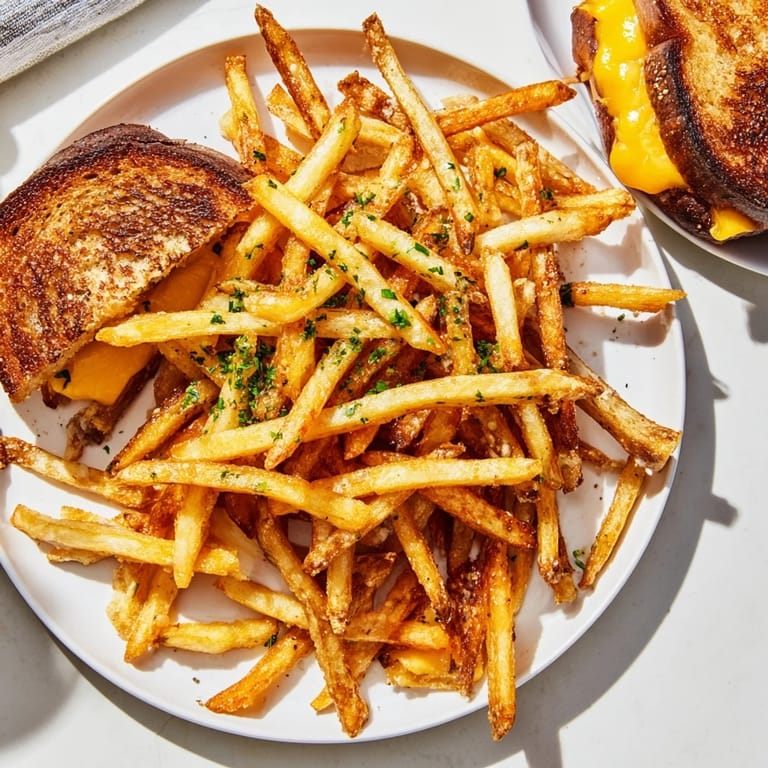
Save This meal has become my answer to the question of what real comfort food actually means—it's not about complexity or exotic ingredients, but about respecting simple things enough to do them well. Every time I make it, I remember that good cooking is just paying attention.
Recipe Questions & Answers
- → Why use beef tallow for frying the fries?
Beef tallow provides a high smoke point and adds a rich, savory depth that enhances the fries' crispiness and flavor compared to typical oils.
- → How can I achieve ultra-crispy fries?
Soaking the potatoes removes excess starch, and frying twice at different temperatures—first to cook through, then to crisp—ensures a crunchy exterior with a soft interior.
- → What is the best way to melt the cheese evenly in the sandwich?
Cooking the sandwich on medium heat and pressing gently with a spatula allows the cheese to melt thoroughly while the bread crisps to a golden brown.
- → Can I substitute the beef tallow for another fat?
Yes, alternatives like duck fat can be used for similar flavor, or vegetable oil for a vegetarian approach, but the taste and texture may vary slightly.
- → What variations can enhance the flavors?
Using cheeses like Gruyère or mozzarella adds complexity, and serving with dipping sauces like ketchup or aioli complements the dish’s savory character.