 Save
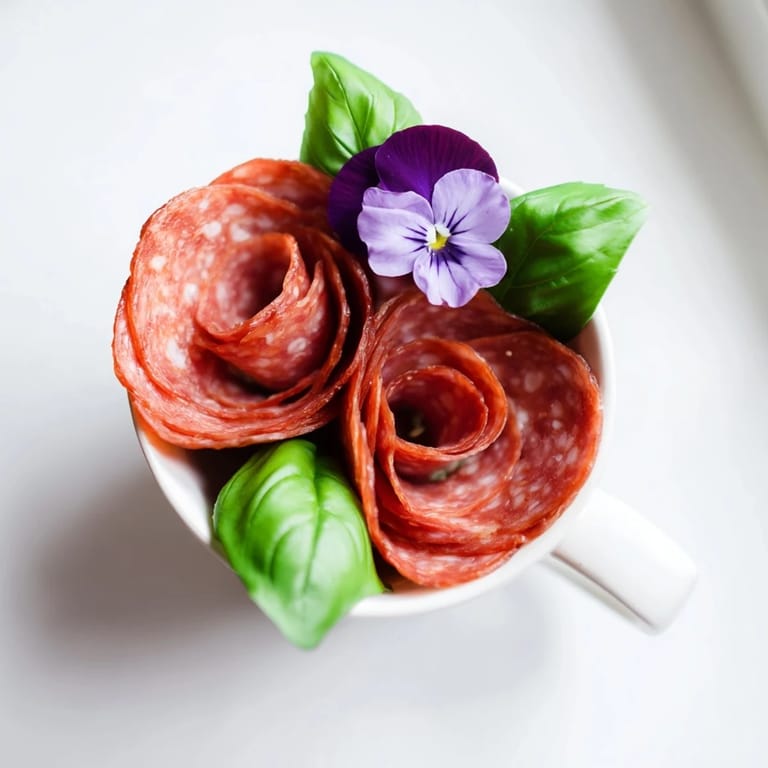
Save There's something about folding paper-thin salami into rose shapes that transports you to a Victorian parlor, even if you're standing in your kitchen in jeans and an apron. I discovered these edible roses completely by accident when a friend mentioned she'd seen them at a gallery opening, arranged in actual teacups like they were meant to be sipped. The audacity of it stuck with me, and suddenly I was in my kitchen at midnight, trying to coax slices of pepperoni into petals. When they finally looked right—crimped edges catching the light, nestled in porcelain like a gift—I realized I'd stumbled onto something that feels fancy but tastes like the charcuterie board you actually want to eat.
I made these for a holiday potluck last winter when I was determined not to show up with store-bought dips, and watching my coworker pick one up and actually pause—like she wasn't sure if it was meant to be eaten or admired—was worth every careful fold. Her nephew asked if they were real flowers, and she had to explain that yes, these roses are delicious, which led to the whole table wanting to try them. By the end of the night, the teacups were empty and someone asked for the recipe, which rarely happens at these things.
Ingredients
- Salami, 18 large thin slices: The thinner you can get them without tearing, the better your roses will be; I learned this by accidentally buying the thick slices and having to improvise.
- Pepperoni, 18 large thin slices: The slight curve and color of pepperoni naturally creates petal-like edges, so don't skip this ingredient even if salami is cheaper.
- Porcelain teacups, 6 small: These aren't just for show—the cup creates a natural frame that makes even slightly imperfect roses look intentional.
- Fresh basil or baby arugula, optional: A green base catches the eye and adds a fresh note that cuts through the richness of the meat.
- Edible flowers like pansies or violets, optional: If you use these, source them from the grocery store's floral section or specialty markets, never from a florist.
- Crackers, mild cheeses, grapes or berries, optional: Build a small board around the teacups to give guests options and fill negative space on the serving platter.
Tired of Takeout? 🥡
Get 10 meals you can make faster than delivery arrives. Seriously.
One email. No spam. Unsubscribe anytime.
Instructions
- Lay out your salami strip:
- Take six slices of salami and arrange them slightly overlapping on a clean surface, each one covering about a third of the slice before it, like you're building a fan. This overlap is what gives the rose its depth and movement when you roll it.
- Roll into a spiral:
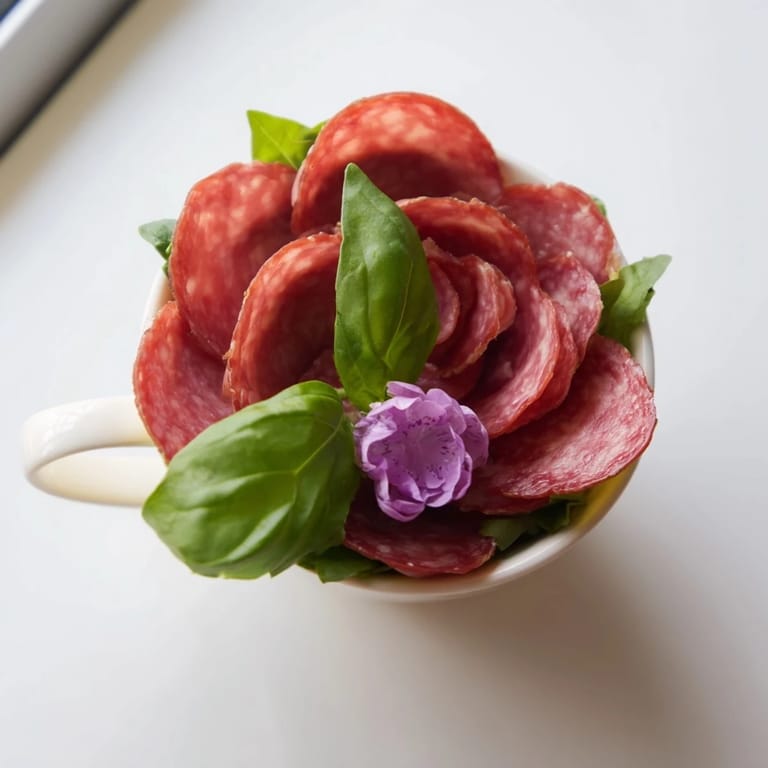
- Starting at one end, gently roll the overlapped slices into a tight spiral, then carefully stand it upright so it naturally forms a rose shape. If it feels too loose, give the outer petals a gentle tug upward to make them more prominent.
- Make your second rose:
- Repeat the exact same process with six slices of pepperoni, which often holds its shape a bit better because of its slightly firmer texture. You should feel confident by the second one, even if the first looks a little wonky.
- Build your trio:
- Make one more salami rose and one more pepperoni rose, so you have three of each, for a total of six roses. Line them up and you'll already start seeing how striking they look together.
- Prepare the cups:
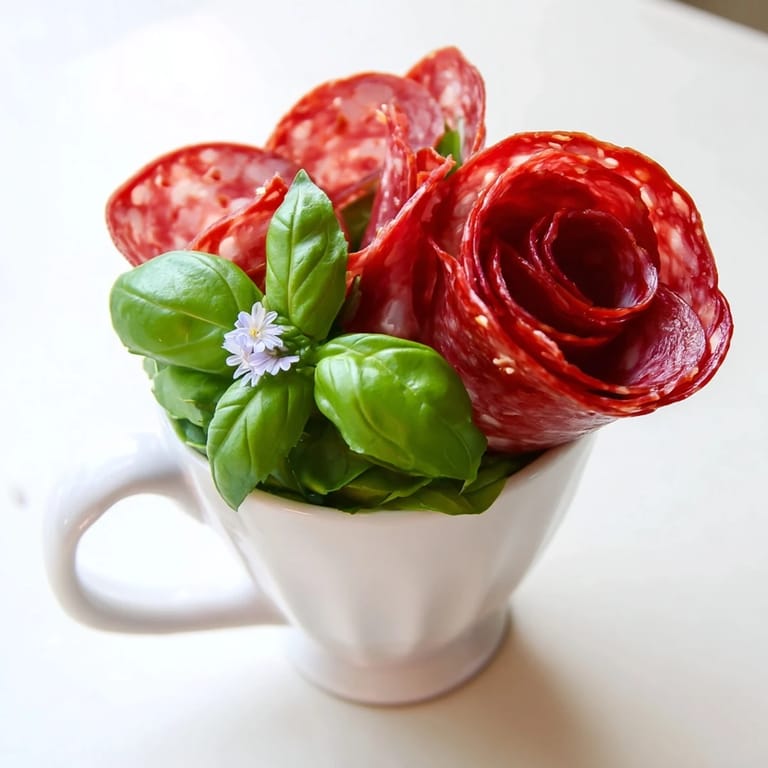
- If using greens, gently nestle a few basil leaves or arugula sprigs into the bottom of each teacup, which gives your rose a natural-looking home. This step is optional but makes everything feel more thoughtfully arranged.
- Place your roses:
- Carefully transfer each rose into a teacup, adjusting the petals as you go so they fan out naturally and don't look flattened. Spend a moment with each one; this is where they go from assembled to actually beautiful.
- Add the final flourish:
- If you have edible flowers, tuck one delicately into the side of a few roses for an extra touch of whimsy. This is pure decoration, but it's the kind of detail that makes people take photos.
- Arrange and serve:
- Set the teacups on a serving board with crackers, cheeses, and fruit scattered around them, creating a composed but relaxed display. This arrangement tells the story that you put thought into it without looking like you overworked it.
 Save
Save There was a moment at that potluck when everyone was gathered around the appetizer table and someone said, 'These are too pretty to eat,' and then everyone ate them anyway, laughing about how something this ridiculous actually tastes good. That's when I realized these aren't just about impressing people; they're about the moment when practicality and beauty collide in the most delightful way.
The Secret of the Teacup Stage
Using actual teacups isn't just about aesthetics, though it absolutely is about that. The cup physically supports the rose from collapsing, acts as a natural edible serving vessel, and gives guests permission to pick one up and eat it with confidence. I've learned that people hesitate with appetizers that feel too fancy, but hand them something in a teacup and suddenly it's playful rather than intimidating. The porcelain also keeps the meat slightly cooler, which extends how long they stay fresh on the serving board.
Playing with Flavor Layers
The salami and pepperoni alone are delicious, but brushing the slices lightly with olive oil mixed with black pepper before rolling them adds a dimension that surprises people who expect something one-note. I've also experimented with other cured meats like prosciutto, which creates an even more delicate rose, and coppa, which has a richer, spicier flavor that some guests prefer. The real discovery came when I started pairing different meats with different garnishes—pepperoni roses look stunning next to arugula, while salami pairs better with the subtle flavor of basil.
Timing and Presentation Strategy
These roses can be assembled up to two hours ahead and refrigerated, which means you can show up to an event feeling calm instead of frazzled. I always make them the morning of because there's something satisfying about the ritual, but the real gift is that they don't need last-minute fussing. The board arrangement matters too—surround the teacups with negative space rather than piling everything together, so each rose gets its moment.
- Chill the meat slices for fifteen minutes before starting if you have time, because cold salami holds its shape like it's meant to be folded.
- Keep your hands cool and work quickly to prevent the meat from warming and becoming floppy or hard to manipulate.
- Have your teacups ready before you start rolling so you're not fumbling with placement once the roses are formed.
 Save
Save There's something deeply human about taking something as ordinary as sliced meat and transforming it into something that makes people smile before they even taste it. These roses remind me that good food isn't always about complexity; sometimes it's about seeing something ordinary in a new way.
Recipe Questions & Answers
- → How do I create the rose shapes with salami and pepperoni?
Lay slices overlapping in a line, roll tightly to form a spiral, then gently loosen the edges to shape petals resembling a rose.
- → Can I use other meats for the roses?
Yes, cured meats like prosciutto or coppa work well to create similar floral shapes and flavors.
- → What is the best way to serve the tea rose appetizers?
Place each rose in a porcelain teacup lined with basil or arugula leaves and arrange on a serving board with crackers and cheeses.
- → Are there decorating tips for an elegant look?
Add small edible flowers such as pansies or violets alongside the meat roses for a charming, Victorian-inspired touch.
- → How far in advance can these be prepared?
They can be made up to two hours before serving and kept chilled to maintain freshness and shape.