 Save
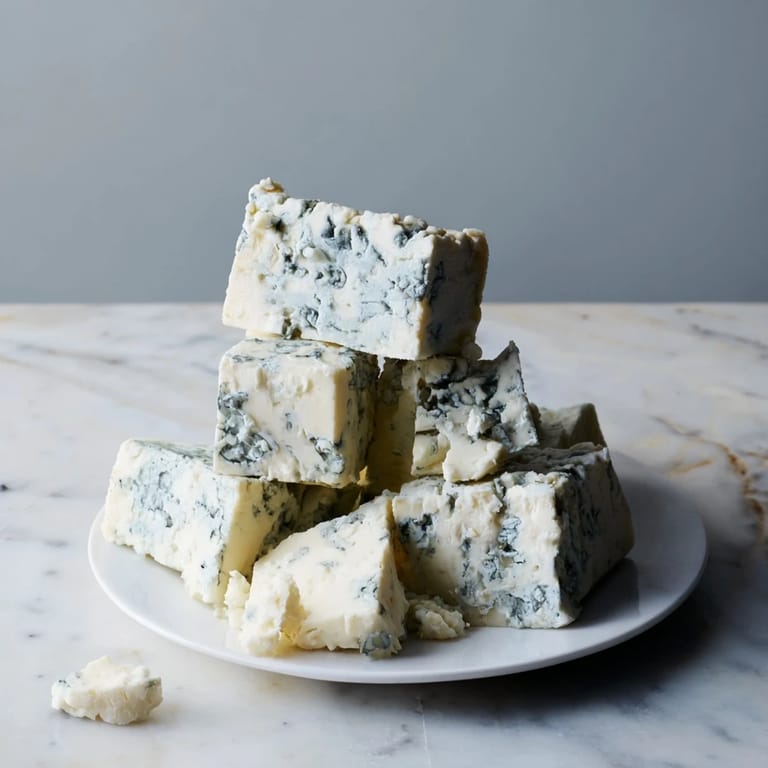
Save I discovered this cheese board concept on a cold afternoon when I opened my refrigerator to find two distinct wedges staring back at me—a bold blue cheese and a sharp white cheddar. Rather than tossing them onto a regular wooden board, I reached for a piece of marble I'd been saving, and something clicked. The way those irregular chunks caught the light against the cool stone felt less like dinner prep and more like arranging a gallery installation.
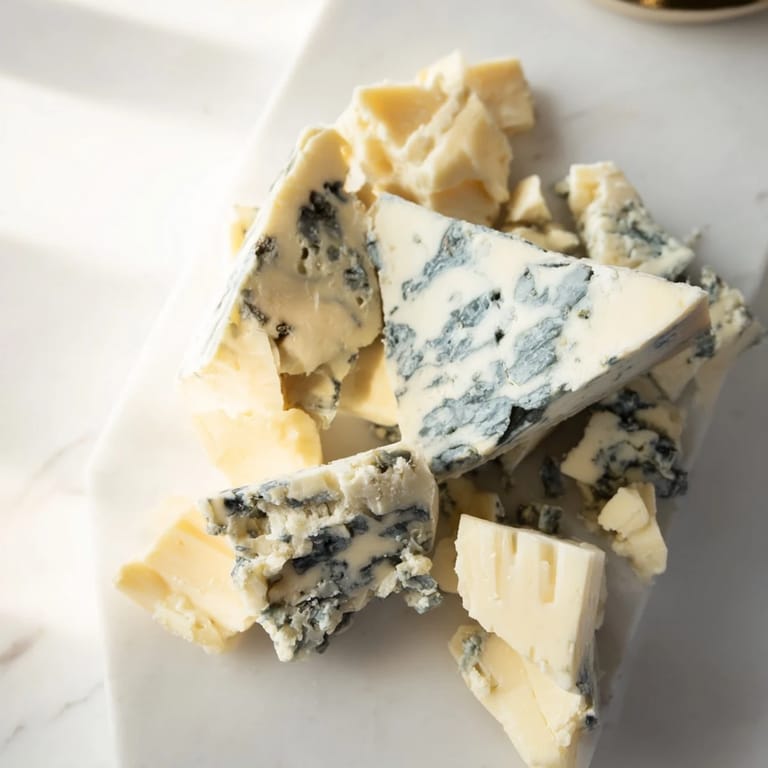
A friend once asked me why I used marble instead of wood, and I realized it wasn't just about aesthetics. That slab arrived at my door damp and chilled, and I'd handled it carefully all morning knowing it would make this presentation possible. When I finally set it on the table during dinner, the evening light made those blue veins glow like something from a museum piece, and everyone went quiet for a moment before reaching for crackers.
Ingredients
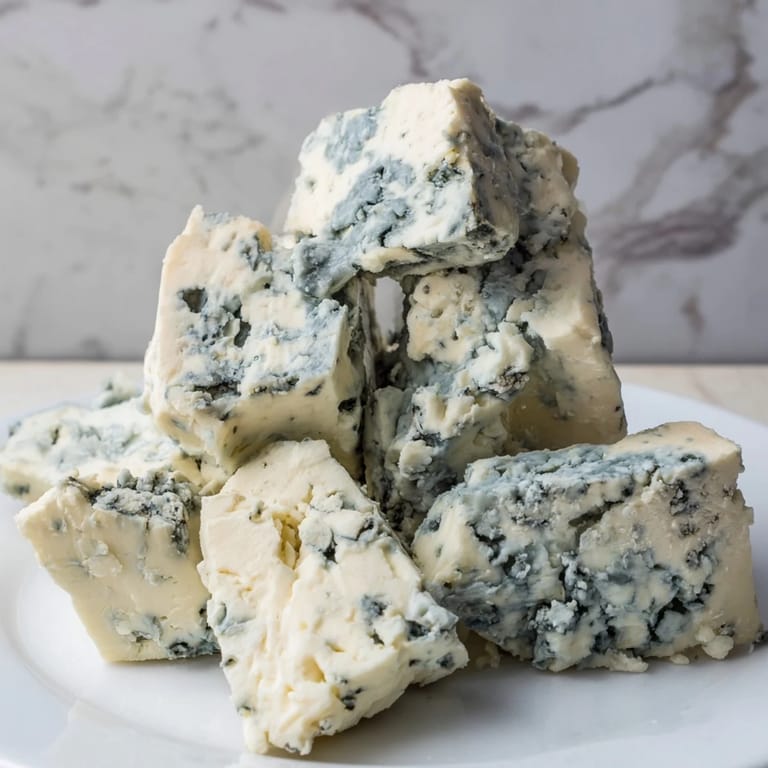
- Blue cheese (200g): Choose Roquefort, Gorgonzola, or Stilton—whatever speaks to you—and cut into large, deliberately irregular chunks that look quarried rather than knife-neat.
- Aged white cheddar (200g): The sharpness here is crucial; it needs to stand its ground against the blue's intensity, so don't reach for mild versions.
- Fresh grapes or sliced pears: These balance the intensity beautifully and add a small moment of sweetness that people appreciate between bites.
- Assorted crackers or crusty bread: Serve on the side so guests control their own flavor combinations.
- Honey or fig jam: A small drizzle transforms everything; I keep both on hand because different cheeses sing with different sweeteners.
Tired of Takeout? 🥡
Get 10 meals you can make faster than delivery arrives. Seriously.
One email. No spam. Unsubscribe anytime.
Instructions
- Chill the marble:
- Place your marble slab in the refrigerator for at least 30 minutes before you begin. You'll feel the difference the moment you touch it—that cool surface keeps everything perfect without fussing.
- Cut the cheeses:
- Don't overthink this part. Aim for chunks that look like they could've tumbled out of an actual quarry, not uniform cubes.
- Arrange with intention:
- Set the marble on your serving surface and begin scattering blue and white chunks across it with a few inches between pieces. Step back and look—you're creating a landscape, not filling a platter.
- Add the companions:
- Tuck grapes or pear slices into the gaps, and place small bowls of honey or jam nearby where they catch the light and beckon.
- Serve with confidence:
- Bring it to the table and let it speak for itself while crackers and bread wait nearby on a separate board.
 Save
Save There was one evening when I forgot to chill the marble, and by the time guests arrived, the blue cheese was sliding slightly across the slab like it was melting in slow motion. I learned that day that preparation matters when you're relying on simplicity and visual impact. Now it's the first thing I do, and it's become a small ritual I genuinely look forward to.
Why the Marble Matters
Marble isn't just aesthetic—it's functional in a way that changes the entire experience. The stone naturally cools whatever touches it, creates a neutral backdrop that makes both cheeses pop, and feels substantial enough that people treat the board with respect rather than rushing through it. It also tells a quiet story about care and intentionality without saying a word.
The Art of Spacing
I used to crowd things together, treating the marble like it was table space that needed filling. Now I understand that the empty spaces are just as important as the cheeses. They give your eye permission to rest, make each piece feel special rather than part of a heap, and create that quarry effect the name promises. Breathing room transforms arrangement into curation.
Pairing and Serving
The beauty of this board is that it pairs beautifully with so many moments. I've served it before a dinner party as guests arrive, at the end of a meal as dessert, or simply on a Friday night with good company. The flavors are bold enough to command attention but simple enough that nothing competes for the spotlight.
- A crisp white wine like a Sauvignon Blanc or Riesling brings out the blue's mineral notes.
- If you prefer red, choose something light-bodied like a Pinot Noir that won't overwhelm the delicate cheddar.
- Sparkling wine works beautifully too, cutting through the richness with its acidity and bubbles.
 Save
Save This board teaches a lesson that extends beyond cheese: sometimes the most memorable moments come from paying attention to the simplest details. Chill the marble, cut with intention, leave space, and let the ingredients do their work.
Recipe Questions & Answers
- → What types of cheese are used in this presentation?
Large, irregular chunks of blue cheese such as Roquefort, Gorgonzola, or Stilton, paired with aged white cheddar, create contrasting flavors and textures.
- → Why use a marble slab for serving?
The chilled marble slab keeps the cheese cool, maintaining its texture and enhancing the visual appeal of the display.
- → Can I add accompaniments to this cheese display?
Yes. Fresh grapes or sliced pears, honey or fig jam, and assorted crackers or crusty bread complement the cheeses beautifully.
- → How should the cheese be cut for this presentation?
Cut into large, irregular chunks to give a rustic 'quarry' effect that adds visual interest to the board.
- → What pairings work well with this cheese arrangement?
A crisp white wine or a light-bodied red pairs nicely, balancing the rich flavors of the blue cheese and cheddar.