 Save
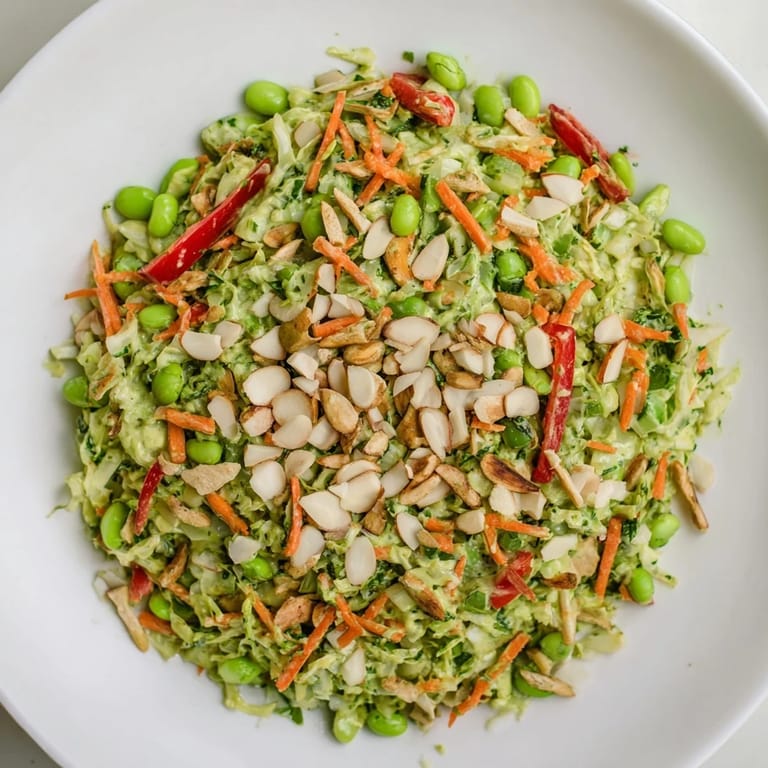
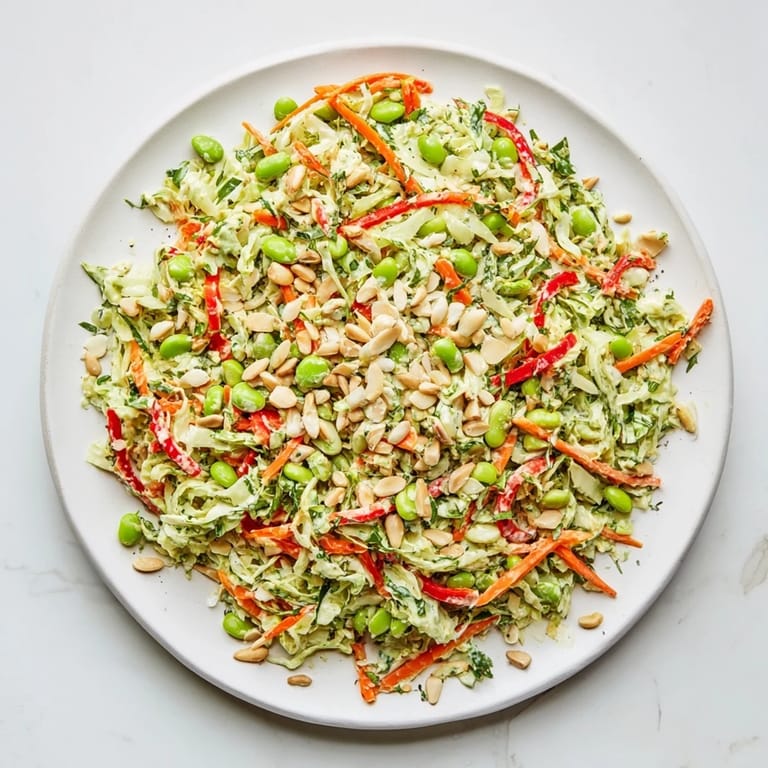
Save There's something about assembling a salad on a warm afternoon that feels like you're doing something right. I discovered this particular combination at a farmer's market when a vendor handed me a sample of their shelled edamame paired with a taste of their house-made green goddess dressing, and I thought, why haven't I put these two things together before? The crunch of cabbage against the tender beans, the herbaceous dressing—it clicked instantly. Now it's what I reach for when I need something that tastes bright and substantial without any fussiness.
I made this for a potluck last spring when everyone else brought the usual pasta salads, and it was the first thing to disappear. People kept asking what made it so addictive, and I realized it was the texture contrast—the way the soft edamame plays against the snap of raw cabbage. Even my friend who claims to hate salad came back for seconds, which tells you something.
Ingredients
- Green cabbage: Shredding it by hand takes longer but gives you more control over the size; a food processor works if you're in a hurry, though the pieces can sometimes get too tiny.
- Shelled edamame: Frozen is absolutely fine and honestly more convenient than hunting for fresh ones; the brief cook just wakes them up.
- Carrots: Julienning them thin means they absorb the dressing better and add visual pop to every bite.
- Red bell pepper: The thinness matters here—you want delicate strips that don't overpower the other vegetables.
- Green onions and cilantro: These are your brightness; don't skip them or the whole thing tastes one-dimensional.
- Greek yogurt: The base of the dressing, creamy and tangy without being heavy like a full mayo situation.
- Mayonnaise: Just enough to bind and add richness, but the yogurt does most of the work.
- Fresh lemon juice: Bottled will work if you're desperate, but fresh lemon changes everything about the flavor.
- Fresh herbs in the dressing: Parsley, chives, and tarragon if you have it—these small amounts create that herbaceous, almost garden-fresh quality that makes people pause and ask what's in it.
- Dijon mustard: A teaspoon adds complexity without any sharp mustard flavor; it's almost invisible but crucial.
- Sunflower seeds and toasted almonds: Add these at the last second or they'll get soggy and lose their purpose entirely.
Tired of Takeout? 🥡
Get 10 meals you can make faster than delivery arrives. Seriously.
One email. No spam. Unsubscribe anytime.
Instructions
- Prepare the edamame if frozen:
- Bring a small pot of water to a boil, add the frozen edamame, and cook for just 3 to 4 minutes—you're not cooking them from scratch, just thawing and warming them through. Drain and rinse under cold water until they're cool to the touch, or they'll continue cooking from residual heat.
- Build the base:
- In a large bowl, toss together your shredded cabbage, cooled edamame, julienned carrots, bell pepper strips, sliced green onions, and fresh cilantro. The goal is even distribution so every forkful gets all the flavors.
- Make the dressing:
- In a separate bowl, whisk the Greek yogurt, mayo, lemon juice, all the fresh herbs, minced garlic, Dijon mustard, salt, and pepper until you have something smooth and pourable. Taste it and adjust—need more lemon brightness, add a squeeze more; too herby, a pinch more salt balances it.
- Bring it together:
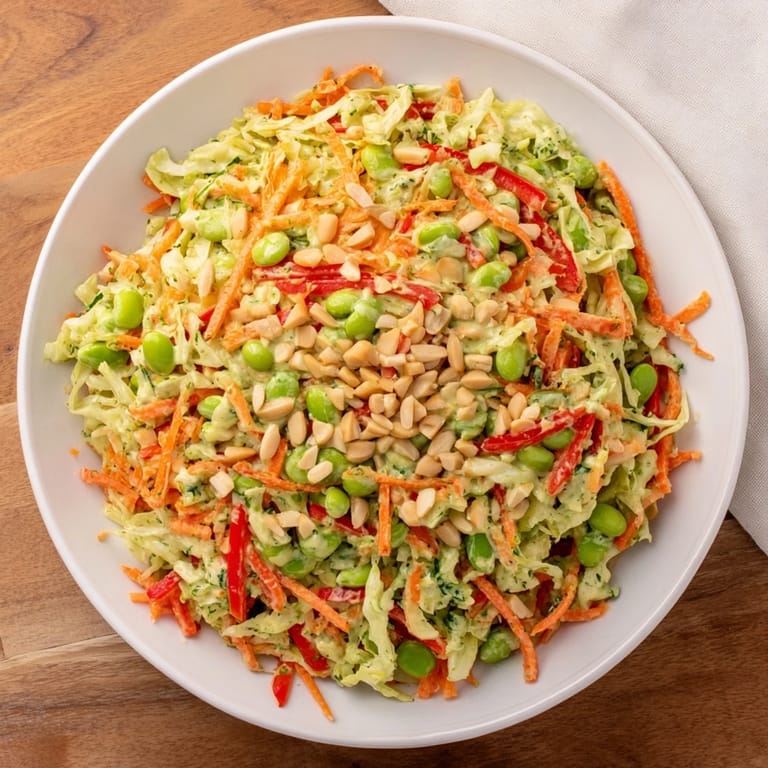
- Pour the dressing over the vegetable mixture and toss everything until the cabbage glistens and every piece is coated. This is the moment it transforms from separate ingredients into something cohesive.
- Add the crunch:
- Right before serving, scatter the sunflower seeds and toasted almonds over the top so they stay crispy and don't dissolve into the dressing. This step matters more than you'd think.
- Serve and enjoy:
- This salad is good chilled or at room temperature, so serve it however your meal calls for. If you're making it ahead, keep the dressing and toppings separate until the last moment.
 Save
Save What surprised me about this salad was how it transformed a regular Tuesday lunch into something I actually looked forward to. It's the kind of thing that made me realize salad doesn't have to be something you eat because you should; it can be something you eat because you genuinely want to.
Why the Dressing Makes All the Difference
The green goddess element here isn't just flavor; it's what elevates this from a pile of raw vegetables into something memorable. The Greek yogurt keeps it light compared to a mayo-heavy situation, while the fresh herbs give it that almost herbal, garden-like quality that feels special. When you taste it, the mustard adds this subtle complexity that you can't quite put your finger on, which is exactly the point.
Make-Ahead and Storage Tips
This salad has made my weeknight lunches infinitely easier because you can prep everything the night before and assemble it the morning you want to eat. The cabbage stays crisp even after 24 hours in the fridge, and the dressing actually gets better as it sits. Just keep one golden rule in mind to avoid a soggy situation.
- Prepare vegetables and store them separately in airtight containers for up to 2 days.
- Make the dressing ahead and refrigerate; it's even more flavorful the next day as the herbs infuse.
- Always add seeds and nuts just before eating so they maintain their crunch.
Customizing Your Salad
The beautiful thing about this formula is that it bends easily to whatever you have on hand or whatever you're in the mood for. Sometimes I'll add avocado slices for creaminess, or swap the cilantro for fresh mint if that's what's growing in my garden. Cucumber slices add freshness, and I've thrown in everything from shredded kohlrabi to thinly sliced radishes.
 Save
Save This salad has become my go-to reminder that the best meals are often the simplest ones, where a few quality ingredients and a little attention to texture and flavor do all the heavy lifting. Keep making it and it'll become yours too.
Recipe Questions & Answers
- → What is the best way to cook edamame for this salad?
Boil shelled edamame in water for 3-4 minutes, then drain and rinse under cold water to cool before adding to the salad.
- → Can this salad be made vegan?
Yes, substitute Greek yogurt with plant-based yogurt and use vegan mayonnaise in the dressing for a vegan-friendly version.
- → What gives the dressing its distinctive flavor?
The dressing combines fresh lemon juice, chopped parsley, chives, tarragon, garlic, and Dijon mustard, creating a zesty herb blend.
- → How can I add extra freshness to this salad?
Adding sliced avocado or diced cucumber complements the existing vegetables with additional freshness and texture.
- → What crunchy toppings are included and can they be modified?
Roasted salted sunflower seeds and toasted sliced almonds provide crunch; almonds can be omitted for a nut-free version.
- → Is this salad suitable for gluten-free diets?
Yes, all ingredients are naturally gluten-free, making it suitable for gluten-free dietary needs.