 Save
Save There's something almost magical about the first time you taste a perfectly balanced cold noodle salad on a sweltering afternoon—the kind of moment when you realize food doesn't need to be complicated to be extraordinary. I stumbled upon this combination while experimenting with pantry staples one summer, mixing leftover soba noodles with whatever vegetables needed using before they wilted. The sesame-ginger dressing came together almost by accident, a whisking together of bottles I'd been meaning to use, and suddenly I had something so refreshing I made it three times that week.
I served this to my neighbors one July evening when we were all too tired to cook, setting everything out family-style in the backyard with cold drinks sweating beside the bowls. Someone asked if I'd made it from a cookbook, which made me laugh—it came entirely from improvisation and whatever looked good at the market that morning. They've been asking me to make it ever since, which tells you something about how this simple dish has a way of sticking with people.
Ingredients
- Dried soba or rice noodles, 250g: Soba brings a subtle nuttiness that plays beautifully with the sesame dressing, though rice noodles work equally well if that's what you have on hand.
- Carrot, 1 medium, julienned: The sweetness and crunch are essential—take a moment to cut these into thin, even strands so they dress properly.
- Red bell pepper, 1 small, thinly sliced: Choose one that feels heavy and firm, as these tend to be sweeter and less watery than lighter ones.
- Cucumber, 1, seeded and julienned: Seeding prevents the salad from becoming waterlogged as it sits, which I learned by making mistakes.
- Spring onions, 3, finely sliced: Use both the white and green parts for different flavor layers—the white adds sharpness, the green adds freshness.
- Red cabbage, 50g, thinly shredded: This small amount adds visual pop and a delicate crunch without overwhelming the other flavors.
- Fresh cilantro, 2 tbsp, chopped: Don't skip this if you enjoy bright herb notes, though parsley works if cilantro isn't your thing.
- Soy sauce, 3 tbsp: The foundation of the dressing—use tamari for a gluten-free version without sacrificing depth.
- Rice vinegar, 2 tbsp: This gentle acidity balances the richness of the sesame oil, so don't substitute with something sharper.
- Toasted sesame oil, 2 tbsp: The difference between good and transcendent here is using toasted rather than untoasted—the flavor is entirely different.
- Honey or maple syrup, 1 tbsp: A touch of sweetness softens everything else, making the dressing taste complete rather than one-dimensional.
- Fresh ginger, 1 tbsp, finely grated: Freshly grated is non-negotiable—jarred ginger won't give you that bright, alive quality.
- Garlic clove, 1, minced: One is enough; garlic can easily overpower if you're generous.
- Sriracha or chili sauce, 1 tsp (optional): This is your chance to customize heat level—add it if you want warmth, skip it if you prefer pure refreshment.
- Toasted sesame seeds, 1 tbsp: Toasting them yourself makes this infinitely better, but quality store-bought ones work in a pinch.
- Roasted peanuts or cashews, 2 tbsp, roughly chopped: The crunch factor that transforms this from good to crave-worthy.
- Additional sesame seeds for garnish: A small luxurious finishing touch that catches light on the plate.
Tired of Takeout? 🥡
Get 10 meals you can make faster than delivery arrives. Seriously.
One email. No spam. Unsubscribe anytime.
Instructions
- Bring water to a rolling boil and cook your noodles:
- Follow the package timing exactly—you want them tender but with just a whisper of bite remaining. That moment when you pull one out and taste it is when you know you're ready to drain.
- Shock them in cold water and let them rest:
- This stops the cooking and prevents them from clumping together while they cool. I run mine under cold water for about a minute, then spread them on a plate in a single layer.
- Prepare your vegetables with intention:
- Even cuts mean they dress evenly and look beautiful in the bowl. This is the meditative part, where the cutting board becomes your workspace and the smell of fresh vegetables fills the kitchen.
- Whisk the dressing together until it tastes like harmony:
- In a small bowl, combine soy sauce, rice vinegar, sesame oil, honey, ginger, garlic, optional Sriracha, and sesame seeds. Taste it before moving forward—adjust sweetness or heat or saltiness until it makes you want to eat noodles immediately.
- Combine everything in a large bowl and toss with intention:
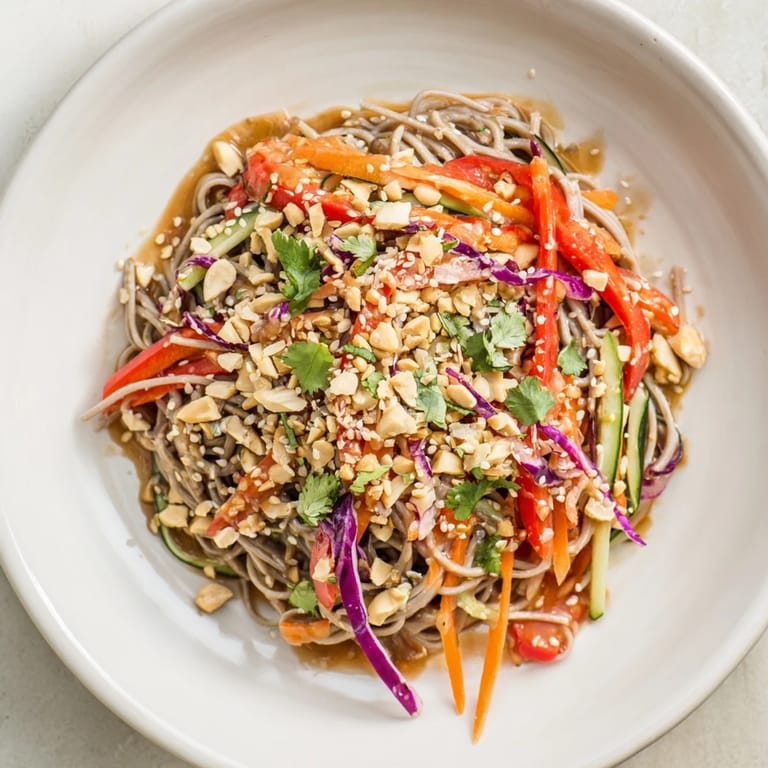
- Bring the cooled noodles, prepared vegetables, and cilantro together, then pour the dressing over everything. Use salad tongs or two forks to toss until every strand of noodle is coated and glistening.
- Finish and serve:
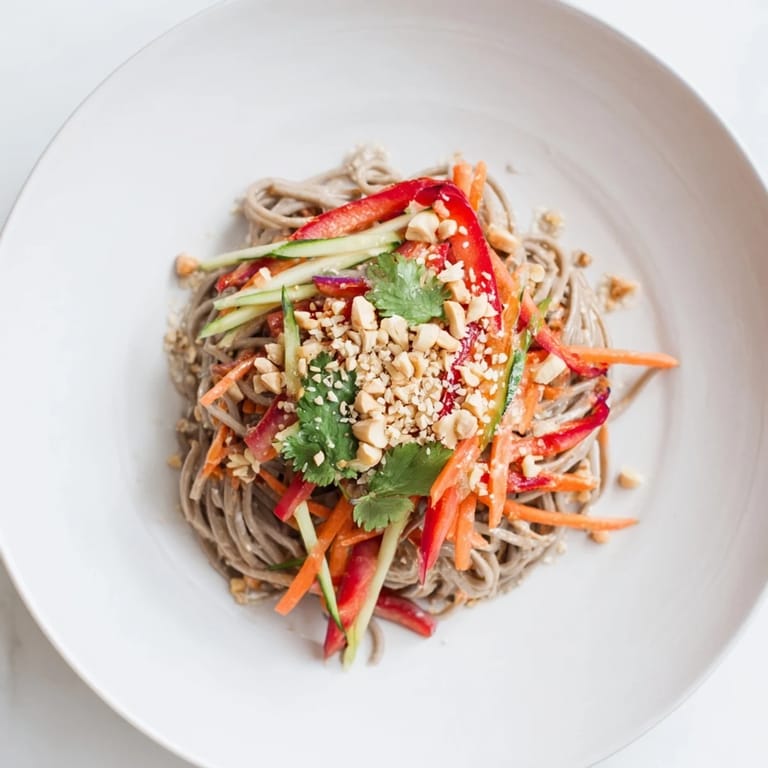
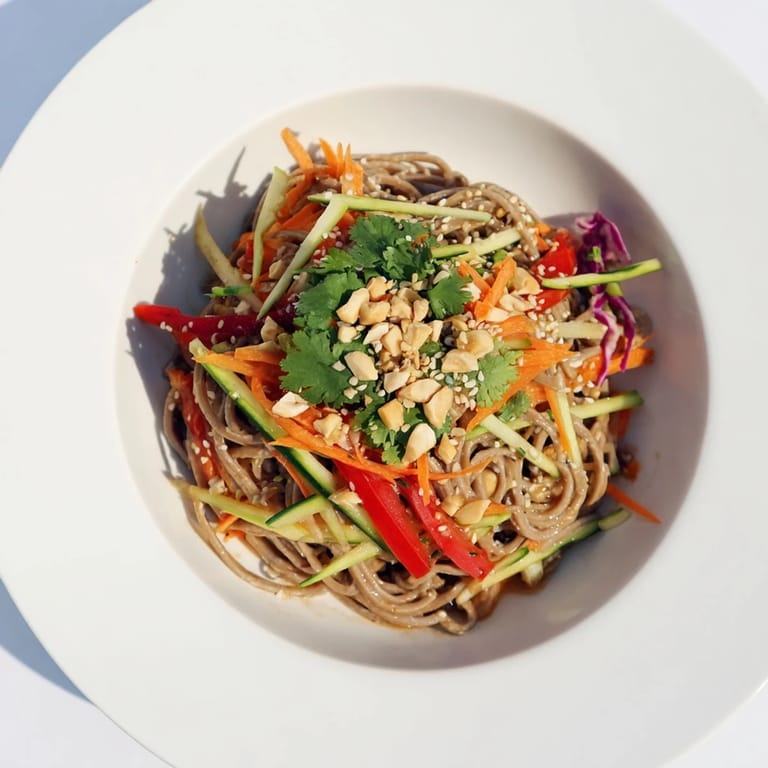
- Divide among bowls and crown each one with roasted nuts and a sprinkle of sesame seeds. Serve immediately while the contrast between cold noodles and room-temperature dressing is at its peak, or chill for an hour if you prefer everything uniformly cold.
 Save
Save One evening, I made this for a dinner party where I thought I might have miscalculated everything, and instead it became the dish people kept returning to, filling their bowls a second time while barely touching the other courses. That's when I understood that sometimes the simplest things are the most memorable.
Making It Your Own
This recipe is a starting point rather than a rigid instruction, which is what I love most about it. I've added shredded cooked chicken or crumbled tofu depending on what felt right, stirred in cashews or peanuts or sunflower seeds, swapped the cilantro for mint or basil based on what was growing in the garden. The framework stays the same, but your kitchen and your preferences are always welcome to reshape it.
The Magic of Sesame-Ginger Dressing
The dressing is honestly where the transformation happens—without it, these are just noodles and vegetables, but with it, they become something that tastes intentional and alive. The balance of salty and sweet, tangy and nutty, sharp and warm is what keeps people coming back, and it's entirely forgiving if you want to adjust things slightly to match your palate.
Serving and Pairing Suggestions
This dish loves cold drinks beside it, whether that's iced green tea or a crisp white wine, and it's equally at home as a light lunch, a summer dinner, or a make-ahead component of a larger spread. It travels well to picnics and gatherings, actually tasting better after a few hours as the flavors meld together.
- Chill your serving bowls in the freezer for five minutes before plating for maximum temperature contrast.
- If you're adding protein, let it cool completely before mixing it in so the whole dish stays refreshing.
- Consider setting out extra dressing on the side—people almost always want more once they taste it.
 Save
Save This is the kind of recipe that becomes a reliable friend in your kitchen, the one you turn to when you want something nourishing without pretense. Once you've made it once, you'll find yourself making it again and again, each time discovering something new about how simple ingredients can create something entirely satisfying.