 Save
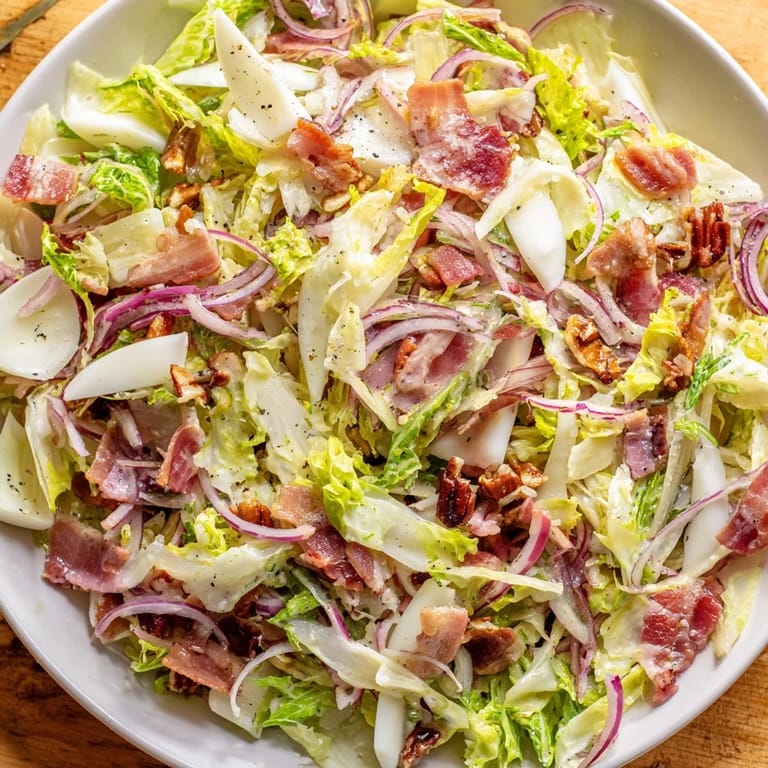
Save There's something about the moment when hot bacon fat hits cold greens that makes you understand why certain dishes endure. I discovered this salad on a crisp fall evening when I had a crisper drawer full of those assertive bitter leaves nobody seems to know what to do with—radicchio, frisée, dandelion greens. Instead of letting them wilt into nothing, I rendered some bacon, built a quick warm dressing right in the skillet, and poured it over the greens still raw. The transformation was instant and honest, greens softening just enough to lose their bite without losing their character.
I made this for a potluck once and watched people's faces shift from skepticism to genuine surprise. Nobody expects a salad to arrive still warm, to taste like something someone cared about making. The bitterness of the greens playing against the salty sweetness of the dressing, the way the bacon stayed crisp even after tossing—it felt like a small kitchen triumph, the kind that sticks with you.
Ingredients
- Mixed bitter greens (escarole, frisée, dandelion, radicchio, chicory): Use about 4 cups torn into bite-size pieces—these sturdy leaves stand up to heat in ways tender lettuce never could, and they benefit from the warmth more than they suffer from it.
- Red onion: One small onion, thinly sliced, adds sharp sweetness and texture that keeps the salad from feeling one-note.
- Thick-cut bacon: Six slices, diced—thick-cut renders more slowly and stays crispy longer than thin bacon, which matters when you're building an emulsion in that fat.
- Red wine vinegar: Two tablespoons brings acidity and a subtle tannin quality that echoes the bitterness of the greens.
- Dijon mustard: One tablespoon acts as an emulsifier and adds complexity without harshness.
- Honey: One teaspoon balances bitterness with a gentle sweetness that doesn't taste like sugar.
- Freshly ground black pepper and salt: ¼ teaspoon pepper and ⅛ teaspoon salt layer the flavors without overwhelming.
- Extra-virgin olive oil: Two tablespoons finish the dressing with richness and help it coat every leaf evenly.
- Hard-boiled eggs and toasted nuts (optional): These are the final flourishes—eggs for richness, nuts for crunch and earthiness.
Tired of Takeout? 🥡
Get 10 meals you can make faster than delivery arrives. Seriously.
One email. No spam. Unsubscribe anytime.
Instructions
- Prep the greens:
- Rinse your bitter greens and dry them thoroughly—any excess water will dilute the warm dressing and make everything taste flat. Tear them into pieces you can actually eat with a fork, and toss them with the sliced red onion in a large bowl.
- Render the bacon:
- Dice your thick-cut bacon and cook it in a large skillet over medium heat until the edges are crisp and the fat is golden, about 7 to 9 minutes. The skillet should look almost too fatty at this point—that's exactly what you want. Transfer the bacon to paper towels, leaving every drop of that precious rendered fat behind.
- Build the warm dressing:
- Lower the heat to medium-low and add the red wine vinegar, Dijon mustard, honey, pepper, and salt directly to the hot bacon fat. Whisk everything together, making sure to scrape up any browned bits stuck to the bottom of the skillet—those are flavor. Let it warm for just a minute so everything melds.
- Emulsify with oil:
- Slowly drizzle in the olive oil while whisking constantly, as if you're making a mayonnaise. The dressing should turn creamy and cohesive, glossy enough to coat a spoon. This only takes a minute or two, and it matters.
- Dress and toss:
- Pour the hot dressing directly over the greens and onions while it's still warm—the heat is essential here, wilting the leaves just slightly so they soften and absorb the flavors. Scatter the crisp bacon over top and toss everything together until every leaf glistens.
- Plate and garnish:
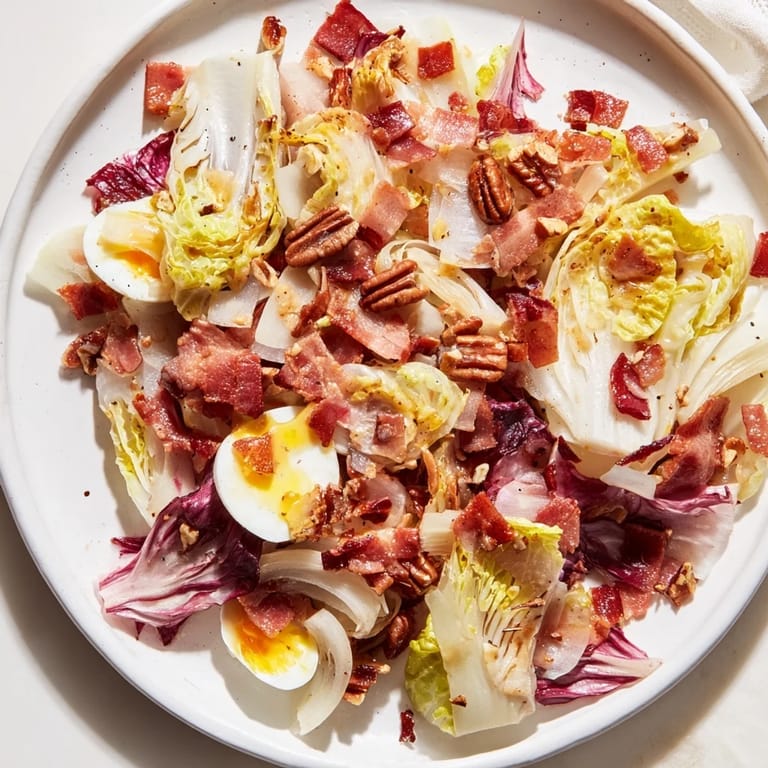
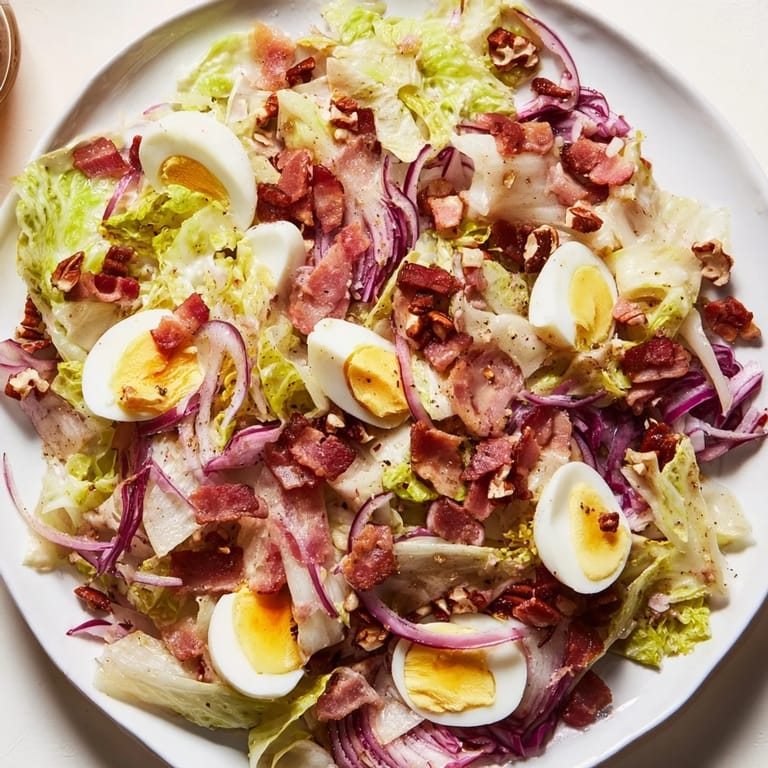
- Arrange the warm salad on plates immediately so it stays warm. If you're using them, top with quartered hard-boiled eggs and toasted nuts, which provide contrast in temperature and texture.
 Save
Save The first time someone told me they'd never thought of serving a salad warm, I realized how many good ideas sit quietly in the back of cookbooks, waiting for someone to pull them out and make them feel normal again. This salad does that—it makes bitterness seem like a gift rather than something to apologize for.
Why Bitter Greens Matter
Bitter greens get a bad reputation, but they're actually the most forgiving salad base you could choose. Their assertive flavor doesn't get overwhelmed by a bold dressing the way tender lettuce does—instead, they push back, creating a real conversation between the greens and what you dress them with. Radicchio brings a deeper bitterness and almost meaty texture, while frisée adds a delicate, wispy element. Dandelion greens taste green and mineral in a way that feels almost wild. The blend matters because the complexity keeps you interested bite after bite.
Making It Your Own
This salad is a template more than a rigid recipe. I've added thin slices of apple or pear when I wanted brightness and sweetness without changing the dressing formula. I've swapped maple syrup for the honey on mornings when that seemed right. Even the bacon itself can shift—I've used pancetta, prosciutto, even smoked salt when bacon wasn't in the house. The core idea—hot fat, acid, a little sweetness, bitter greens—holds up to almost any variation you want to try.
For Vegetarians and Other Paths
If you're skipping the bacon, don't just leave the fat behind—build it a different way. Sauté thin-sliced mushrooms (cremini, oyster, even white button mushrooms work) until they're golden and yielding, then proceed exactly as you would with bacon. Use a good glug of extra olive oil instead of bacon fat, and you get something different but equally honest. A friend served this to me with crispy chickpeas once, and it was strange and wonderful, crunchy and savory in its own right.
- For extra richness in a vegetarian version, add a handful of toasted seeds like sunflower or pumpkin.
- Smoked salt or smoked paprika can stand in for the smokiness bacon usually provides.
- Consider adding roasted root vegetables for substance that makes this feel like a complete meal.
 Save
Save A good salad doesn't need much—just ingredients that taste like themselves and the courage to let them matter. This one has taught me that.
Recipe Questions & Answers
- → What types of greens work best for this salad?
Hearty, bitter greens like escarole, frisée, dandelion, radicchio, and chicory provide the ideal balance of texture and flavor.
- → How is the warm bacon dressing prepared?
Bacon is cooked until crisp, then the rendered fat is combined with red wine vinegar, Dijon mustard, honey, black pepper, salt, and olive oil whisked to emulsify and heat gently.
- → Can I omit bacon for a vegetarian version?
Yes, replace bacon with sautéed mushrooms and use extra olive oil instead of bacon fat for a similar depth of flavor.
- → What garnishes complement this salad?
Hard-boiled eggs and toasted walnuts or pecans add richness and a satisfying crunch, enhancing both texture and taste.
- → Are there sweet variations to this dish?
Adding maple syrup instead of honey or thinly sliced apples or pears introduces a subtle sweetness and fruity contrast.